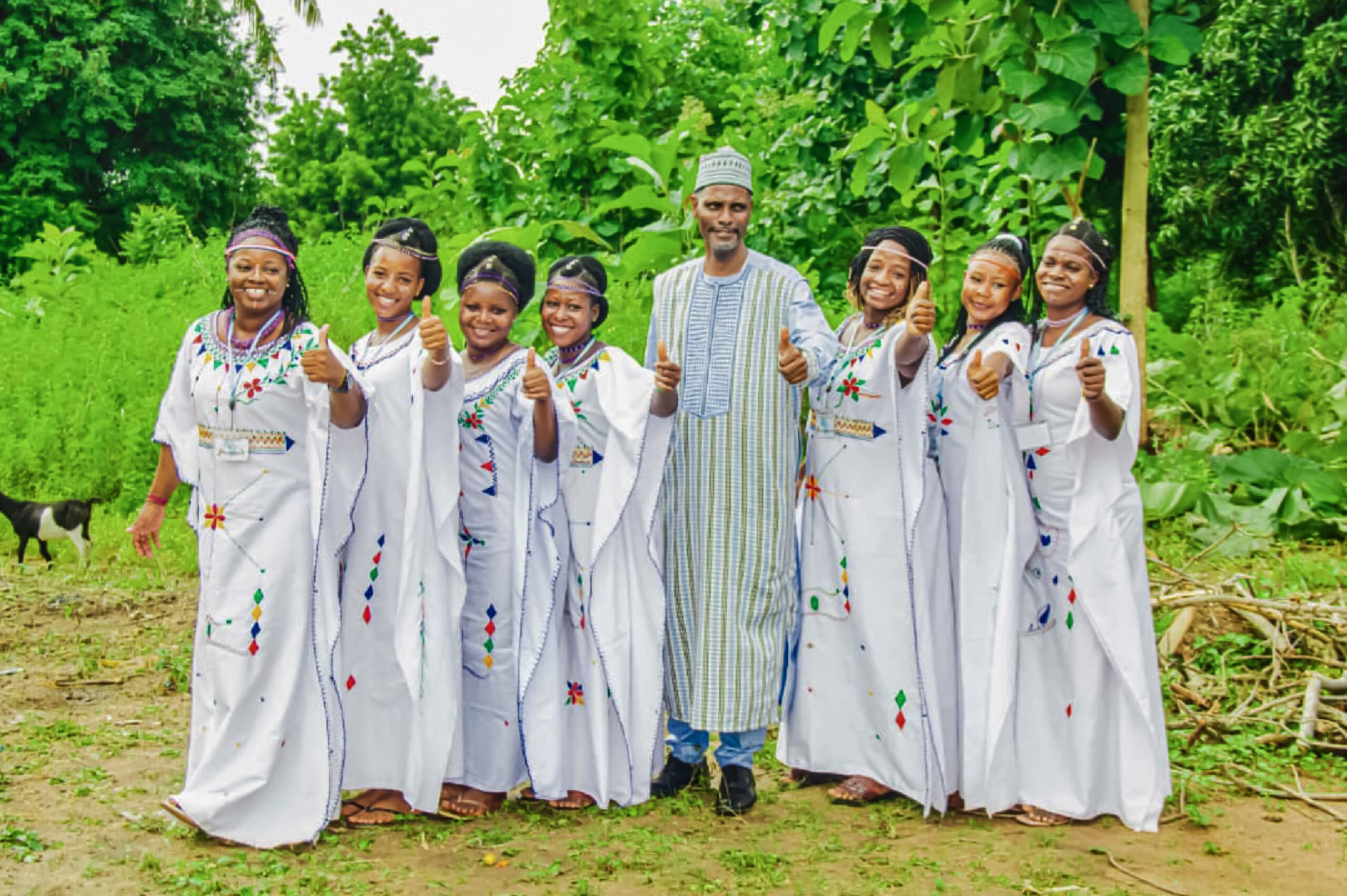
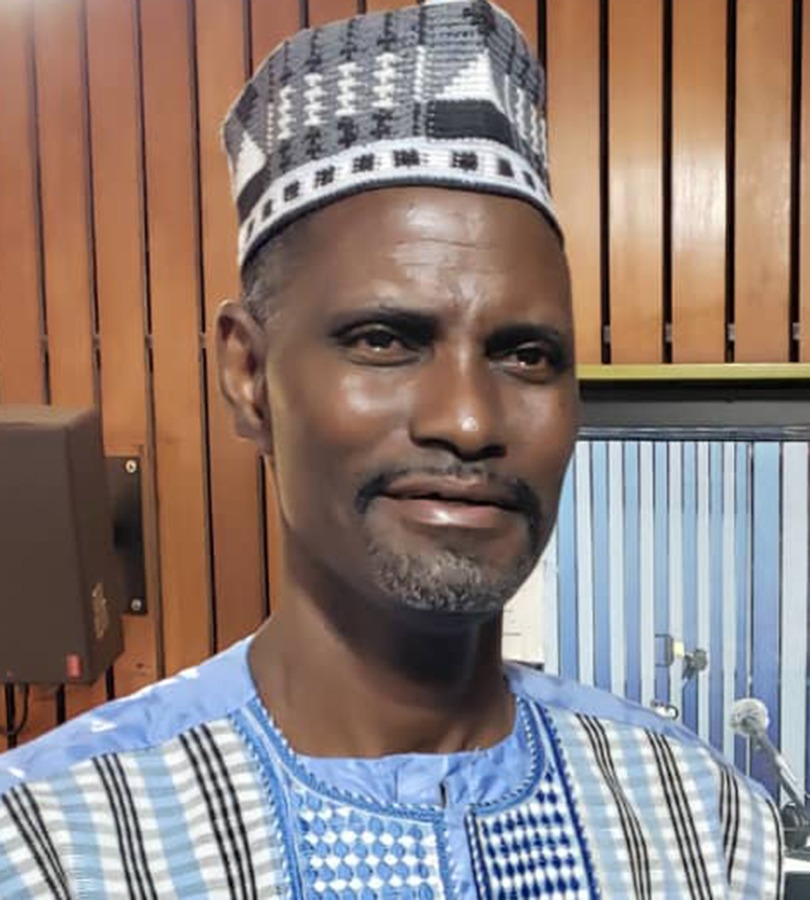
Daniel Dama believes that the arts are the most powerful medium God has given to communicate God’s love. Dama is honing his peacebuilding skills through the Masters of Conflict Transformation program at Le Centre de Formation à la Justice et à la Paix (Justice and Peace Training Center), a Mennonite Mission Network partner, based in Ivory Coast.
I grew up in Goro, a small, close-knit community in northern Benin, where my grandfather was the village chief. We are members of the Fulɓe tribe, one of the largest ethnic groups in West Africa, numbering more than 45 million people. Because of my paternal lineage as nobility, I was expected to follow in my grandfather’s footsteps. But I wanted to become a musician.
Musicians are part of a different caste in the social hierarchy of the Fulɓe people. This caste includes goldsmiths, praise singers, musicians, cobblers and weavers, who serve the nobility. It was taboo for me to become a singer. But God gave me talent, and I loved music!
Raised in a Muslim context, I became Christian in my late teens. Following my conversion, I began a decades-long journey of missionary work sharing the gospel among the Fulɓe people in West Africa. Ministering out of a van, my wife, children and I traveled through more than 15 countries singing songs of peace and witnessing to the good news of Jesus Christ.
During this time, I observed that the most powerful unifying factor in West Africa is music, as it is the common language in every community. Historically, music has played an important role in promoting peaceful co-existence in traditional African societies. However, I noticed that today’s West African Christians rarely rely on music as a means of peacebuilding. I also noticed that while religious leaders and local political leaders use a variety of peacemaking and peacebuilding mechanisms, such as formal dialogues and the signing of peace declarations, they have had little to no lasting impact.
In response to West African churches’ lack of engagement with the arts, I founded Africa Sings, an organization which uses music as a tool for peacebuilding and reconciliation between different ethnic groups and faiths in West Africa. Africa Sings offers educational music programs and cultural events, which serve as a bridge in a region where inter-ethnic and inter-religious conflicts claim many lives and destroy a lot of property every year. Our music is an instrument to promote reconciliation and unity within the body of Christ, healing old divisions and bringing new life and new hope to our region.
One of Africa Sings’ major initiatives is a Fulɓe Christian Festival of Arts and Culture. The festival brings together different religious communities for several days of academic lectures, presentations of various local artistic expressions, and a musical contest where dancer-musicians compete for prizes as the best performers of Indigenous musical compositions. At the first Africa Sings event in August 2015, hundreds of people came from all over West Africa, even non-Christians sent their youth and children.
For the 2024 festival, 400 people attended the lectures and more than 4,000 showed up for the musical competition that featured 37 local contestants. One of the surprises and unintended consequences of the festival is that it brought together two ethnic groups, the Baatombu and the Fulɓe peoples, who have been in conflict with one another. These two ethnic groups have a complex relationship with one another. They sometimes live in peaceful coexistence and even inter-dependence, but at times, this harmony is marked by tension and conflict. The conflict between them largely stems from the fact that the Fulɓe are nomadic herders and the Baatombu people are sedentary farmers. In recent times, particularly in the Borgou region of Benin, violent tensions have arisen over land use, access to water, and livestock grazing.
The hostile and violent nature of the relationship between the two groups means that there are few spaces for peaceful encounters. However, the Fulɓe Christian Festival of Arts and Culture has brought together both sides in a way that no other initiative in the region has been able to do. During the festival, each group donates their yams, corn and chickens — important gifts that symbolize respect and honor. During the festival, they also perform for one another and even collaborate with one another! Members of the Baatombu and the Fulɓe peoples listen and watch each other take turns on stage; they talk with one another and even eat together.
One of the participants said, “Music has brought our people together. It has brought unity and peace and hope!”
Another unanticipated outcome of the arts festivals is the large number of children and youth, both Muslim and Christian, who attend. This delights me because the young people of my region have been increasingly drawn into a life of violence. African children and adolescents in the Sahel (Northern Benin, Burkina Faso, Mali and Niger) are today the target of extremist groups. Weak governance, porous borders, growing ethnic tensions, hostility between Christians and Muslims, as well as high unemployment, particularly among adolescents have created an environment which facilitates the proliferation of terrorist organizations and ideologies. Unfortunately, recent studies show that children and adolescents are also increasingly interested in joining these extremist movements because they are excluded from political processes and suffer from a growing sense of hopelessness. This makes young people easy targets for radicalized recruiters, who lure them through heretical religious arguments and financial incentives.
Instead of choosing a lifestyle of destruction and hopelessness, at the festival we teach them not to hate but to love. Instead of learning to shoot guns and arrows, we teach them how to play musical instruments that echo peace. Arts and culture are common grounds for everyone. I believe that arts and music education may help curb the evil we are experiencing and assure a peaceful future for generations.
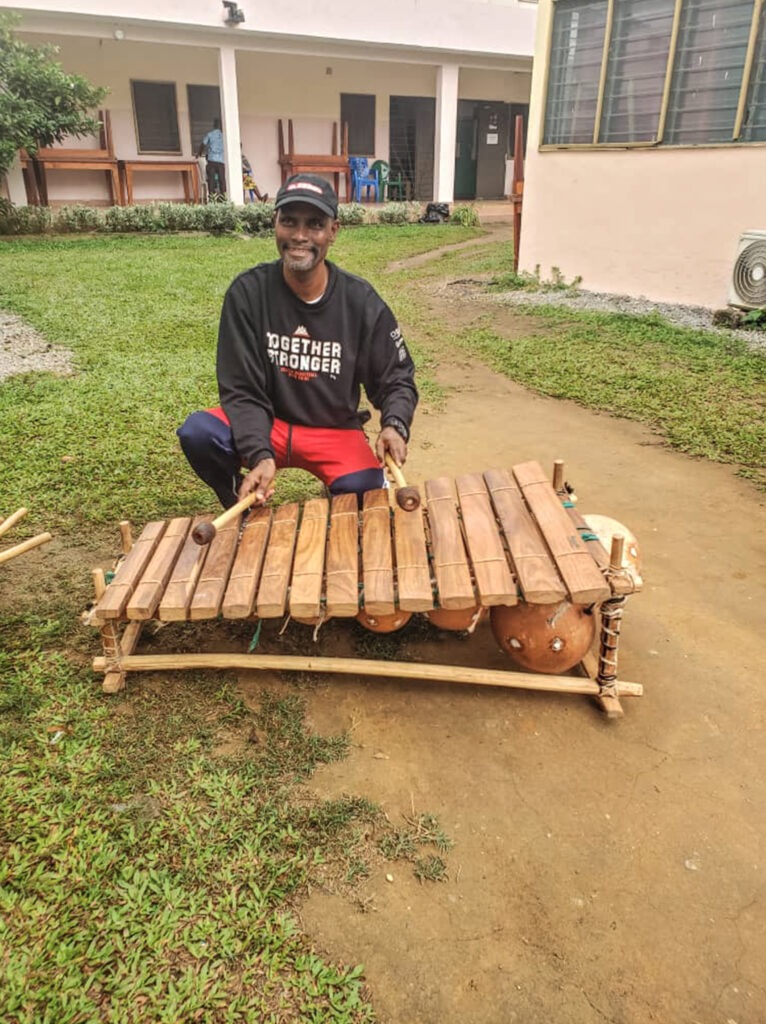
While the festival has done much to create peace, I feel that much more is needed to resolve the massive challenges facing youth in northern Benin. An African proverb invites us to treat Mother Nature and children with respect, “We do not inherit the Earth from our ancestors; we borrow it from our children.”
To do this, I felt the need need for formal training in peacebuilding and the arts. When I learned that Le Centre de Formation à la Justice et à la Paix (CFJP — Justice and Peace Training Center) was launching a Masters of Conflict Transformation for French-speaking West African church leaders, I felt it was an answer to my prayers. There are no Christian-based programs in conflict transformation in Benin, or in the surrounding French-speaking countries. The CFJP’s program provides an opportunity for Christian leaders, like me, to reflect theologically on peacemaking, as well as honing the skills and competencies needed for conflict transformation in our communities.
Through CFJP’s program, I am strengthening my skills and competencies in understanding the structures and systems that perpetuate conflict. Although the arts remain central to my focus, I am now reflecting on how the arts can be integrated into a long-term approach that creates “nonviolent cultures” for Beninese youth.
I recently returned from Bamako, Mali, where Africa Sings and the Evangelical Baptist Church of Bamako organized a training seminar for children. For the past decade, Mali has experienced massive social unrest due to violent extremist groups. Through song, dance and drama the seminar aimed to provide Muslim and Christian children skills and tools for relating to one another in ways that create trust and build bridges. I believe that African music and arts, including storytelling, proverbs and parables, can be fruitful in creating cultures of peace for children and adolescents.
Music and the arts are the most powerful medium God has given us to communicate God’s love. I’m convinced that God will bring peace and hope to the next generation of African youth through music.