
Ghana Mennonite Church desires renewed partnership with North America
ACCRA, GHANA – Entering the sanctuary of Trinity Chapel in Ghana, I felt something wonderfully powerful.
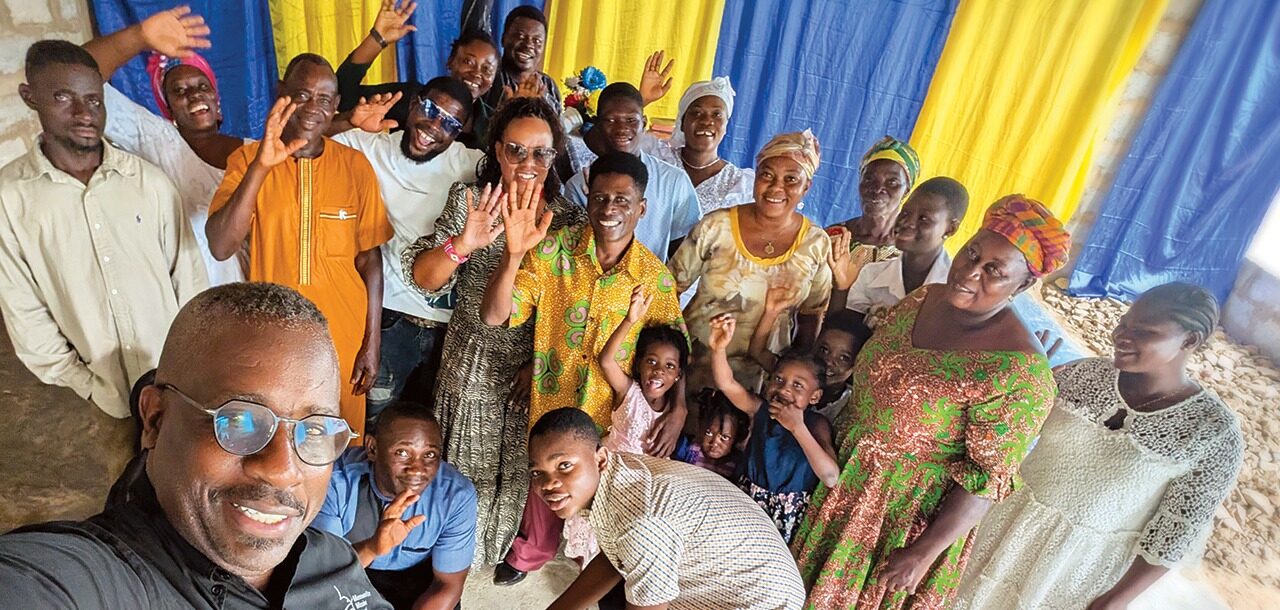
It flowed through the pulse of hearty handshakes, ready embraces, and the joy in each face, young and older.
But the physical surroundings defied what one would likely expect from a denominational headquarters in a major city. Paint-peeled olive-green cement walls. A rusted tin roof that provided shade, but less protection from rain. An earthen floor dusting my brown shoes.
Amid the bustling streets of Accra — where modern high-rises compliment mountainsides, and traffic crawls past openair markets buzzing with crowds — Trinity Chapel, the headquarters of Ghana Mennonite Church (GMC), looks as though it has been left behind.
The compound, established decades ago with the help of Mennonite missionaries, remains structurally sound but visibly worn.
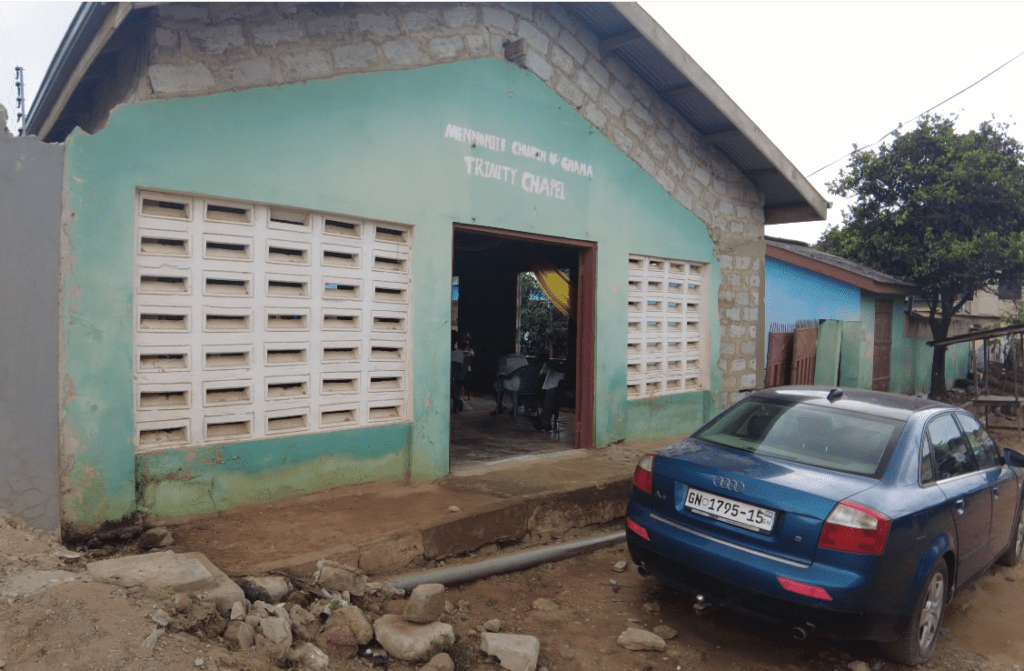
For its pastor, Rt. Rev. Francis Dzivor, moderator of GMC, the conditions symbolize a deeper problem he wants help to solve: How can the Mennonite church grow throughout Ghana if people perceive it as impoverished, and therefore unstable and unappealing?
“In the urban areas, most people do not know about Mennonites and that is why we are not taken seriously,” Dzivor said. “It is high time for us to promote our work in the urban areas.”
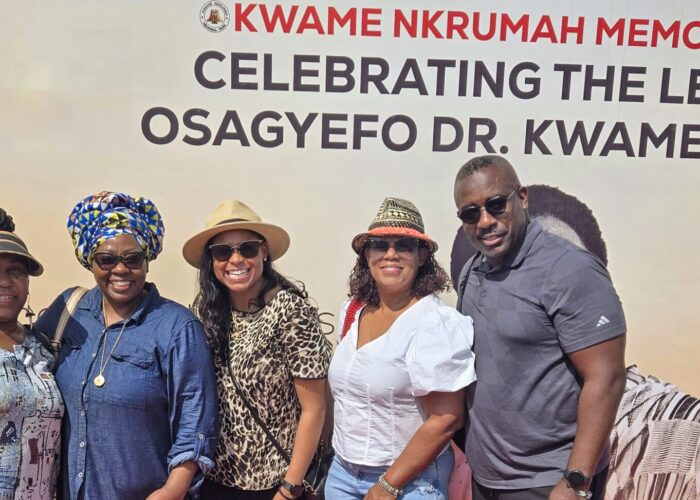
I was in Ghana as part of a 5-person learning tour delegation of Black leaders from Mennonite denominations in the United States, invited to network with our African counterparts. The October 1-7 learning tour was initiated and hosted by Thomas Oduro, president of Good News Theological Seminary (GNTS), a Mission Network partner since 1971. Many GMC leaders are seminary alumni, Oduro said.
The learning tour was initially set for 2020 but was postponed because of the COVID-19 pandemic. Representatives from LMC, Mosaic Conference and MC USA attended the Mission Network tour made possible, in part, by a generous grant from the Schowalter Foundation. Together we met with African leaders and visited different cultural sites. We each enjoyed Sunday worship at different congregations.
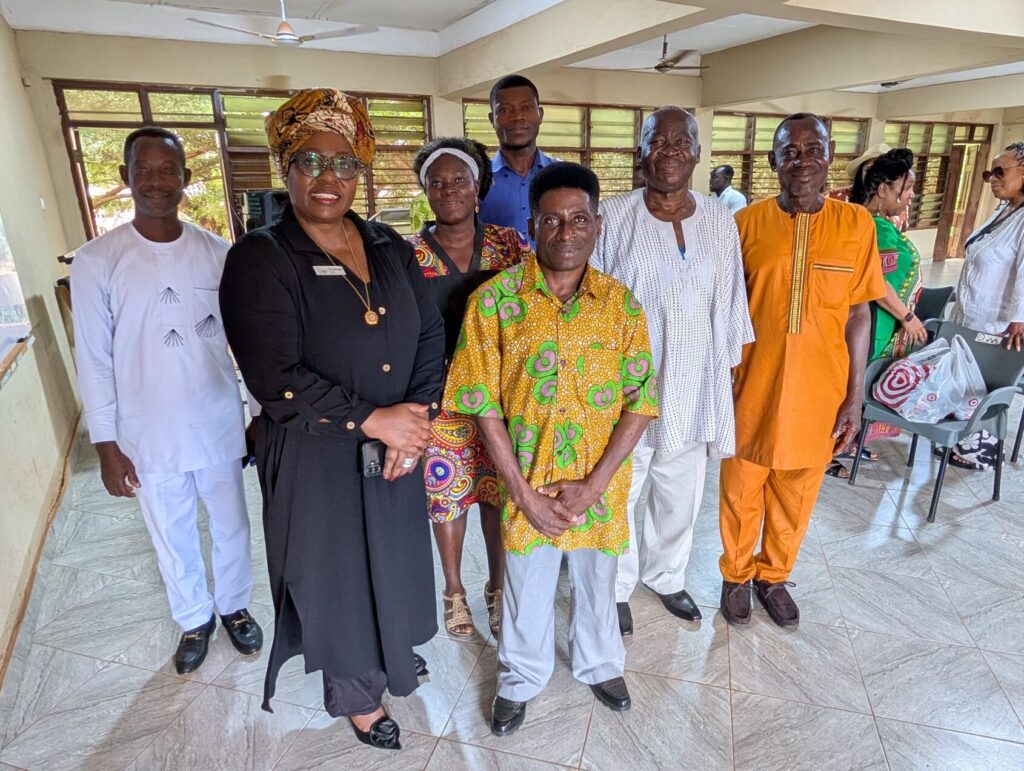
All leaders agreed that the Anabaptist emphasis of peace, justice and reconciliation is sorely needed throughout Ghana and communities worldwide today. Pastor Dzivor and his ministerial team spoke with gratitude for North American Mennonites, but also urgency for strengthened ties. Pastor Dzivor appreciates the historic relationship with entities such as Mission Network, Mennonite Men, Mennonite Central Committee, Mennonite Economic Development Associates, and other agencies that are not directly related to each other.
However, from GMC’s vantage point, these organizations operate as one unified North American Mennonite church. A successful mutual partnership reflects positively on how Mennonites are viewed when compared to other denominations in Ghana, Dzivor said.
Dzivor wants his leadership team to be consulted, supported and that Trinity Chapel be recognized as the hub of Mennonite life in Ghana. He said as GMC members reach out to fellow Ghanaians to reflect God’s love, the headquarters facility must also be “lifted up” as part of a comprehensive strategic plan to project a positive Mennonite image that draws Ghanaians in.
From rural to urban
Founded in 1956, GMC is an independent Anabaptist denomination with approximately 5,000 members across 29 congregations. The church began in rural communities where worship facilities were minimal — services frequently held outdoors under a tree, or bamboo structures exposed to the elements.
Through the efforts of Matthew Krabill, a mission worker serving as an instructor at the University of Ghana’s Sanneh Institute (TSI) and the Center for Justice and Peace at the Université de l’Alliance Chrétienne d’Abidjan, Dzivor secured a $2,000 grant from Mennonite Men in October 2025. The funds will help the rural Santramozorh Mennonite Church build a dedicated place of worship.
As young people migrate to cities for education and employment, the GMC has expanded into urban areas — where higher expectations of a decent church meeting house and supporting facilities are typical of major cities or towns.
In Accra, charismatic and prosperity-driven congregations proliferate, Dzivor said. Gleaming facilities and greater resources attract visitors to become members.
“People compare buildings,” Pastor Agbenuakor Harrison Mawulawoe, a ministry team member and GNTS student. “They assume a poor building means a poor church — spiritually and financially.”
Yet when Ghanaians hear the Anabaptist message, particularly through the seminary trained passion of ministers like Dzivor, something shifts deep within them.
“It sounds biblical to them,” Agbenuakor emphasized. “When people know the bible and understand the doctrine, …they see [that the Anabaptist message] is rooted in Scripture.”
The key challenge is getting visitors to see beyond the headquarters’ weathered condition: open square holes as windows that leave worshippers exposed to the elements, outhouse lavatories instead of indoor plumbing, musical instruments patched and repatched.
“Vibrant worship and singing and instruments are very important to the church experiences and very important to attract youth,” said Blessing Charles Samoah, a student pastor and current seminarian at GNTS. “When young people see the instruments and the quality of the building is lacking, they are attracted to other ministries that have these things. Young people are moving away from the Mennonite churches in Ghana that lack these things.”
Striving for self-sufficiency
Dzivor and members of Trinity Chapel are not deterred by their limited resources. They worship with a Spirit-filled joy. From the door to my seat, I felt their genuine warmth and hospitality reflecting the love of Jesus. Dzivor’s sermon about “The Last Supper” was enlightening and thought-provoking.
After the worship services, our team was treated to meals, enjoying hospitality as to brothers and sisters returning home to family for the holidays. While at Trinity Chapel, I thought about the many churches I have visited in the United States with much more in material possessions yet poor in spirit toward a stranger in their midst.
Dzivor offered a tour of the compound and proudly pointed to the church’s small garden along the concrete property wall. The congregation desires to develop income-generating projects: mango farming, tilapia fishponds, and a guesthouse at the compound that could serve as an Airbnb style lodge for visitors.
A sister church, Somanya Mennonite Church, in the Eastern Region of Ghana has developed a successful income-generating mango farm business. Some rural churches have also had success with agriculture projects. Dzivor is determined that all GMC churches achieve success, but especially Trinity Chapel, as the denomination headquarters.
GMC needs partners, Dzivor said. GMC ministers are bi-vocational because congregations cannot afford salaries. Youth rarely consider careers in ministry, fearing it alone cannot sustain them financially. Training programs are needed — for pastors, youth, and church administrators. Healthcare support is needed, especially in rural congregations, Dzivor said.
Who is Menno?
Another big city challenge is that branding determines reputation in the community. In Ghana, Christian churches are in abundance and must differentiate themselves.
“People hear ‘Mennonite’ and think it is a person,” said Pastor Emelia Lorlonyo Adzo Amexo, a Trinity Chapel leadership team member. “They don’t know the name, though the church has been in Ghana for many years. They say, who is “Menno?” You are following a man who is dead? We want to follow Jesus, who is still alive in us.”
The term “Anabaptism” also requires explanation, Amexo said. Several other denominations have long ago rejected infant baptism. The prefix “Ana” often leads people to assume it refers to a woman, rather than “re-baptizer.”
They are unaware Anabaptism has evolved to mean a “peace church” movement that emphasizes believers should read the bible for themselves and truly model the peaceful and just life of Jesus, Amexo said. Other denominations are better known in Ghana because of the schools or hospitals they developed decades ago to meet critical community needs.
A partnership ready for renewal
Dzivor emphasized that GMC is committed to fostering mutual relationships, mutual communication, and shared vision in a collective commitment to spread Anabaptism throughout Ghana and beyond.
To draw people into deeper relationships with God.
To equip families with tools to resolve conflicts.
To instill hope in young people for their futures.
To inspire elders to believe in dreaming prophetic dreams.
As Mission Network and other agencies reassess their global partnerships in a rapidly changing world, GMC offers an opportunity to strengthen a connection beyond nostalgic bridges – to be proactive in building Ghana’s spiritual future for generations to come.
To support our work with Ghana Mennonite Church – donate to the Mennonite Mission Network General Fund.