Solidarity pilgrimage in Navajoland

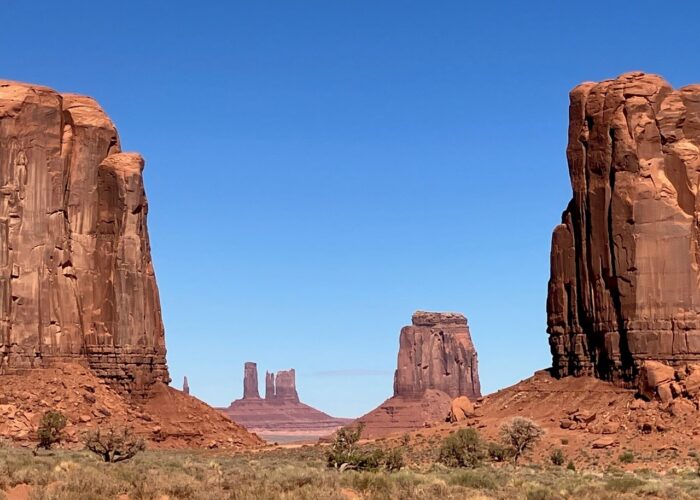
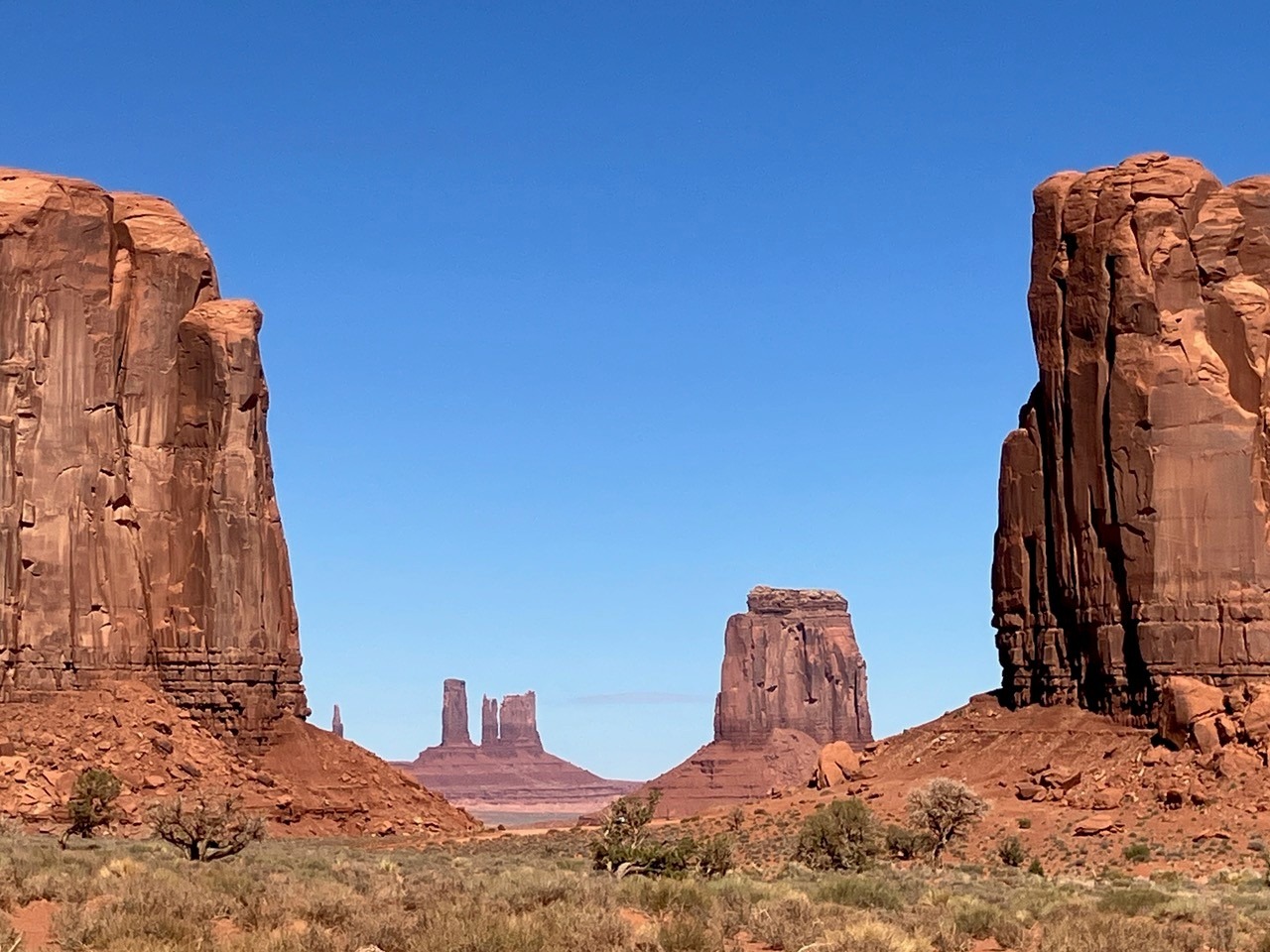
The pilgrimage included a tour of Monument Valley, on the ancestral land of the Navajo Nation. Monument Valley is considered sacred by the Navajo people. Despite this, it was mined for uranium in the 1940s-60s, leaving behind nuclear waste, abandoned mines, and numerous health hazards for the local Indigenous population. Photo by Myrna Krehbiel.

Dismantling the doctrine of discovery through shared stories and sacred land

From October 7-11, 24 pilgrims journeyed to Navajoland in Southern Utah for the Solidarity with Indigenous Peoples Just Peace Pilgrimage. Organized in partnership with The Coalition to Dismantle the Doctrine of Discovery, the trip and was co-led by Coalition Executive Director Sarah Augustine, a Pueblo (Tewa) descendant and Joe Hubbard, Episcopal organizer for the Coalition.

Pilgrims travelled from cities and farmland all over the country to spend a week with the people of Diné Bikéyáh (Navajo homeland), fostering connections rooted in justice and mutual learning.
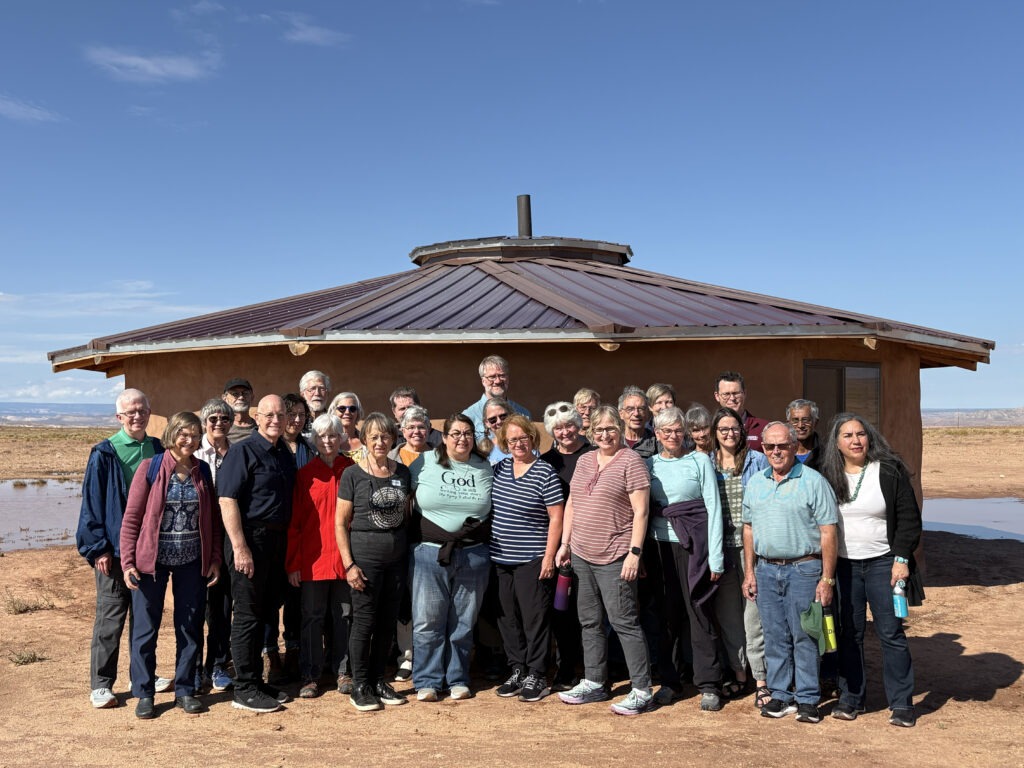
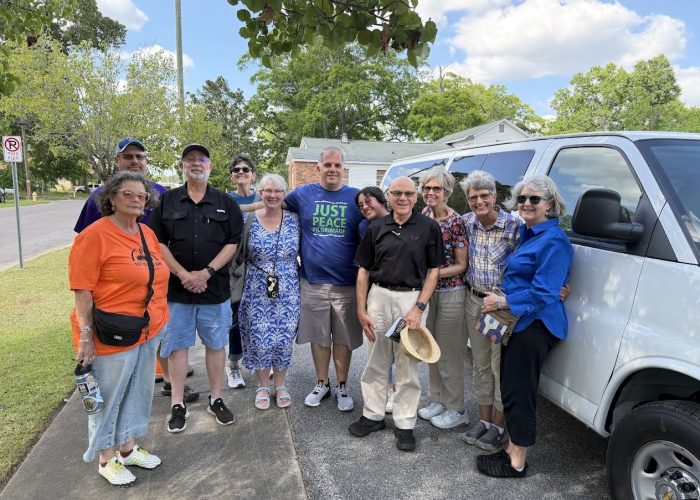
Standing in front of a ceremonial hogan owned by Roy Sampson near Bluff, Utah, are: Front row, left to right: Julie Hart, Patrick Bell, Rachel Gratz, Myrna Krehbiel, Yvonne Postelmans, Arloa Bontrager, Stephanie Weaver, Barb Fridley, Eileen Schuhmann, Leonard Harms, Sarah Augustine. Second row: Scott Applegate, Krisann Applegate, Amanda Pittman, Joni Fornelli, Linda Herr, Kim Morton, Frances Loberg, Sam Holiday, Bobbi Holiday, Merwyn De Mello Third row: Conrad Gratz, Phil Hart, Brett Baker, Mike Schut, George Fridley, Lara Dale, Joe Hubbard. Photo by Arloa Bontrager.
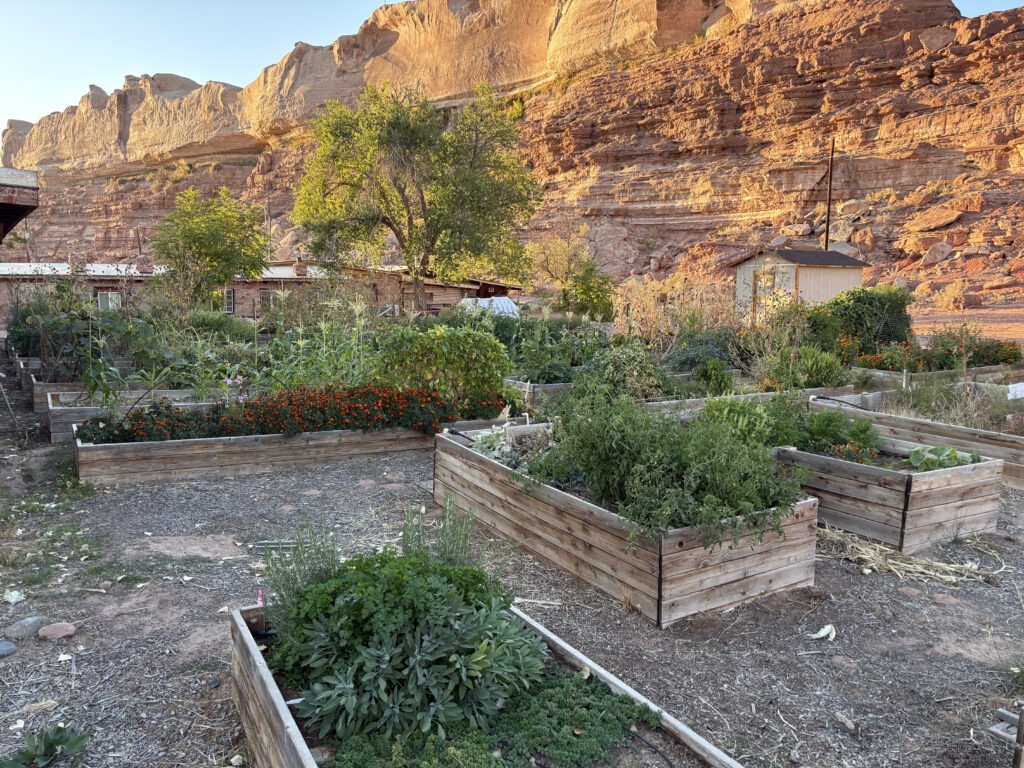
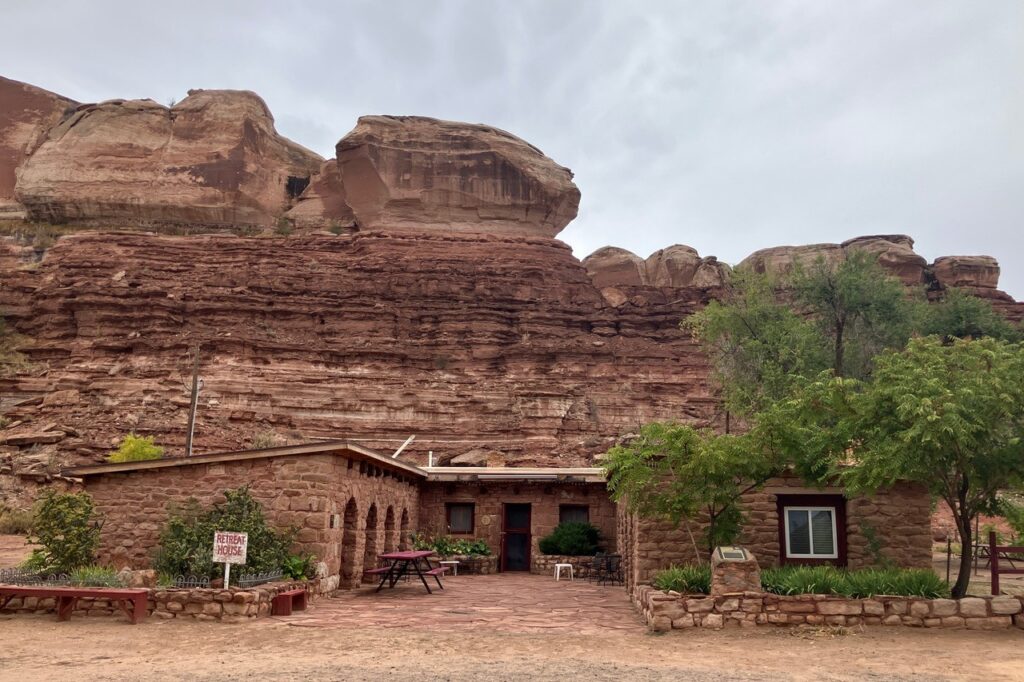
The ministry hub for the Utah Region of the Episcopal church in Navajoland, St. Christopher’s Episcopal Mission hosted the pilgrimage in the retreat center. The 80-acre campus under the San Juan River bluffs includes ten historic buildings, gardens, and orchards. Photo by Myrna Krehbiel.
Community members tend the community garden at St. Christopher’s Episcopal Mission, using sustaining traditions of care for the land. Photo by Stephanie Weaver.
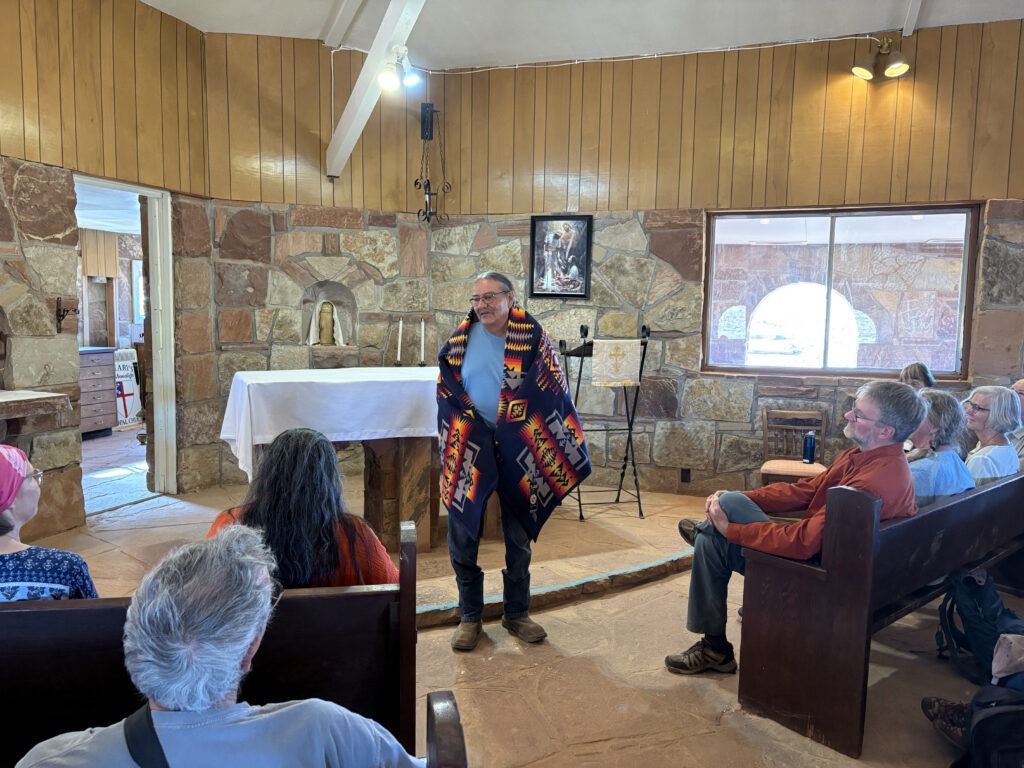
Navajo elder Walter Shorty shared his story with the pilgrims, recounting his experience in Christian boarding school, his grandfather’s role in building St. Christopher’s Episcopal Mission, and his own ongoing stewardship of the site. Photo by Joe Hubbard.

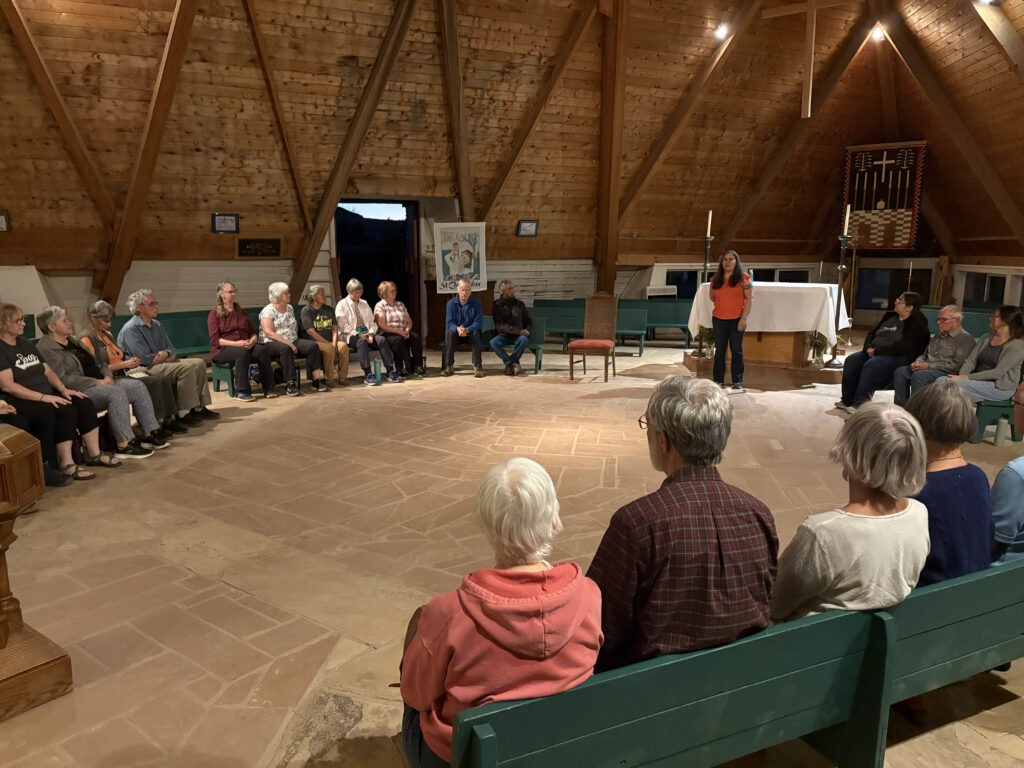
Sarah Augustine leads a workshop for the pilgrims in the chapel at St. Christopher’s Episcopal Mission. Photo by Stephanie Weaver.

Sarah Augustine facilitated workshops in the mission’s chapel, joined by Joe Hubbard in presenting on Indigenous cosmology, the devastating uranium extraction and its lingering pollution, and the Doctrine of Discovery’s enduring impact on modern laws.

In one workshop, elders recounted the trauma of boarding school — forced assimilation into Western Christian culture, stripping away language, religion and traditions. Navajo poet Eirene Hamilton shared poetry (not pictured due to privacy concerns).

Dishwasher

By Eirene Hamilton

The electric dishwasher has been inoperable for about a year, now.
The Maytag wonder had finally croaked,
choked by mineral deposits or circuits fried!
Never minding,
I mix a plastic tub of warm chlorinated water,
sprinkled with a capful bleach.
Roll up my sleeves and looking out the window at the unfolding vernal vegetation,
I rinse the dog licked, slimy bowls,
“Only bleach takes off the slime”, I tell my husband,
whose culture has no qualms
about letting dogs lick bowls of whipped egg residue.
Fondling the plates and cups,
I bathe them in soapy water and rinse them,
and rest them in dish drainer to dry,
in their own time.

Growing up in the desert,
there were no excuses
for girls not doing the dishes!

Our dear Navajo mother, frustrated,
would finally burst out sarcastically,
“Doo hanii łeets’aa’ t’óó ni’góó ninóhnííł da! Bini’dii łééch’ää’í deełnaad!”
“Why don’t you just put the dirty dishes on the floor
and let the dogs lick them clean for you?”
As it was, in our culture, dogs were not even allowed in the house.
So I imagine,
dogs licking dishes were an insult of high degree!

Shibeedí tánágis, tł’óógóó dínísh’îįgo.
I cleanse my precious kitchenware,
bowls that cradled nourishing sustenance and,
I remember Grandmother’s prayers that gave special mention of “beedí,”
precious cooking utensils.
Outside, an easterly breeze tickles pine branches,
the snow has melted, the grass is greening up.

Cleansing one’s dishes must have been a holy ritual.

“Tsx’îîłgo łeets’aa’ ha’naa naanaojeeh.”
“Herd the dishes across the flowing water, quickly!”
The dishes are done!
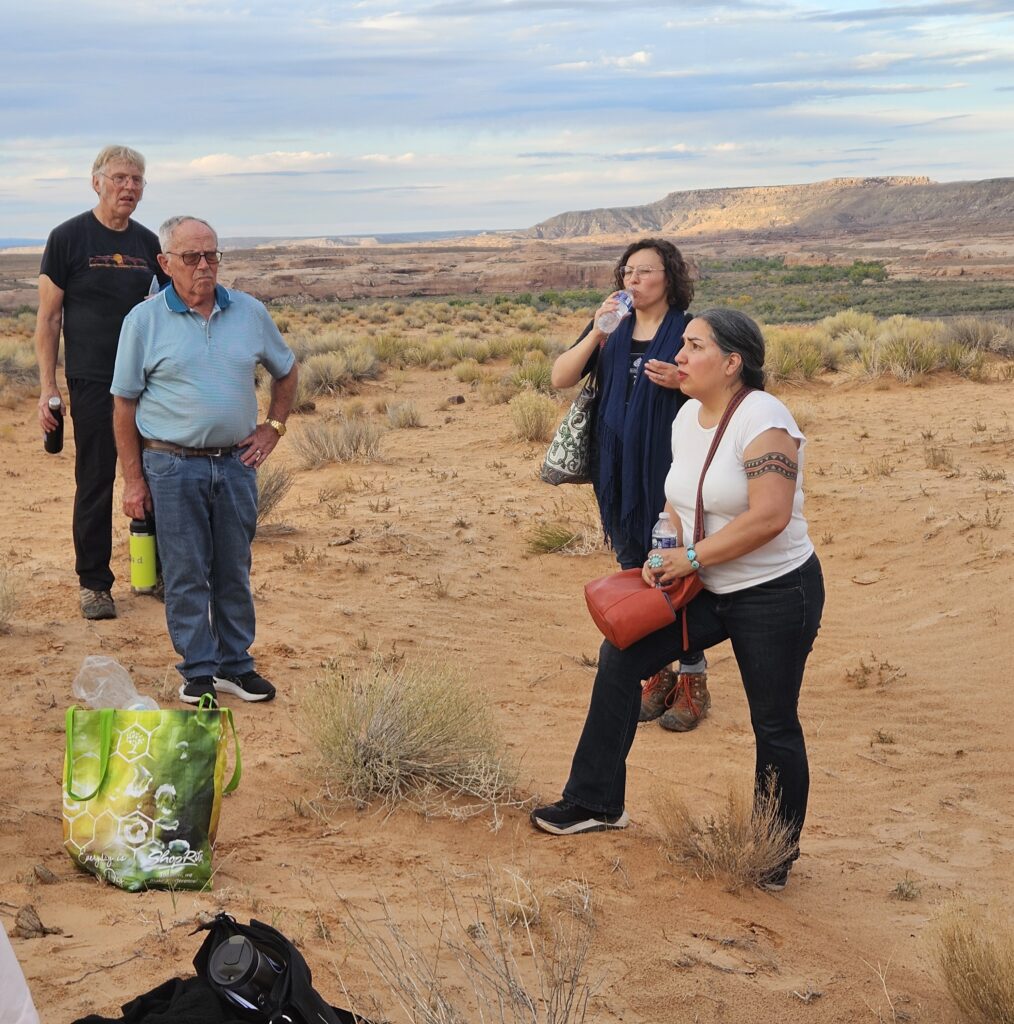
Sarah Augustine pictured with George Fridley, Len Harms, and Amanda Pitman. Photo by Scott Applegate.
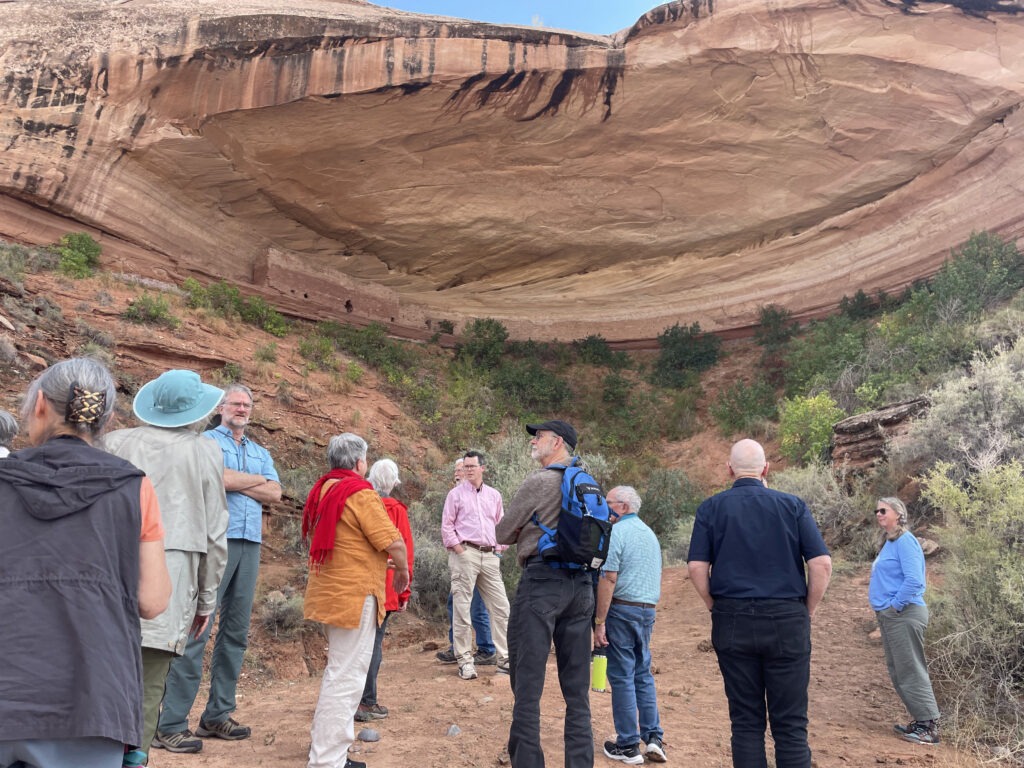
The pilgrims visited a sustainable family farm and toured nearby ancient sites. The farm has been cultivated by the same family for five generations, using Indigenous practices. Photo by Arloa Bontrager.
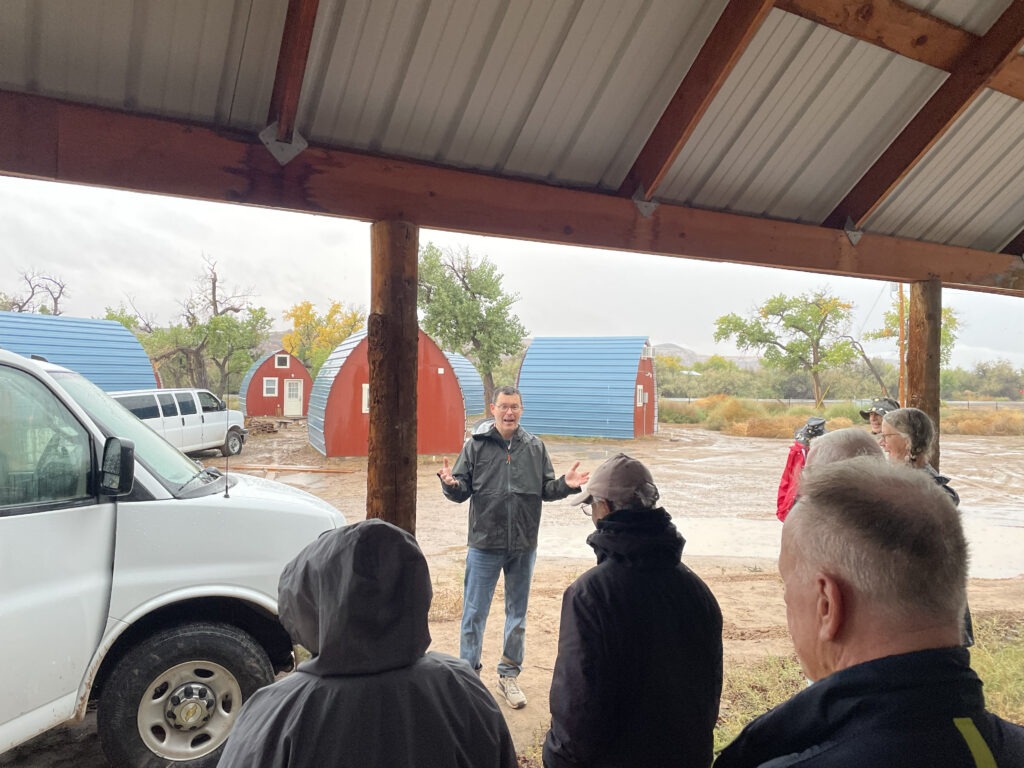
When trying to leave the farm, the pilgrims found that the road was too muddy. Joe Hubbard encouraged them to believe that community would show up to help dislodge the van from the mud. For more on Hubbard’s thoughts on this experience, read his full blog. Photo by Stephanie Weaver.
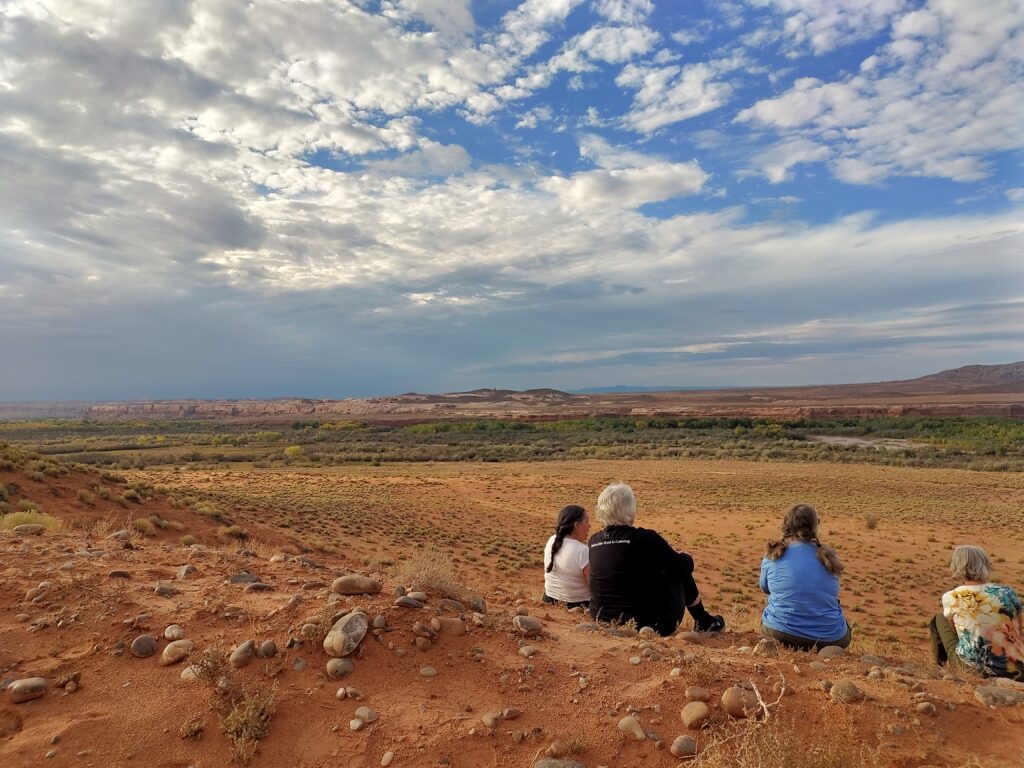
Sarah Augustine and pilgrimage participants discuss learnings from the trip. In the distance, under the river bluff, is St. Christopher’s Episcopal Mission. In between lies the San Juan River and the above-mentioned sustainable farm. Photo by Linda Herr.

Connected workers

Placements