
Emily Keefer is a participant with the Alamosa, Colorado, Mennonite Voluntary Service (MVS) unit. This post has been edited for length, and was originally published on her blog in two parts. Click here to read her blog in full. Mennonite Voluntary Service is a one-year service experience of Mennonite Mission Network for individuals age 20+, with the opportunity for a placement extension for an additional one to two years. Applications for the 2026-27 service term are open! Click here for more information and to apply.
A few months ago, I sat under bright doctor’s office lights, shoulders hunched as I waited in the plastic chair in the corner of the room. I tucked my car keys into my purse; a packet of inconclusive blood tests folded in my hands. I fantasized that someone would come sweep me away, save me from the forms, calls to insurance, and blood pressure cuffs. In The Lord of the Rings, Gandalf tells Frodo that “A wizard is never late, nor is he early; he arrives precisely when he means to.” However, as I sat in the doctor’s office, I began to suspect that my rescuer, my beleaguered wizard, was not arriving, which meant he was never intending to come save me.
I grew up believing in a god who would save me – an interventionist god.
I was raised on a god who bends down into human history and alters things to provide for the people earnestly trying to follow him at great personal cost and suffering. They believe he will provide -and he does! Right in the nick of time.
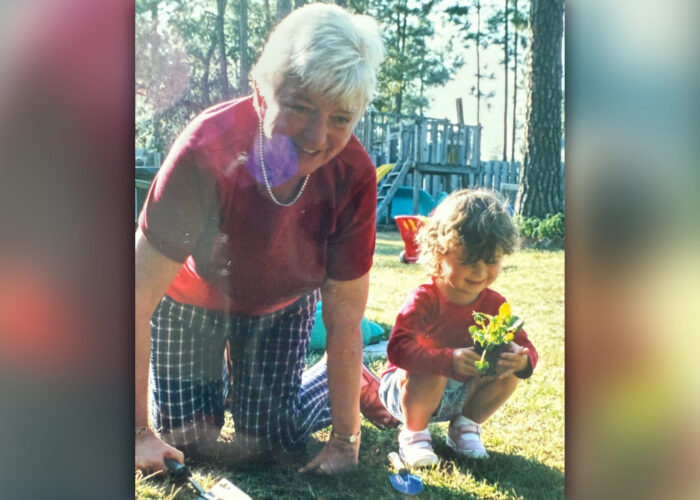
These stories were not confined to books. When I was younger, my cat Tabitha, sleeping on the roof of our car, was flung off the top and into adjacent rice fields along the highway, quite a way from our home. We searched and searched but could not find her. At school that day, the chapel speaker had shared about God’s love, and that God would find a way that day to reveal his love for us. I decided this was the moment, and that God would bring Tabitha home safely.
My parents worried that the likely reality of a dead or missing cat might squelch my faith as I prayed that night. Lo and behold, the next morning, there was Tabitha on the doorstep loudly meowing for food. We were overjoyed, and my parents were shocked by this seemingly miraculous provision, but I was not – I had prayed after all!
As my family moved overseas, I continued to be surrounded by stories of God’s provision, even experiencing some of these moments myself – God seemed to be guiding my family through airport security, medical crises, and transnational moves.
I guess I thought this divine intervention might happen for me now. That God might hear me, might alleviate some suffering. Instead, I sit alone in the doctor’s office. No one knows I’m here.
I’m confronted by the classic question of Theodicy – how do you reconcile the goodness and providence of God with the suffering in the world? It almost feels trite to ask it – how unoriginal.
I want to say to God – why don’t you come down here and see about us? And even as I say that, fist curled up at the sky, I am reminded of the incarnation, and I have to admit that he did come down to see about us. And Jesus had the same question for God as all of us. “Please don’t make me suffer this horrific thing, let this cup pass” and then, “Why have you forsaken me?”
And that awful moment in the garden. His friends asleep. All alone, the noonday sun blotted out. I wonder sometimes if the garden was worse than the cross. At least there were people weeping with him at the cross.
I think about the stories I grew up with, the provisions I’ve received. I come from two families of faithful Christians, people who believed in miracles, in an interventionist God who swoops in at the right time. How did the product of a thousand miracles end up here?
I sink back into my pillow, the lamp beside my bed clicking off. It’s my fourth consecutive day of lying in my bed, between those dusty blue walls. The clothes still on the drying rack. My ability to think beyond two steps is still gone.
James K.A. Smith wrote in his article, “Stop Looking for the Light: Listen to the Dark:”1 “What if, instead of chasing the light, we got curious about the dark? … What if the dark is a door to a different sort of discovery?” He points to the mystics who “testify to the luminosity of the dark.”
“Make your home in this darkness. Stay there as long as you can.”2
Strangely, the PA at the Urgent Care tells me the same thing. No rushing back to work, or trying to step out of the house into that bright Colorado sun. Stay in the dark, stay away from screens, and sleep. Make your home in the darkness and stay as long as you can.
Smith continues, “Something happens in the dark, the mystics attest, that can only happen there… When we are “in the dark,” we lack the mastery and control of knowledge. This vulnerable vertigo of un-knowing, the mystics counsel, harbors the potential for liberation. What we learn in the dark is how to let go.”3
Smith quotes Meister Eckhart, “You’re never closer to God … than when you are in utter darkness and unknowing.”
The concussion left me in utter darkness and unknowing, but even before my unfortunate encounter with a volleyball, I was there. In silence. In the garden. In my blue, blue room. I was like a cicada husk, my sadness had hollowed me out, my ribs weathered and grooved like the canyon walls of Glenwood Springs.
Was this really the place where God was closest to me? I felt like I could only sense a hollow emptiness. In myself, and in any effort to think about God.
As I emerged from the liminal space of my concussion, my mind kept circling back to the idea of an Apophatic God.
Apophatic theology or ‘negative theology’ is a way of speaking about God in negation, or only in terms of what may not be said about God, emphasizing God’s transcendence and unknowability. It pairs with Cataphatic theology which approaches God through a lens of immanence, affirming who God is, i.e. God is Love, or God is Beauty. Both Apophatic and Cataphatic lenses are important components to Christian understandings of God.4
“Paul is plunged into darkness… Only when he rose from the ground, blinded, was he finally able to see God.”
In my book club, we are reading Flourishing on the Edge of Faith. Author Andrew DeCort tells the story of Jacob, who, in wrestling with the angel, “meets a God that he didn’t know and couldn’t name.” In fact, “God refuses to reveal God’s name.”5
Later, when Moses asks God’s name at the burning bush, God replies by naming “Godself in the future tense: I-Shall-Be-Who-I-Shall-Be.” This is a god who cannot be contained or manipulated by human desire. In the ancient world, knowing a god’s name was used to control the god’s power, enabling a human to use the god for their own ends. Yahweh refuses to be contained by this logic. As Bonhoeffer writes, “There can be no point in human life when we can speak of God as our possession… God is always the One who is to come; that is God’s transcendence.”6
I must admit to myself that I, like Jacob, wished to use God for my own desires. And really, who doesn’t? I often fall for this prosperity gospel, that if I am good, and righteous, I will be blessed, I will be protected from harm, and I will always feel God’s presence.
This seems not to be so.
DeCort writes that “In the darkest night of his life, [Jacob] meets a God that he didn’t know and couldn’t name. And it’s this loss of control that sends him limping towards reconciliation with his worst enemy.”7
In the words of a friend, I hear the quiet whisper of God, and a peace falls over me. Maybe I’ve been looking at this all wrong. Maybe I need a more expansive view of God, and a more expansive view of myself. God is not just Gandalf searching for lost kittens on command. I am not just a helpless peon in need of saving. I am not a passive spiritual damsel in distress.
It may be time to practice seeing Christ in myself.
Henri Nouwen writes, “You must believe in the yes that comes back when you ask, ‘Do you love me?’ You must choose this yes even when you don’t experience it.”8
I only have a few more days here in Alamosa. I savor the time I have left in my blue, blue room. I go for a final walk by the Rio Grande, my boots caked in mud. During my time here, I have learned to see God in Mount Blanca, I have learned to feel the pursuit of God from the foxes on the river bank, and I think about God every time I see a raven swooping low over the telephone poles behind my office. I stare into my reflection in the purple hibiscus tea. I am learning to see God here too. To hear the faint echo, the whispered yes, that comes back.
- Stop Looking for the Light: Listen to the Dark ↩︎
- Substack. “Stop Looking for the Light: Listen to the Dark.” Substack, substack.com/@jameskasmith/p-185725549. Accessed 19 Mar. 2026. ↩︎
- Substack. “Stop Looking for the Light: Listen to the Dark.” Substack, substack.com/@jameskasmith/p-185725549. Accessed 19 Mar. 2026. ↩︎
- Nicholas Bunnin and Jiyuan Yu. “The Blackwell Dictionary of Western Philosophy: negative theology”. Blackwell Reference Online. ↩︎
- DeCort, Andrew. Flourishing on the Edge of Faith: Seven Practices for a New We. BitterSweetBooks, 2022, 26. ↩︎
- DeCort, 29, 32. ↩︎
- DeCort, 29. ↩︎
- DeCort, 1. ↩︎