
Through voluntary service with SOOP, Derrell Ness discovered community, friendship and renewed purpose in the vibrant Sonoran desert.
NEWTON, Kansas (Mennonite Mission Network) – After retirement, Derrell Ness wanted to do long-term voluntary service. A remote retreat center in Washington checked all his boxes: a job he was excited about, a home nestled in thick forest, and a nurturing faith community, all on the same property.
Then the mudslide.
Within 24 hours, evacuation orders were given. Everyone needed to leave camp. As the hours ticked by and the roads continued to deteriorate, the decision was made to airlift all the remaining staff out.
“[At the retreat center] I had a well-defined mission and purpose,” recalled Ness in a phone interview. “And I lost it.”
With the retreat center closed for the foreseeable future, Ness had lost his home, job, and faith community all at once. His foreseeable plans had been wiped away in a violent slurry of mud and rock.
As a long-time member of Portland Mennonite Church in Oregon, Ness had heard about the Mennonite Mission Network program SOOP (Service Opportunities with Our Partners). Over the years, fellow congregation members had served in the program at locations around the country. But it wasn’t until a friend mentioned their experience with the Tucson, Arizona, SOOP site that Ness felt the pull to try it out himself.
On a whim, Ness called Stephanie Weaver, intake coordinator for SOOP, and asked what options there were in Tucson for not just voluntary service, but housing during his service term.
“[SOOP] was able to accommodate me on both fronts,” Ness said. “It was a real blessing at the time, because I had a lot of uncertainty as to where I was [after the retreat center]. I didn’t have a plan B in place.”
Most SOOP placements are planned out months in advance, and Ness expressed his gratitude for Weaver and the local service leaders working to bring his service assignment together in mere weeks, from the first phone call to arriving on-site in February.
Some SOOP sites have lodging available, while others accommodate RVs or homestays. In Tucson, most SOOPers live in RVs on the property of Shalom Mennonite Fellowship church. Shalom is also the host church for the Tucson Mennonite Voluntary Service (MVS) unit, and the unit house is on the church property. Like SOOP, MVS is a service program of Mennonite Mission Network. While usually full of MVS participants, the unit house had available space for Ness to stay for the winter/spring season.
Living in such close proximity on the church campus, Tucson SOOPers and MVSers have a long history of sharing life together – early evening pickleball games, standing meal invitations, or just setting up lawn chairs and swapping stories under the bright Arizona stars.
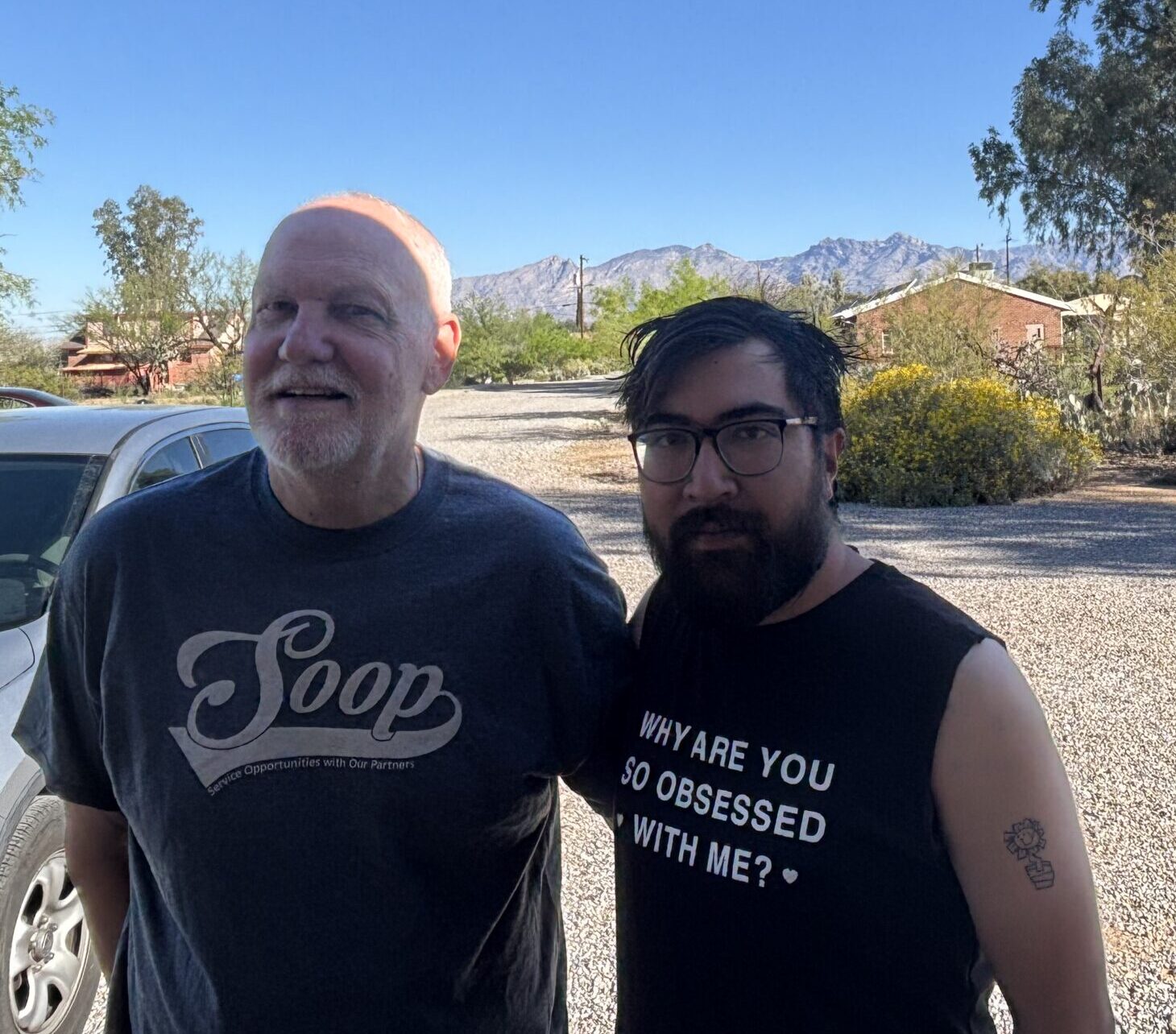
Ness’ living situation would be different, however. He would be living in the MVS unit house, and sharing the more routine aspects of life with a housemate – Juan Witmer, an MVS unit participant serving with CHRPA (Community Home Repair Projects of Arizona).
“[Juan and I] hit it off immediately when I got there,” recalled Ness. “It took five minutes of the Mennonite game to know that I knew his parents and his aunts and uncles and his grandparents because, of course!”
That same evening, Ness was introduced to the other Tucson SOOP volunteers, who were having supper in the church building. They invited him to sit down and eat.
“I was just part of the group within ten minutes after I got out of my car,” he said.
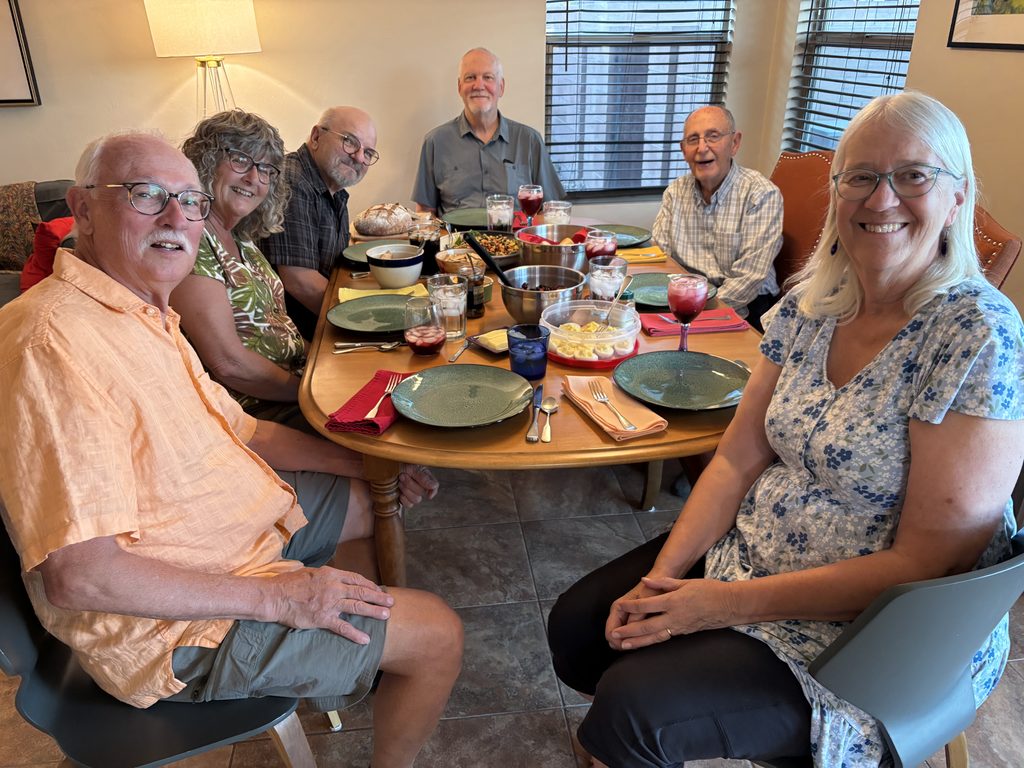
Ness and Witmer usually crossed paths with each other in the evening, after their service placements wrapped up for the day. They cooked independently, but frequently joined the SOOPers for potlucks, game nights, and other activities. Some nights after supper, they’d both stay at the dinner table, swapping stories over ice cream.
Ness recalled that he and Witmer established early on that his role coming into the house wasn’t as a parental figure, or a peer, but to provide, “above anything else, just a listening ear.”
Ness knew how important a listening ear could be. In 2018, his youngest son participated in Service Adventure, another voluntary service program of Mission Network. That experience “changed his life,” said Ness, thanks in no small part to the family in the supporting congregation that helped his son feel at home in a new place.
“One of the things [the Anabaptist] church models so well is intergenerational friendships and relationships,” he said. “I signed up to be a SOOP volunteer and I got a lot more than I signed up for. And I mean that in the best possible way.”
For his first assignment, Ness served with Iskashitaa Refugee Network, a grassroots organization that supports refugees and the broader community through food initiatives and education programs. Ness’ role was to join other volunteers and resettled people in gathering citrus from trees in neighborhoods around the city. Along the way, they would share about their lives and how each person found their way to Tucson.
“It was a very powerful introduction [to SOOP] for me,” said Ness.
His next assignment was with a food bank, where he eventually found himself in the kitchen preparing food for anyone who arrived hungry. With a background of working in commercial kitchens, Ness felt right at home.
“On every kitchen I work in, everywhere I can, I have a sign that says, ‘Food is God’s love made edible,’” said Ness. “That’s my mission, my way to serve.”
Ness plans to stay in Tucson and continue serving, however he can. Time has shaped his perspective on the traumatic events that led him to SOOP. What had been a time of chaos and feeling lost and adrift looks different now, in hindsight.
“I wasn’t lost. I was being led.” he said. “And here I am.”
Your support makes service experiences like Derrell’s possible. Support the Mennonite Mission Network fund today!