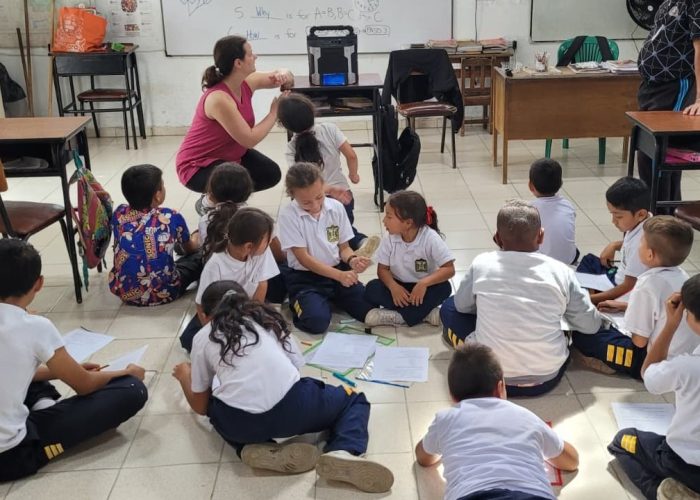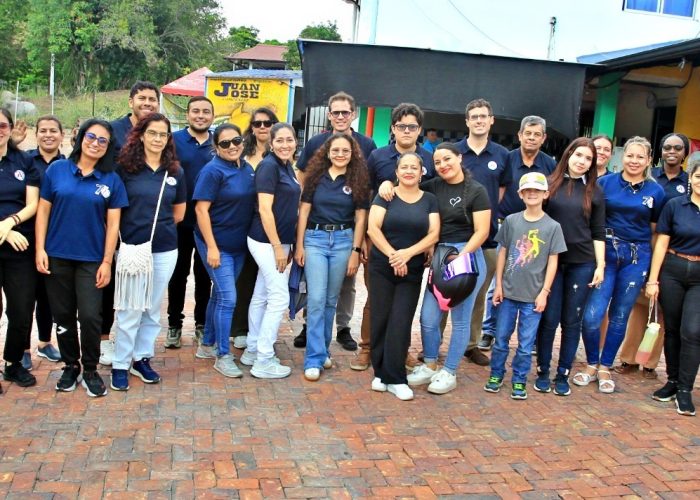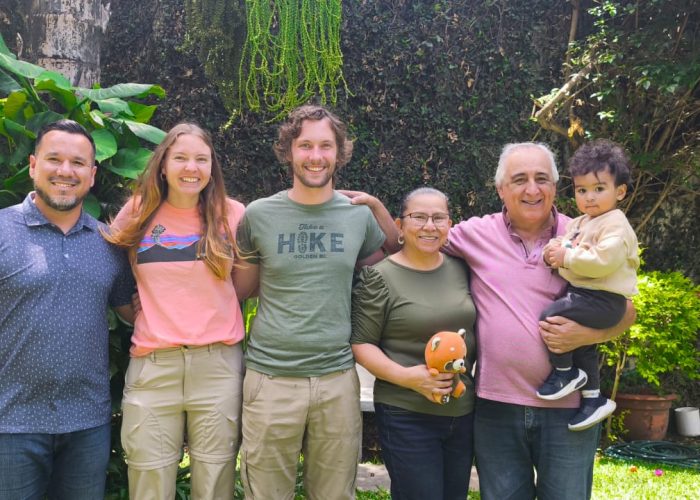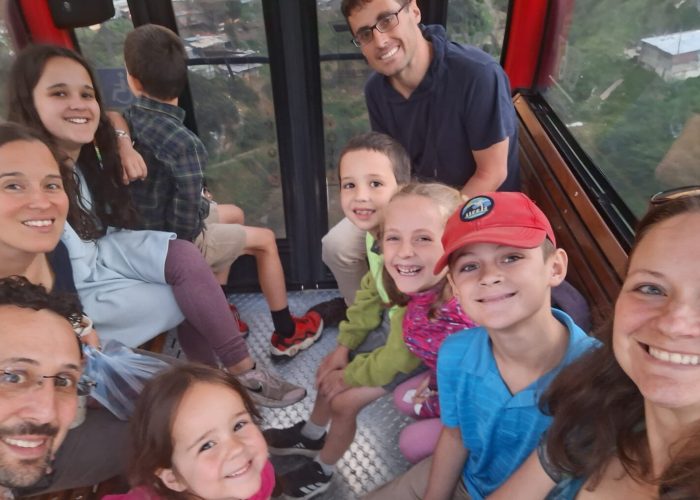
When Laura and Nick Sharp and their children, Jesse and Brielle, arrived in La Mesa, Colombia, to serve through Mennonite Mission Network, they stepped into a new rhythm of life centered around Colegio Americano Menno and Iglesia Cristiana Menonita de Colombia (IMCOL — Colombian Mennonite Church). During their stay, they discovered not only cultural differences, but a deeper sense of family and community that reshaped them.
At the end of each day the family gathered for a simple debrief. They talked about what differences they noticed, what felt cool about being there, and what felt surprisingly familiar. “It seems like the more perspectives you have, the more awareness you have,” Laura reflected. “And so that was neat to do together… deciding, okay, so what should we make note of? What do we want to be sure to add to our blog later? That debriefing as a family was pretty cool.”
The shared newness created a special camaraderie. Coming from something very different, they bonded in ways that everyday life back home rarely allowed. The kids played more together than they did in their larger house in the United States. Parents and children spent far more time with one another because Laura and Nick worked at the same school the children attended. “Here [in the United States] it’s like, okay, you drop them off at school at 8:00, you get home at 6:00. You read for an hour, and then you go to bed. You barely have time to see anybody” Nick explained. “And so that was very priceless for us.”
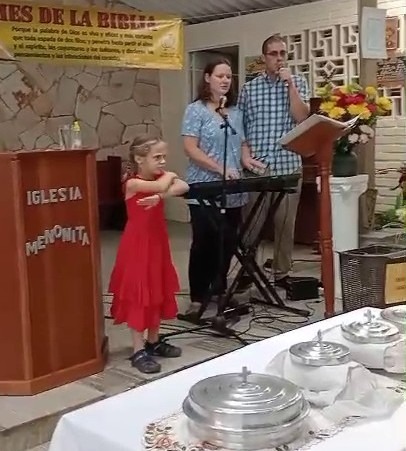
Language learning became a family adventure. Before leaving for Colombia, they had tried to teach the children Spanish, but the kids were not especially interested. Once immersed, the children began picking up more and more. There were moments when Jesse or Brielle caught something their parents missed, and those breakthroughs brought real excitement. Social integration took longer for some than others. Brielle, naturally social, found ways to interact even before she had the language fully. Jesse, more reserved, needed nearly ten months before he began initiating conversations and play on his own. Laura said, “We were about 10 months in, and it was like, ‘Wow, he’s finally talking to people. All right, we made it.’”
The local community and church leaders provided a vital bridge. Pastors and neighbors offered help when the family needed it, and the Sharps were able to offer help in return. That mutual relationship eased the adjustment. Within the family itself, they noticed a pattern: when one person was having a hard day, someone else was usually having a good one, and they could lean on each other. There was also always someone in the wider community to rely on.
Looking back, the parents see clear growth in their children.
Nick said, “Experiencing that, seeing them go through that, and seeing them on the other end coming out like these mature, well-developed, just brilliant children… it’s clear to me that they learned a lot from that trip.”
Jesse even asked for more chores at one point, wanting to feel like a full team player. Small shifts like that revealed how the experience was shaping them into people who noticed needs and wanted to contribute.
The Sharp family’s time in La Mesa illustrates what we often describe as mutual transformation. Serving alongside Colombian partners in education, youth ministry, music and community outreach did not only support the local church and school. It also formed the family itself — deepening relationships, expanding language and cultural awareness, and revealing God’s presence in the ordinary work of living together across difference.
Their story invites others to consider how cross-cultural service, whether short-term or longer-term, can strengthen families and communities while joining God’s work of reconciliation and welcome.