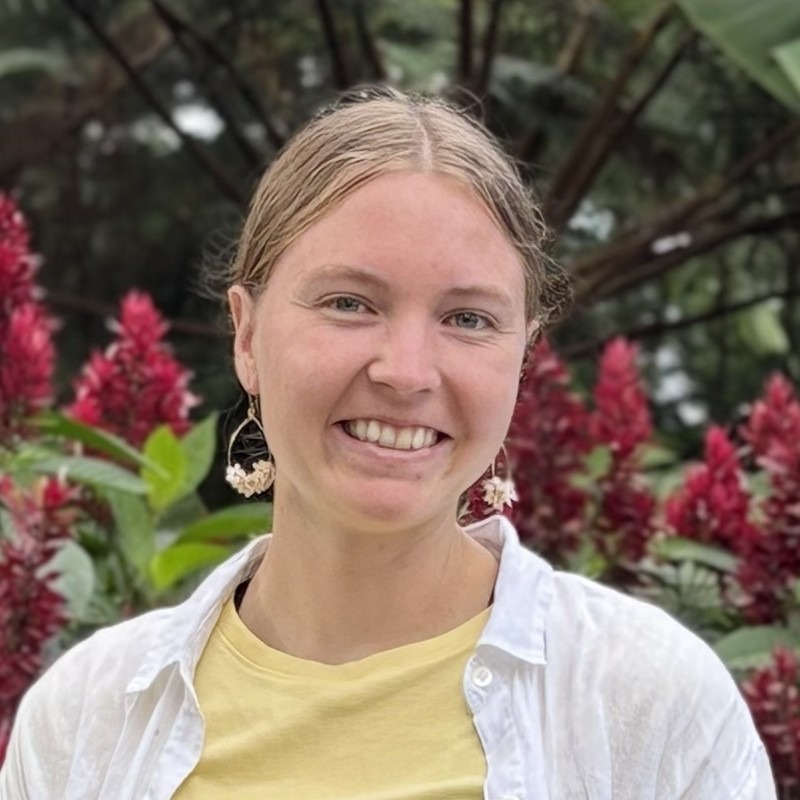
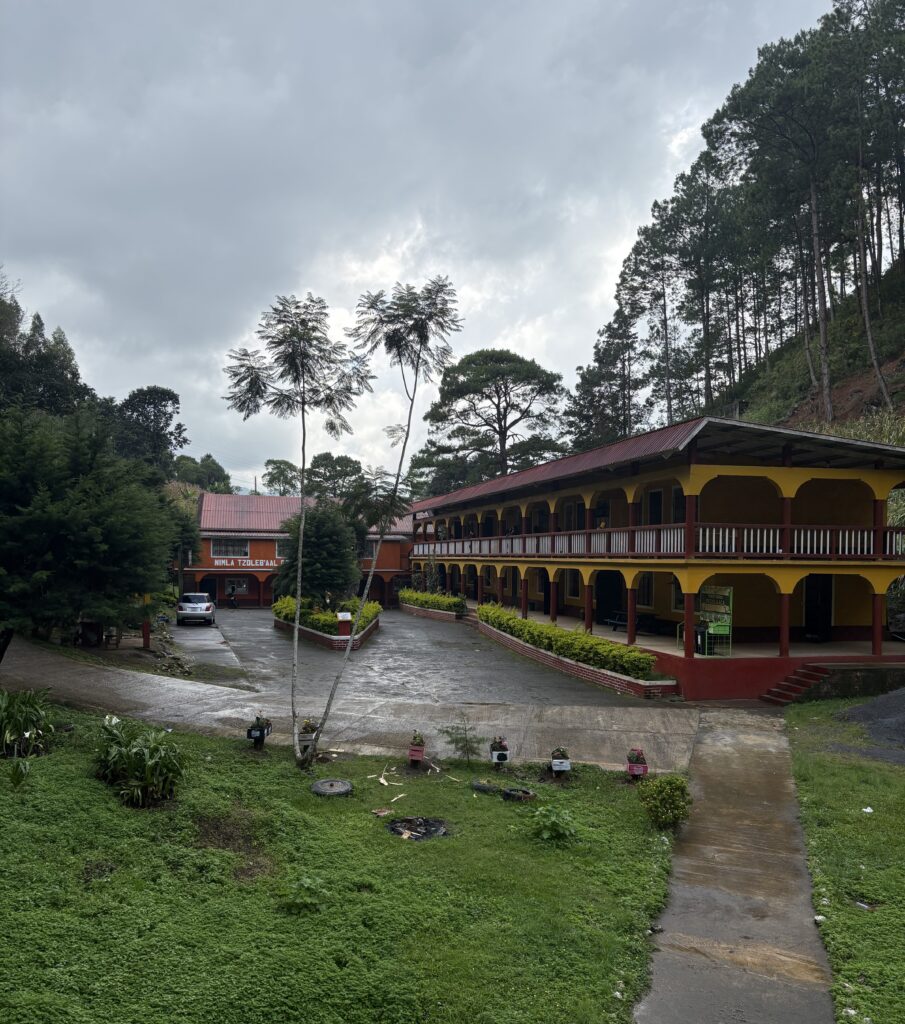
Stephany Rudeen serves at the Q’eqchi’ Bezaleel Mennonite Educational Center, operated by the Q’eqchi’ Mennonite Church near San Pedro Carchá, Guatemala.
As we approach the halfway mark of our service with Mennonite Mission Network in Guatemala, one word comes to mind: gratitude.
I am grateful for everything my husband, Seth, and I have learned. I am grateful for the hospitality and friendship extended to us. I am grateful to serve in a place I already love. And right now, I am especially grateful for the gift of learning a new language.
After three months of intensive Spanish study in Guatemala City, Guatemala, Seth and I moved to San Pedro Carchá, Alta Verapaz, Guatemala, to serve at Q’eqchi’ Bezaleel Mennonite Educational Center. We were initially surprised by how many people here are bilingual. In this rural Q’eqchi’ Maya community, Q’eqchi’ remains the first language for most families, yet Spanish is increasingly woven into daily life. School-age children learn Spanish for the purpose of broadening future work opportunities. As a result, all Bezaleel students are either bilingual or actively becoming so.
Seth and I share that same goal. Yet my role at the school introduced an unexpected twist: a third language for the students.
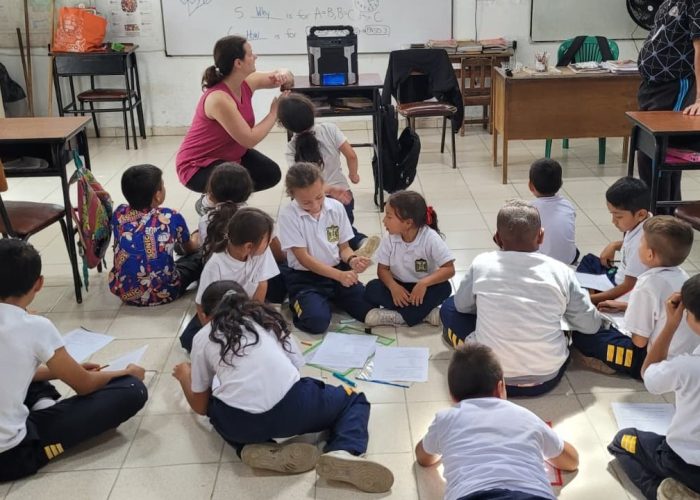
Just before the school year began, the English teacher resigned to pursue a new opportunity. When the replacement felt unprepared to teach English, I stepped in, drawing on my education degree.
The prospect felt intimidating at first. I had no formal experience teaching languages. However, I quickly found my rhythm, and the students have been remarkably patient, forgiving and a genuine joy to teach.
An icebreaker in three languages
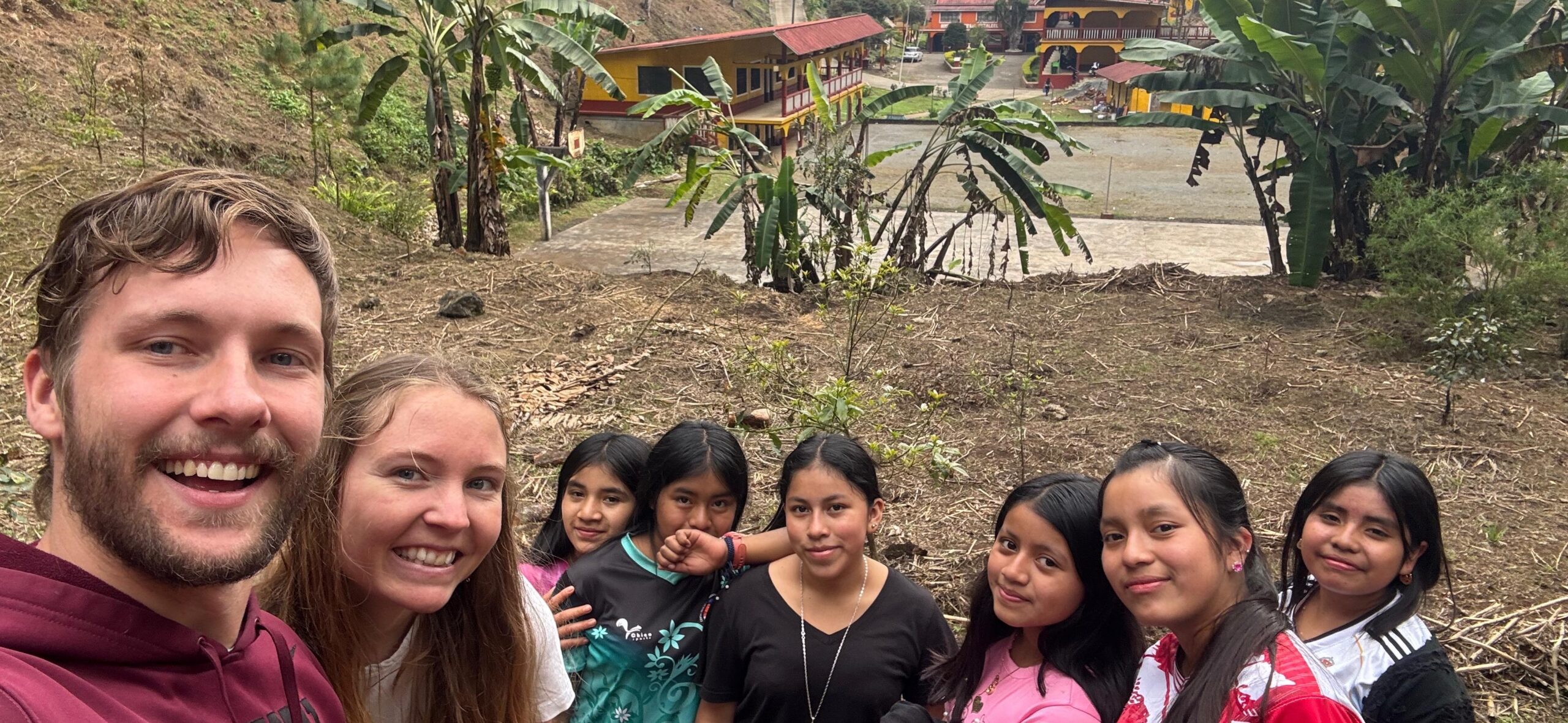
About a week into classes, just as the students were starting to warm up to us, an upperclassman asked if I speak any Q’eqchi’. I sheepishly admitted that I only knew a few words and would love to learn more. Her face lit up. She taught me several key phrases, patiently correcting my pronunciation and repeating the phrases until I remembered them. Other students watched, smiling or giggling as I fumbled with the pronunciation, until I could eventually speak to their satisfaction.
The next day, I opened class by asking, “How are you?” first in English, then, Spanish (“¿Cómo están?”) and finally, in Q’eqchi’ (“Chan xaqwil?” — pronounced roughly “chan sha-KEEL”). Laughter rippled through the room — whether from surprise or my pronunciation, I’m not sure, but the energy shifted. The students sat taller, more engaged. Using their first language as a bridge became the perfect icebreaker.
Since then, language has woven itself into relationship building. Outside the classroom, students love to practice their English greetings with Seth and me — “Good morning!” “Good afternoon!” “How are you?” — sometimes shouting salutations in English across the valley, where the school is located, surrounded by the hills that their families farm. Those echoes warm my heart every time.
On the flip side, when I ask students to teach me a Q’eqchi’ phrase, they often respond with shy pride, writing it carefully in my notebook. It signals that I, too, am a learner and that I value their world.
One student, who helped me early on, later opened up about her siblings who immigrated to the United States and now speak English. She is one of my strongest English students, and that conversation revealed her deeper motivation and family story.
Other teachers have joined in on this language exchange, happily jotting Q’eqchi’ phrases for us, if we return the favor in English. We extend grace, laugh at our mistakes and celebrate small victories together.
These experiences have stirred deep reflection on language and the process of learning:
Learning a language exposes vulnerability, especially when you are conversing with native speakers of that language
It requires courage to speak, accept corrections and stumble publicly. Even so, that very vulnerability draws people closer. It communicates respect for the culture, since language is a culture’s heartbeat, even when the process feels awkward.
It’s healthy to laugh at yourself
At first, I worried the students were laughing at me when I mangled Q’eqchi’. Soon, however, I noticed them slipping English words into Spanish sentences, just to see my surprised reaction. The humor is mutual, and those bursts of shared laughter build unexpected joy.
Approaching another culture with genuine openness unlocks doors
This has been a constant thread during our time in Guatemala. Asking questions, listening attentively and receiving the same graceful curiosity in return has forged meaningful connections.
I don’t know if I will ever speak Q’eqchi’ fluently, but I am deeply grateful for these energetic, gracious teachers, who embrace the journey with me. May the valley at Bezaleel continue echoing three languages as we continue growing in understanding and friendship.