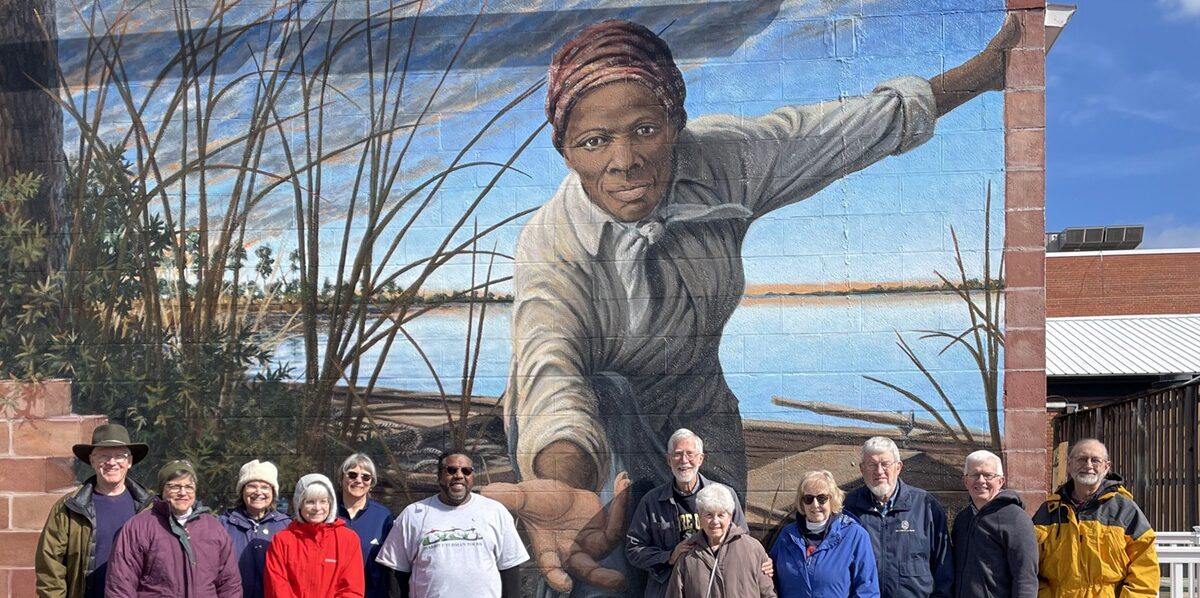
A group from Columbus Mennonite Church recently returned from a transformative Underground Railroad Pilgrimage organized through Mennonite Mission Network. The journey immersed participants in the profound and resilient struggle for freedom waged by enslaved individuals against the brutal system of chattel slavery.
The pilgrimage explored the diverse literal and figurative paths carved out in defiance of oppression. It placed special emphasis on the vital role of faith communities — beacons of courage and compassion — that offered sanctuary, support, and practical aid to freedom seekers. From hidden networks of safe houses to the spiritual strength drawn from shared belief, these communities played an indispensable part in the journey toward emancipation.
“I felt inspired and challenged in my own beliefs that might limit my participation in a modern day underground railroad protecting immigrants by many of the stories that we heard. So, it really was a pilgrimage for me.”
— Julie Hart
The itinerary
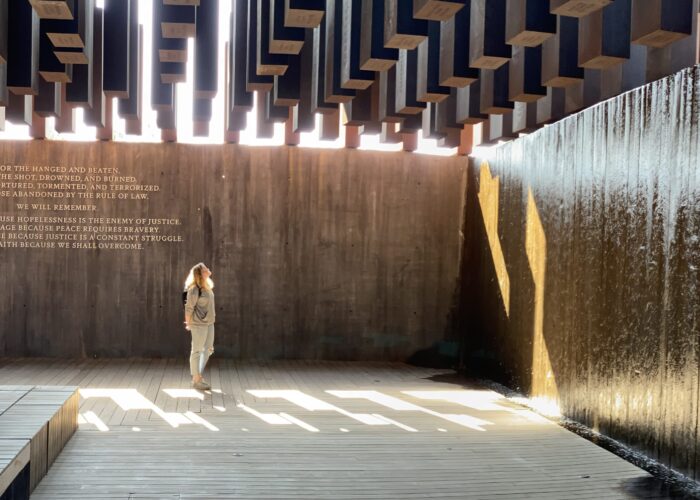
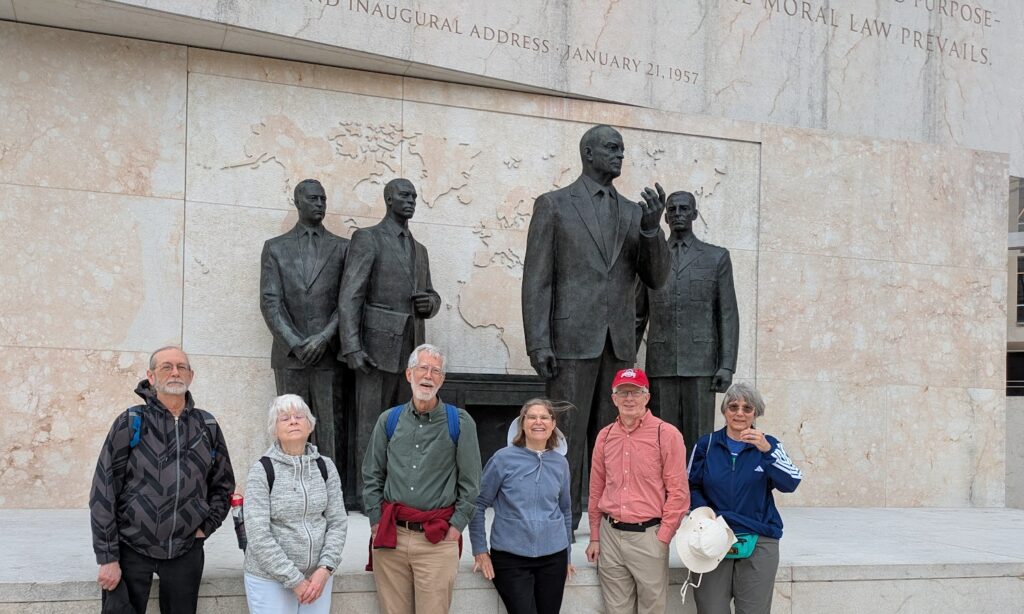
The trip began in Washington, D.C., a city steeped in historical significance. Over the first three days, the group engaged with African American history. They joined American history scholar Dr. Kimberly Schmidt, Eastern Mennonite University professor emerita and past director of the Washington Community Scholars Center, for a walking tour of Georgetown’s African American heritage and another focused on National Mall monuments. Participants also visited the Smithsonian National Museum of African American History and Culture, reflecting on stories of resistance, dignity, and humanity.
From Washington, the pilgrimage continued to Baltimore, Maryland, where the group toured the Frederick Douglass-Isaac Myers Maritime Park and took a self-guided walking tour of Fells Harbor Underground Railroad sites. They also visited Adkins Arboretum for the “Rooted Wisdom” tour, which highlighted nature’s role in the Underground Railroad.
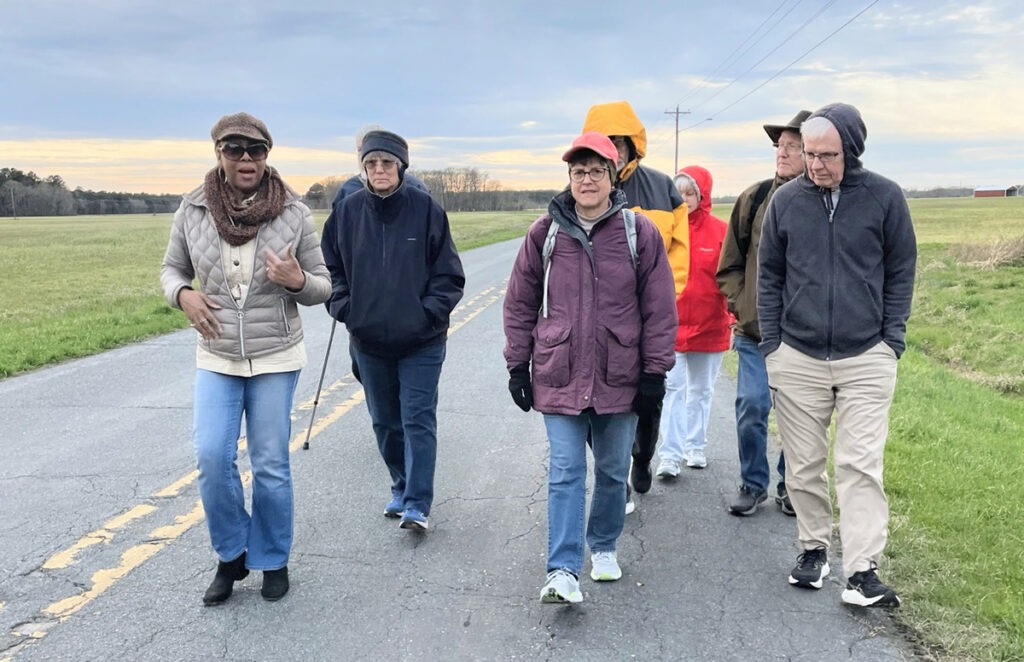
The journey then moved to Cambridge, Maryland, the heart of Harriet Tubman country. Participants explored the Harriet Tubman Underground Railroad State Park, the Harriet Tubman Underground Railroad Center, and the Harriet Tubman Museum and Education Center. These sites brought to life Tubman’s courage and the relentless pursuit of freedom along the Harriet Tubman Byway.
Next, the group traveled to Kennett Square, Pennsylvania, for a tour of the Kennett Underground Railroad Center. This stop illuminated the town’s historic role as a crucial hub for abolitionists and freedom seekers. From there, they drove to Camp Deerpark in Westbrookville, New York — a peaceful Mennonite camp setting — for rest, reflection, and processing the week’s experiences.
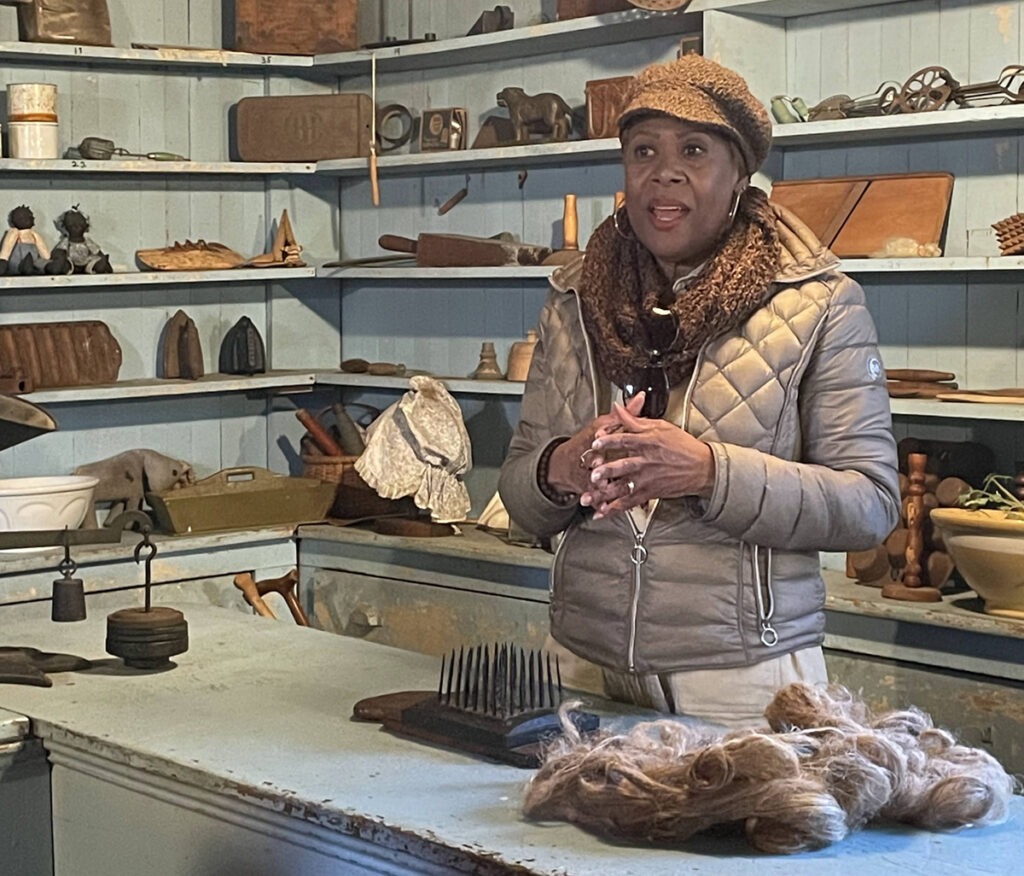
The pilgrimage concluded with an Underground Railroad tour in Troy, New York, led by local historian Joe Paparone, before the group traveled home.
Link to the past
Throughout the journey, participants traced the footsteps of those who risked everything for liberation. They heard from historians and local storytellers and reflected together on the enduring lessons of resilience, solidarity, and faithful witness. The experience connected the legacy of the Underground Railroad to today’s ongoing work for justice and shalom.
As Mennonites committed to peace and justice, the Columbus Mennonite Church group returned with deepened gratitude for the courage of freedom seekers and the faithful communities that supported them. The pilgrimage served as a powerful reminder that the call to discipleship includes confronting systems of oppression and walking in solidarity with all who seek freedom and dignity.