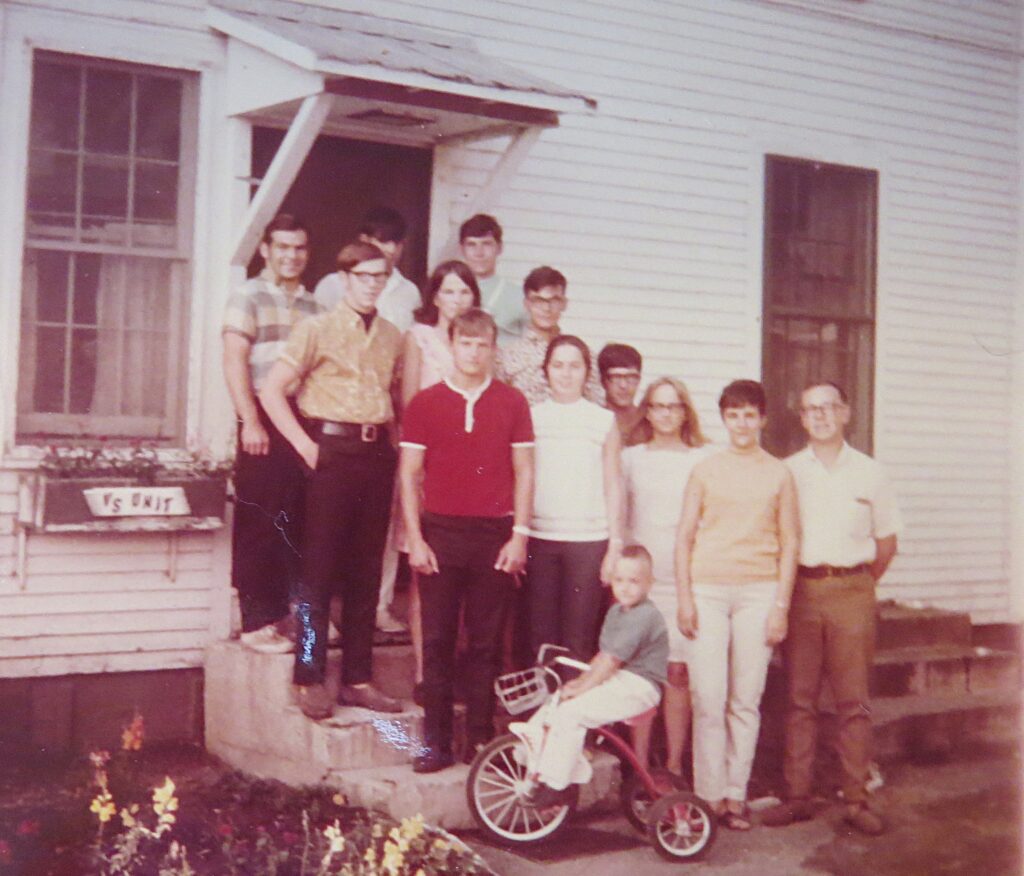
In the late 1960s and early 1970s, while the Vietnam War divided the nation, a remarkable group of young Mennonite volunteers arrived in the hills of Sullivan County, New Hampshire. In waves of 13-15 people, they came for alternative service. What they found in the hospital wings, dorm housing and barn yards was friendships held so dear that, more than fifty years later, the group continues to gather for reunions.
“This was a special group of young Christians who, I hope, made a difference in the lives of those we served. And we continue to love and serve the Lord to this day.”
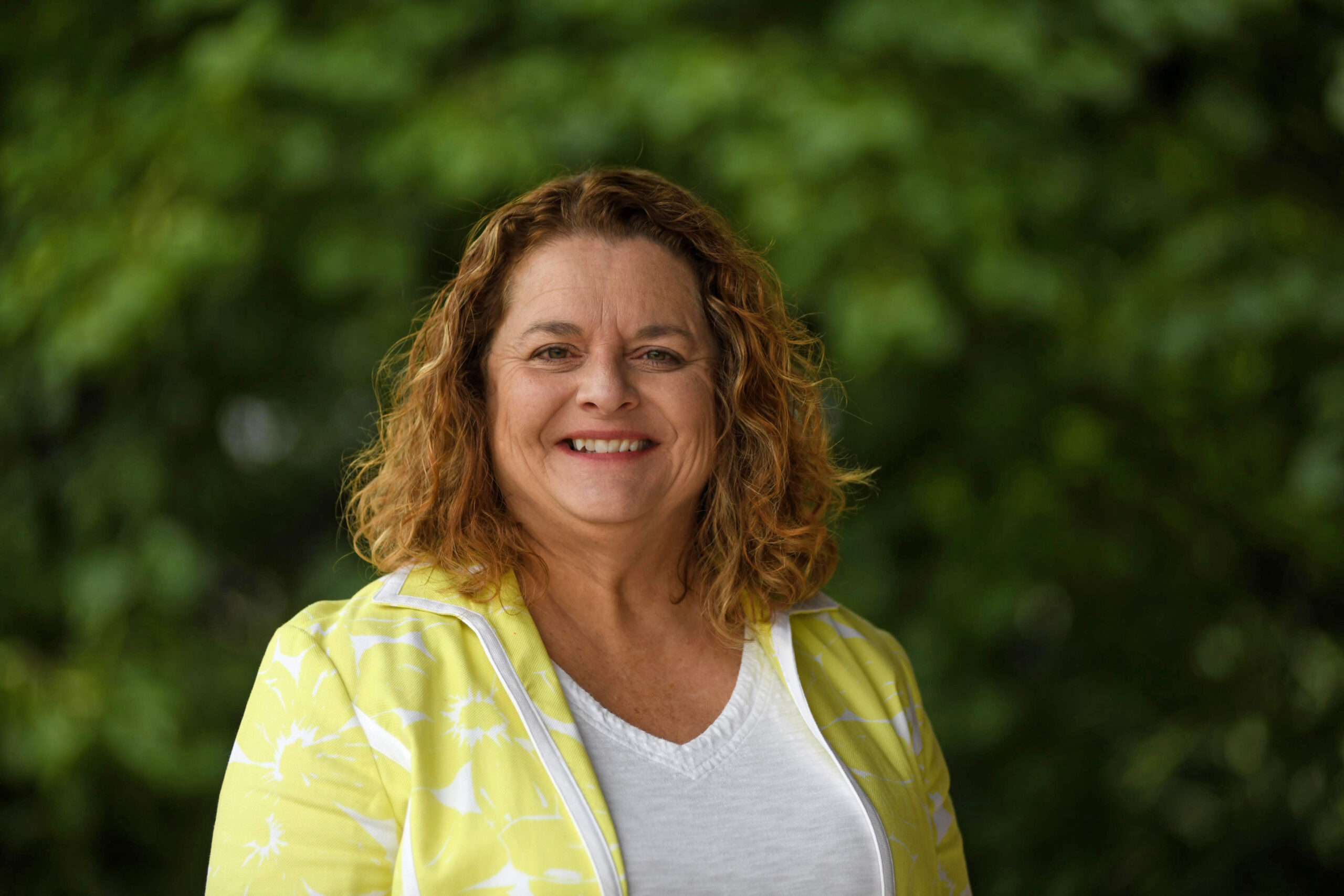
Linda (Eby) Rider, licensed LPN, 1969-70
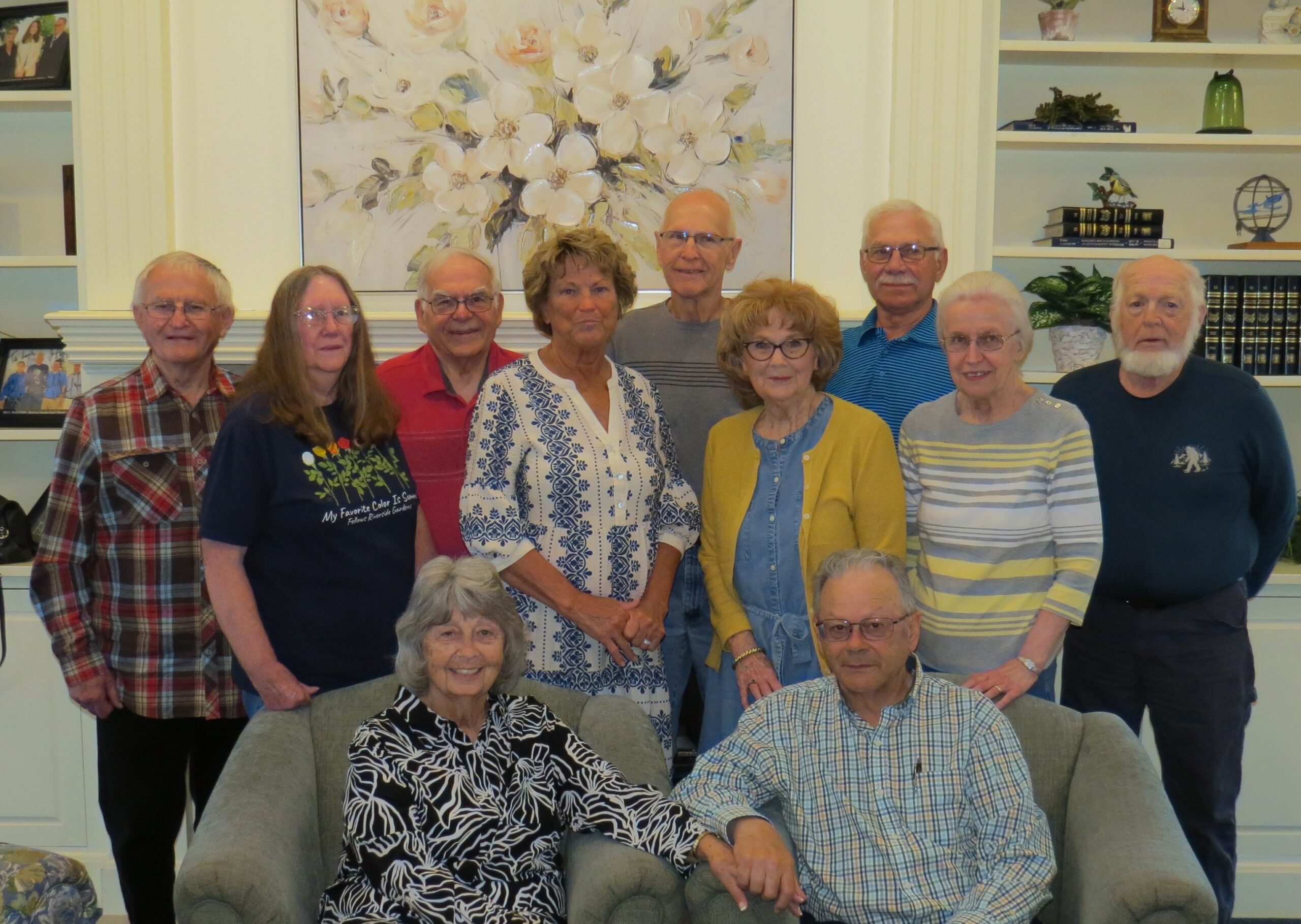
In April 2026, these former service volunteers held a reunion at Das Essenhaus in Middlebury, Indiana. Those in attendance were Allen and Rita (Knepp) Stutzman, Betty (Esch) and Duane Hofstetter, Donald Esch, Earl and Wilma Hofstetter, Linda (Eby) Rider, Roland King, Roland (Butch) and Teresa Seiler, and Wesley Gingrich. Several others who were unable to attend were warmly remembered.
Discovering friends who became family
Far from their homes across the United States and Canada, young Mennonite women and men came to serve at the Sullivan County Home (SCH) — a combination county nursing facility, small county jail, and working farm.
Volunteers arrived after a two-week orientation at Mennonite Board of Missions (MBM) in Elkhart, Indiana. MBM is a predecessor agency of Mennonite Mission Network. Voluntary Service (VS) participants (today, the program is known as Mennonite Voluntary Service-MVS) received a modest monthly stipend of $10-$15, with salaries from SCH directed to MBM. In return, they received dorm-style housing and meals on site. To stretch their resources, the group tended a large garden and purchased chickens and a cow for their use.
“How I got enrolled was a ‘God thing.’ My parents always encouraged me to go into VS. Then, one day, we had a Sunday evening church service hosted by a fellow VSer from Olive Mennonite Church in Elkhart. It was so interesting, I committed that night.”
Linda (Eby) Rider, licensed LPN, 1969-70
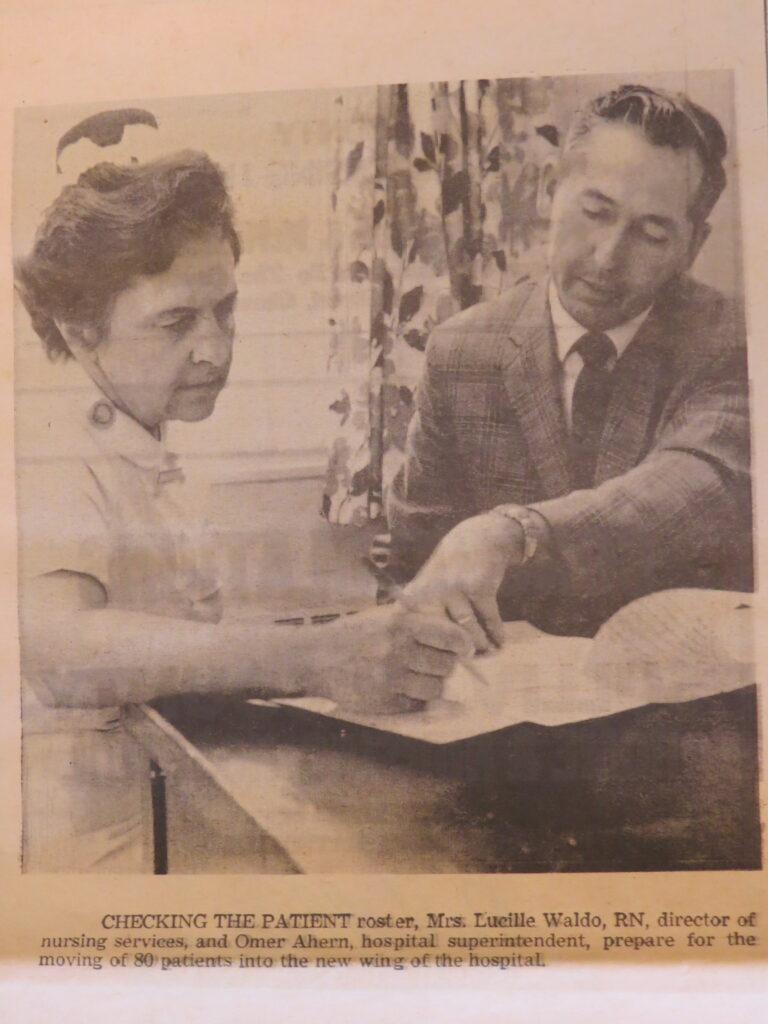
SCH offered residential care for those who could no longer live independently, with basic medical support and daily living assistance. A small jail in the basement housed 15–25 men serving time for minor infractions, such as failure to pay child support. Some of these men worked on the farm alongside the volunteers.
Service in a time of war
Young Mennonite men fulfilling their draft-alternative service as conscientious objectors (COs) typically served two-year terms, while many women served one year. Assignments varied: most worked as nurse aides and orderlies in the nursing home, others in the prison kitchen or on the farm. Duane Hofstetter of Millersburg, Ohio, served from 1969 to 1971 alongside his now wife Betty (Esch). An experienced physical therapist, Duane spent most of his term as an orderly before transitioning to physical therapy aide.
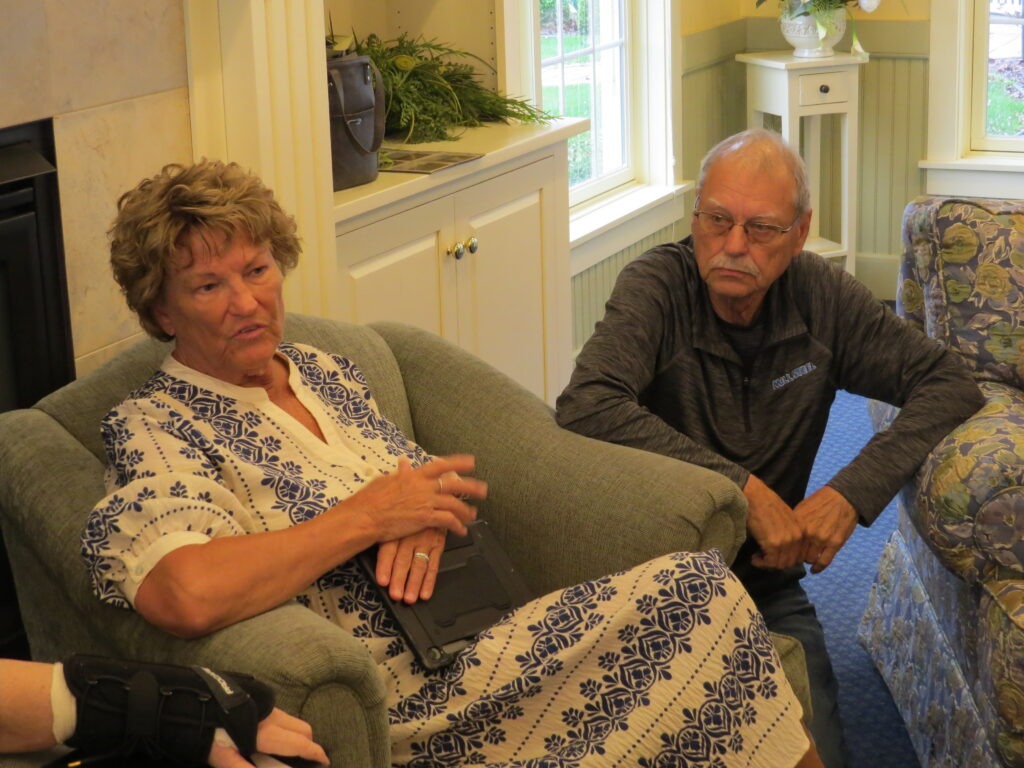
“I wanted to volunteer doing something active to protest the war. The night before orientation, I really wasn’t sure I wanted to go to New Hampshire and work in an elderly care home. After one week, I fell in love with all my patients.”
Rita (Knepp) Stutzman, nurse aid, 1969-71
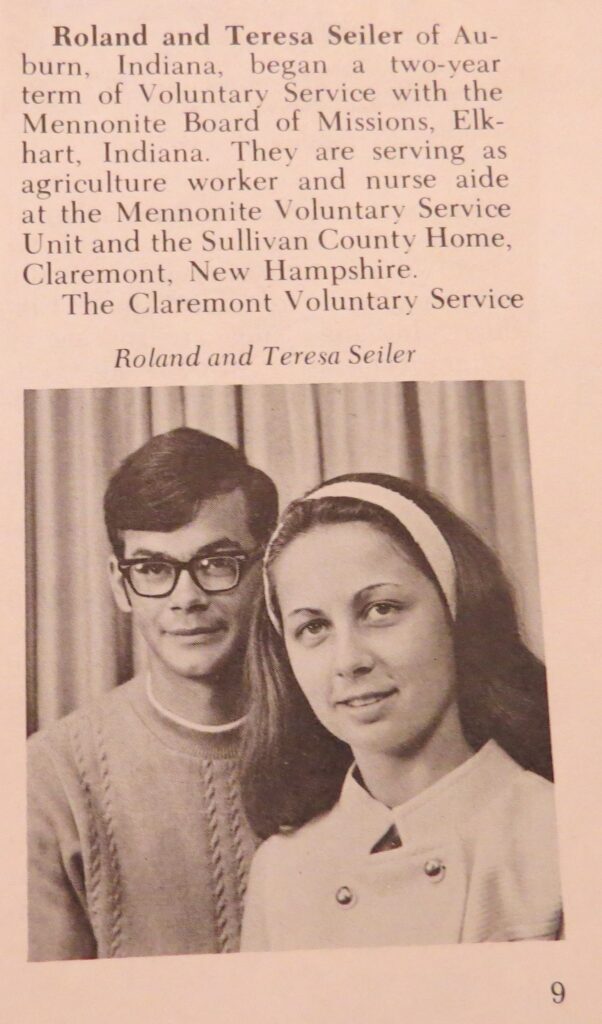
Unit leaders provided steady guidance. Dennis and Fern Clemmer were the first unit leaders beginning in 1967. Sanford and Gloria Bender, who arrived with their three-year-old son Jim, served second. They were followed by Roland (Butch) and Teresa Seiler. Butch, who had not grown up on a farm, quickly learned to care for the animals (his first time castrating pigs is a good story), grow and preserve food, and manage overall operations to help feed both volunteers and residents.
“As houseparents, I had the privilege of working in nearly every volunteer position in the unit. One of my most meaningful highlights was taking trusted prisoners to AA meetings on Sunday evenings using a county vehicle.”
Sanford Bender, unit leader, 1968-69
Faith, fellowship and simple joys
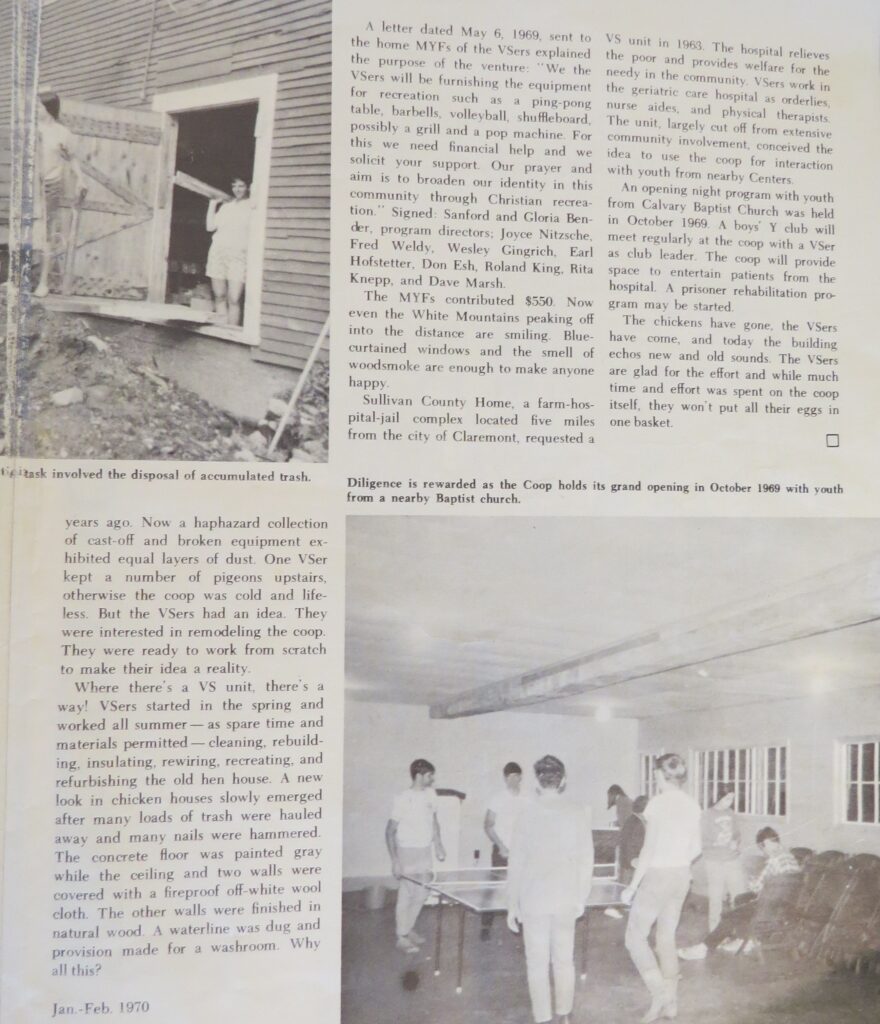
Life in rural New Hampshire offered limited entertainment, so the groups created their own. They attended free Dartmouth College hockey games, skied, sledded, hiked Mount Washington, played music, and sang together. Recreation was simple, low-cost, and shared.
“For fun we did snow skiing and hiking outings, trips to the ocean and mountains. Some of the group played guitar and sang together during free time.”
Roland King, orderly, 1968-70
With no Mennonite congregation in the area, the unit found a warm welcome at Calvary Baptist Church in nearby Claremont. Although a few awkward moments occasionally surfaced when the congregation and other local residents with family members in the military met the peaceful Mennonite conscientious objectors.
At the church they participated in the choir, Sunday school, summer baseball team, and worked with the youth group. Mennonite pastor Ken Benner from Chester, Vermont — about an hour away — provided vital spiritual oversight. He and his wife Anna Mary visited the unit monthly for supper, fellowship and Bible study. When possible, VSers traveled to Chester for worship.
A bond that endures
For reasons the participants still struggle to fully articulate, their unit developed an unusually strong connection. The VSers generally agree that all of them coming from Mennonite families made living and working together with strangers fairly easy.
“The unit was like a family away from home. We all came from rural Mennonite families, so it was easy to get to know each other and live together.”
Betty Hofstetter, VS participant 1969-71
What started as reunions every five years soon became every three years, then every other year. Now mostly in their seventies, the group remains deeply grateful for these friendships.
Over the years, they have continued sharing prayer concerns, celebrating life milestones, and watching their children and grandchildren grow. Reunions are mostly held at each others’ homes. The first one featured a hog roast hosted by Butch and Teresa in 1974.
The group expressed what a powerful experience it was for them living without money, growing their food and serving without a reward. They highly recommend this experience for all young adults.
Several members went on to do additional service throughout their lives, both domestic and international. Three members fostered children, another three hosted international students, and one even created a bicycle cooperative in his community.
“God has certainly blessed us by keeping us together for well over 50 years. We’ll see what the future holds.”
Duane Hofstetter, orderly and physical therapist, 1969-71
These volunteers came to New Hampshire as young adults seeking to serve. They left with far more — lifelong friendships, deepened faith, and memories of simple, faithful obedience in a rural corner of New England. Their story stands as a powerful reminder of how God can weave lasting bonds from shared service, even across decades and distances.