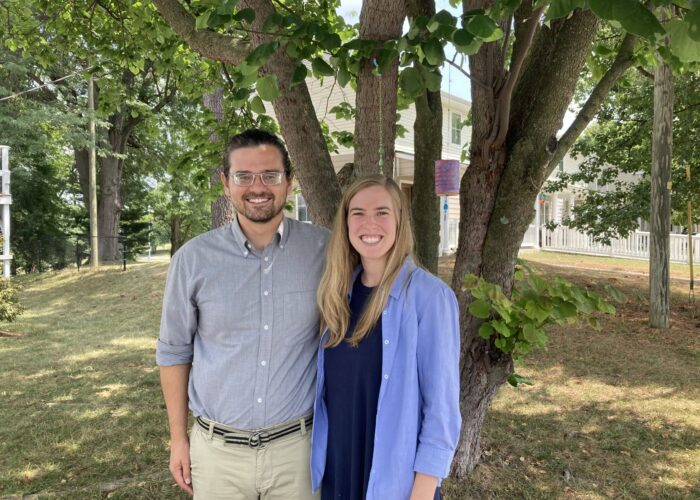
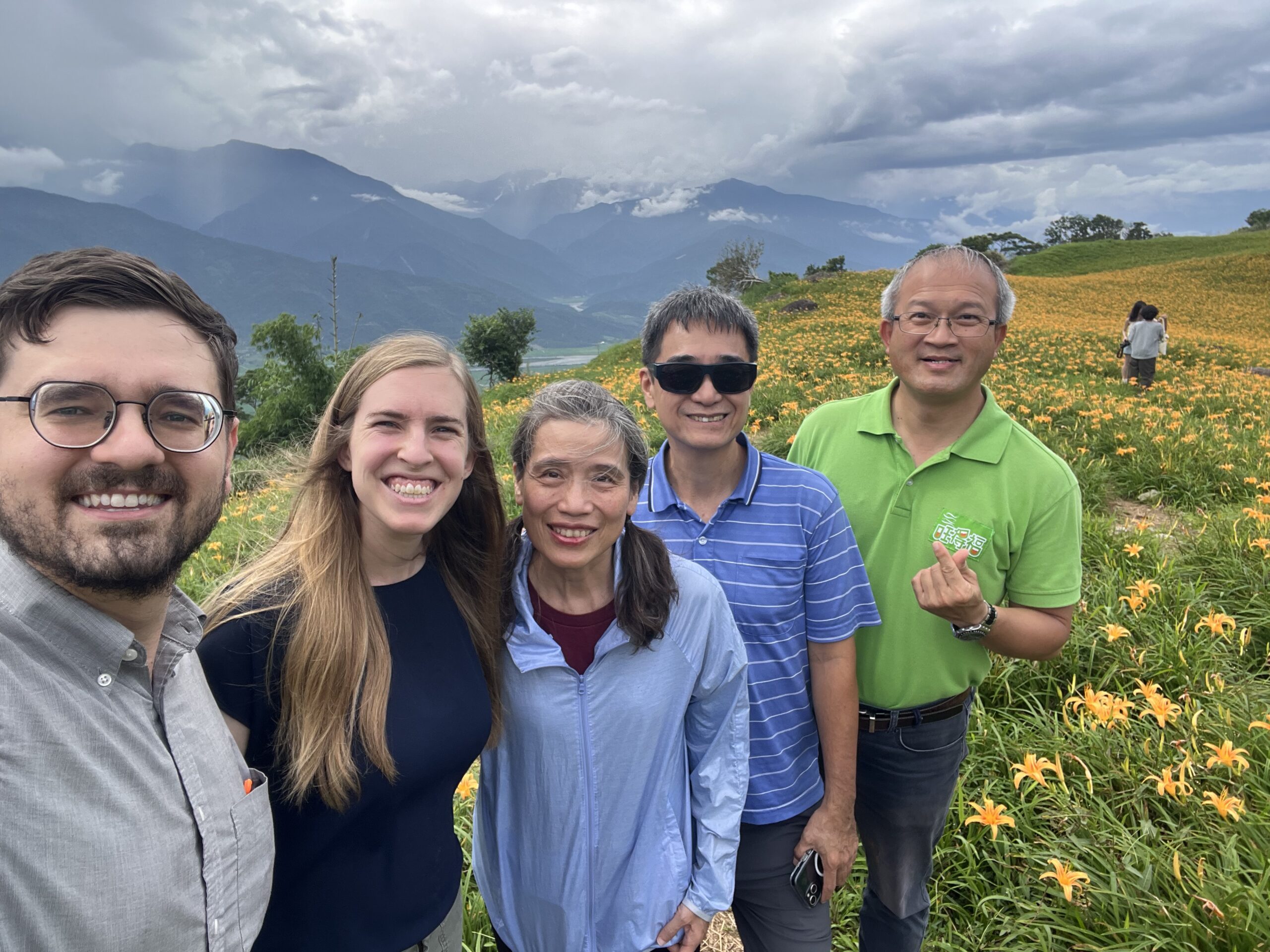
Caleb and Stephanie Schrock-Hurst are Mennonite Mission Network workers serving with Mennonite Christian Hospital (MCH) in Hualien, Taiwan. Established in 1948, MCH is the largest Mennonite hospital in the world and a major regional teaching hospital, with over 500 beds and 1,000 staff. This ministry update was first posted to their blog. It has been edited here for length. To receive newsletter updates and support Caleb and Stephanie’s work, click here.
Things here have been a real whirlwind since June but have started to settle down a bit in the last few weeks.
Recently Steph and I have: hosted guests from Anabaptist Mennonite Biblical Seminary (AMBS) and Mission Network; attended Northeast Asian Regional Peacebuilding Institute (NARPI) and the Fellowship of Mennonite Churches in Taiwan (FOMCIT) pastor’s retreat; and, in the span of 10 days, given four different presentations — one history presentation, two three-hour seminars, and a sermon, my first ever in Mandarin.
Guests
We were very lucky to help host David and Shana Boshart for about ten days in July. David is the President of Anabaptist Mennonite Biblical Seminary (AMBS) and takes a few international trips a year to connect with global Mennonite churches. For the last few days of the trip they were joined by Andi Santoso, Mission Network’s regional director for Asia and Middle East, and Marisa Smucker, Mission Network’s executive director.
It’s a bit cliche but we realized how much we’ve learned here in Taiwan by hosting guests. Though our Mandarin is kilometers from fluent, we were able to hold our own in many things and help everyone navigate through a number of cultural and logistical hurdles.
David and Shana were up for us to teach them one Mandarin phrase a day — highlights include 你好 (nì hǎo) (hello), 謝謝 (xìe xìe) (thank you), 好吃 (hǎo chī) (good eat, aka, this is delicious), and 吃飽了(chī bào leI) (I’m full). Vocab should help indicate that we ate a lot while they were here! Large banquets, preferably of seafood, around tables are the go-to ‘nice’ dinner; we and our guests were treated to them frequently.
NARPI
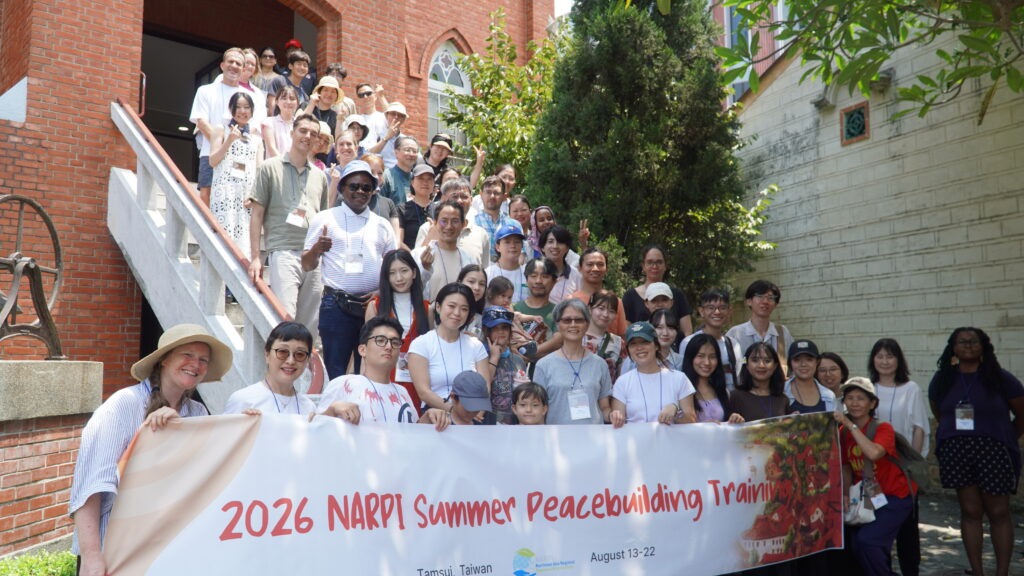
NARPI promotes peace throughout northeast Asia by creating space for learning, peacebuilding and networking peace-loving people together. Every year, NARPI hosts a Summer Peacebuilding Training in August. The training begins with an introductory ‘field trip’ focused on the history of the host country before the ‘class week,’ which is more academic focused and less country-specific. This year, the course was hosted in Taiwan, which was a real boon for us.
This was an exciting chance to connect with Mennonite and Mennonite-adjacent spaces across the region, and ten days in Taipei was also an exciting prospect. Ties into the Mennonite-world varied greatly — Jay Young Lee and Karen Spicher are Mission Network associates and worked in the creation of NARPI. We found out that they’re also Eastern Mennonite University (Virginia) grads like Steph and me (they both graduated from the Center for Justice and Peacebuilding). Other attendees had only heard of Mennonites because Mission Network is a yearly sponsor of the event.
Our classes were quite informative, but what stuck with us most from the event was definitely the community. There were around 60 attendees from around 10 countries; truly amazing peace advocates from a very wide variety of personal and professional settings. It was very meaningful to talk about peace and reconciliation in such an international gathering, with China, India, Japan, Mongolia, South Korea, Taiwan and a variety of other countries represented.
Two seminars
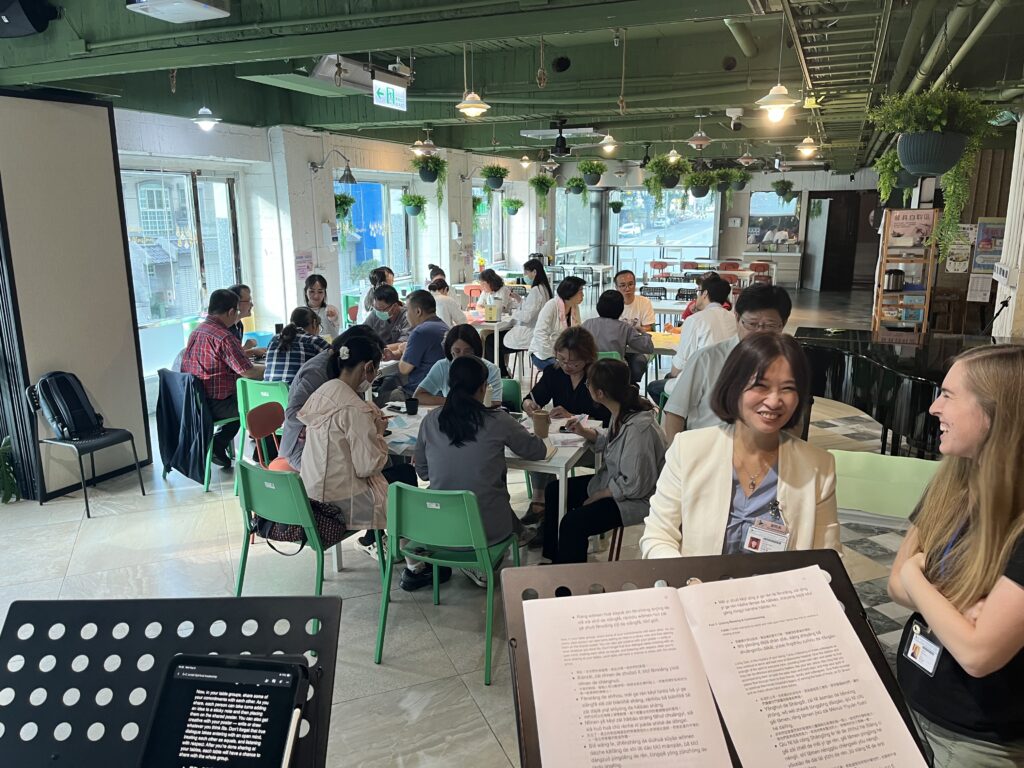
Within a week, we delivered two seminars entirely in Mandarin (aka — we read off our notes, looking up occasionally. Not our finest public-speaking performances, but progress is progress).
The first presentation we gave was on Mennonite history and theology for interested members of the five nearby Mennonite churches. Nearly 60 people attended and it led to a lot of lively and meaningful discussions.
Knowledge of Mennonite history varies significantly — some people are quite knowledgeable, and others have recently joined Mennonite churches and almost everything is still new (particularly for folks who are new to Christianity entirely).
This is a big interest of mine, and having discussions like this with Taiwanese Christians, to know what pieces of Anabaptism make sense culturally and what is more challenging, remains fascinating.
The second seminar was on spiritual leadership in a hospital setting; the seminar was developed and first delivered by David and Shana when they visited. Their expertise as pastors and institutional leaders provided great insight into how leaders can equip their staff to grow even in hectic and stressful professional environments. It was a fun challenge for us to translate and supplement their presentation and make the training available for another 25 staff members. Thanks to David and Shana for letting us adapt it and share it.
First sermon
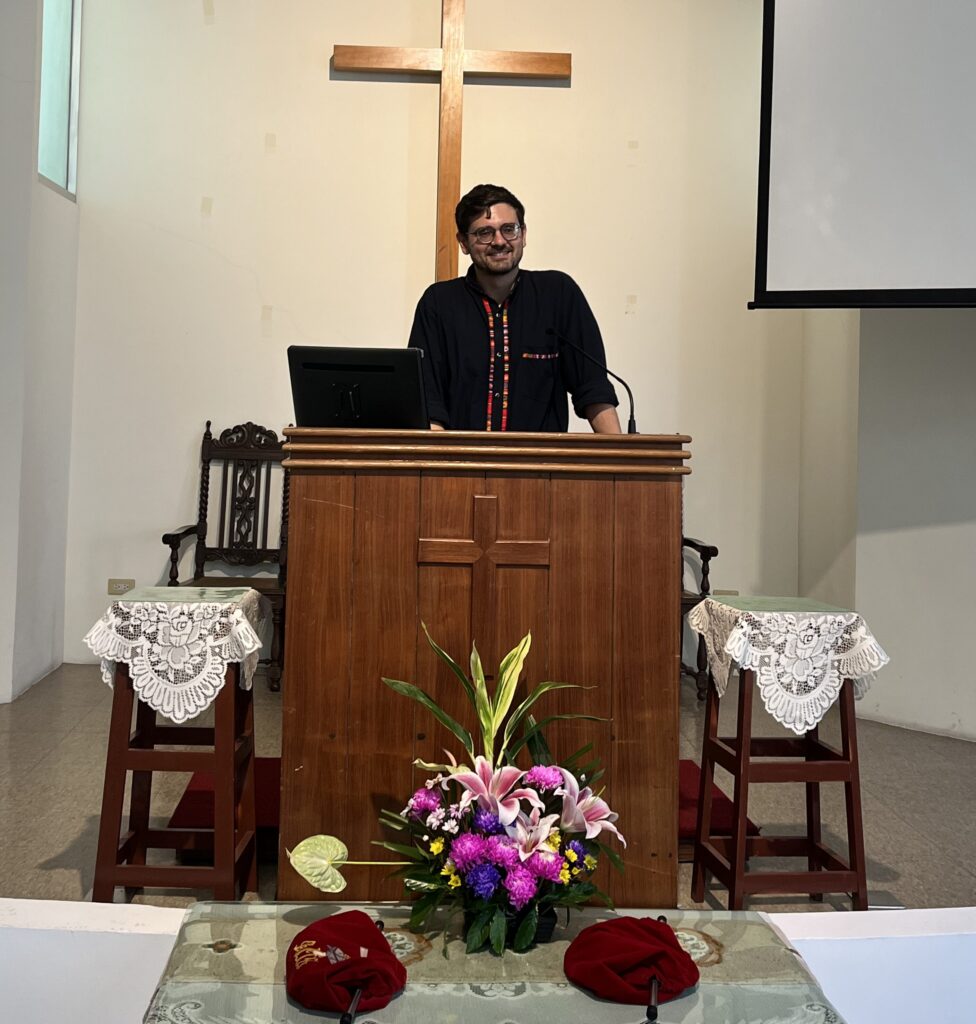
My first sermon in Mandarin was the Sunday after these two training sessions. It focused on Philippians 4 — staying joyful in the midst of hardship. Does anyone know of any stressful global events currently ongoing?
My first mistake was thinking that if I just wrote a sermon in English, translated it (with the significant assistance of AI) into Mandarin, and delivered it, it would be about the right length. I’m pretty locked in on six-pages single space English being the perfect 19-minute modern Anabaptist sermon, so I polished that, and translated for two days.
When I ran through it in Mandarin on Thursday evening — shock, horror — it took me almost an hour.
I had not budgeted for this and was faced with the daunting task of cutting down a sermon on a tight clock — which I generally find impossible, as I’ve already cut a lot of meat by this stage of the process — with the added interface of editing in a second language.
In the end I did it and only preached for about 25 minutes — and sermons here tend to be about that length, so I think that was fine — but it was an arduous process!
Language study
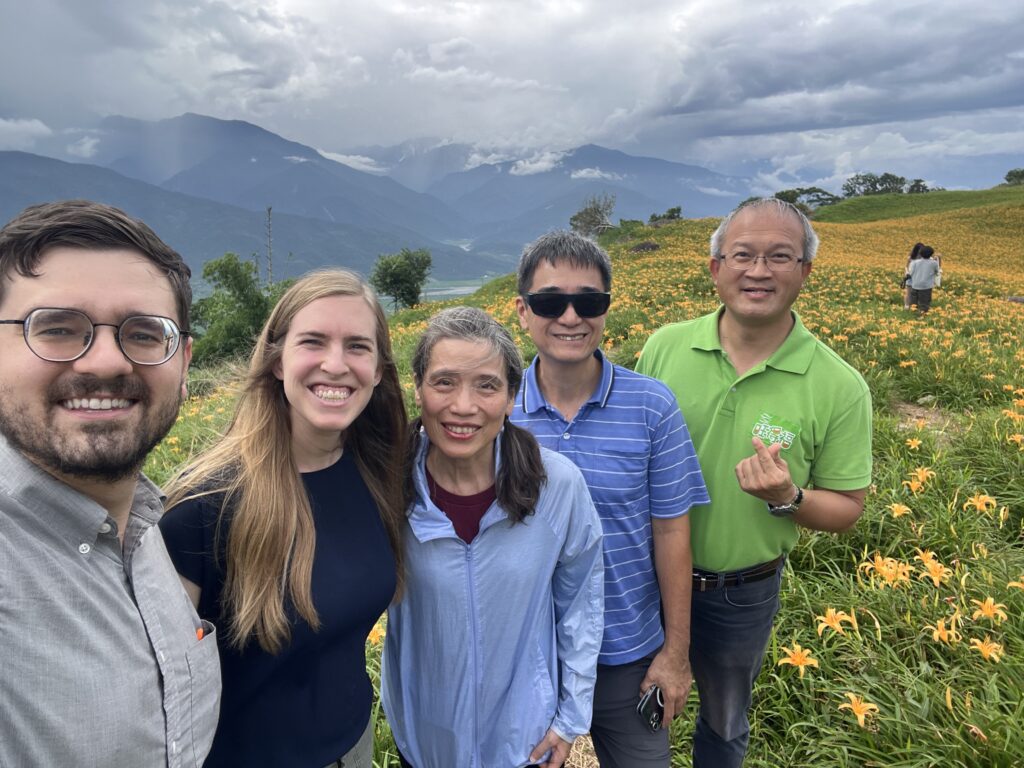
We continue to make progress but also find progress hard. We’re both firmly on the intermediate plateau, so new milestones and goals are becoming a bit harder to come by; most days or weeks we don’t really feel like we’re making progress, but when we remember we’ve only been here less than eight months we have plenty to be proud of. I am having trouble with listening, but Steph’s listening is way ahead of mine. I’m more comfortable speaking than her, though — and this means a common situation is the two of us having a conversation with a colleague where they speak in Mandarin, Steph translates that into English for me, and then I respond to them in Mandarin. Such is life.
Okay — plenty more I could say about the last few months, but I’ll leave it there. We’re doing well and enjoying life; we hope the same is true for you.
Caleb and Stephanie play a pivotal role in rebuilding the relationship between Mission Network and MCH in a holistic witness and people-to-people exchange program. To receive newsletter updates and support their work, click here.