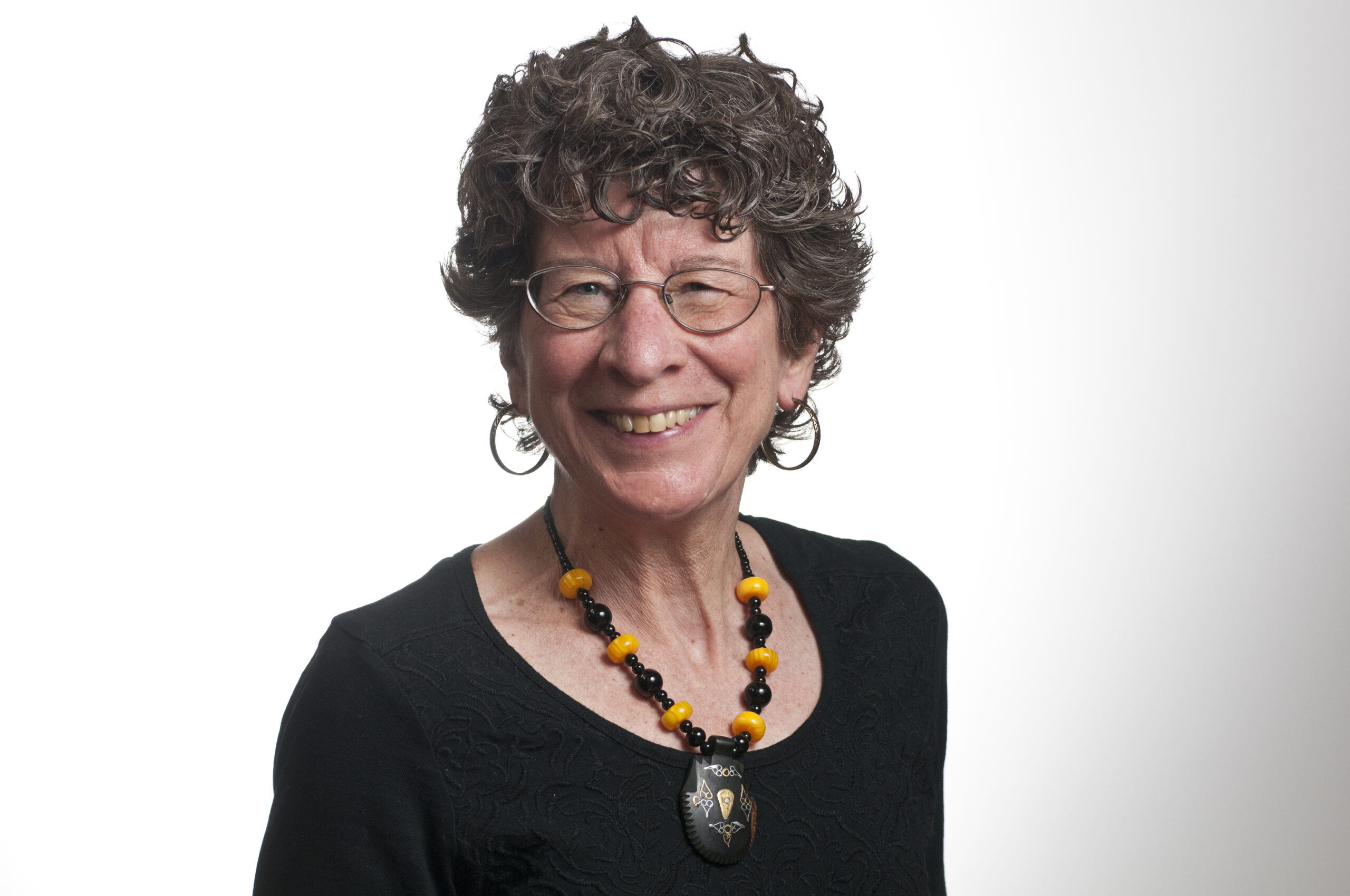
Anicka Fast is editing a biographical book series about Anabaptists in Africa, Asia and Latin America. This series brings global history to life, as it is told by local historians. The first volume of the series focuses on Mennonite leaders in the Democratic Republic of Congo.
In 1922, when Rebecca Sengu was about 14 years old, she defied her parents and enrolled herself in the Mennonite girls’ school at the Nyanga mission station in what is now the Democratic Republic of Congo (DRC). She mustered the courage for this act, because she had heard about a God who loves girls as much as boys, and she was willing to challenge societal norms to follow such a God.
Sengu completed school, got married and had several children. Some of them died of smallpox. Sengu became a comforter to others, drawing on the experience of her own grief in losing her children. She was given the name Kasasashiye (orphan-raiser), because she opened her home to vulnerable children, caring for them and helping them through school. She organized her household around rhythms of worship, work and prayer.
In church, Sengu was an assertive woman. She would debate with the male church leaders in meetings about the importance of women taking their God-given places in the church. Sometimes, she would preach.
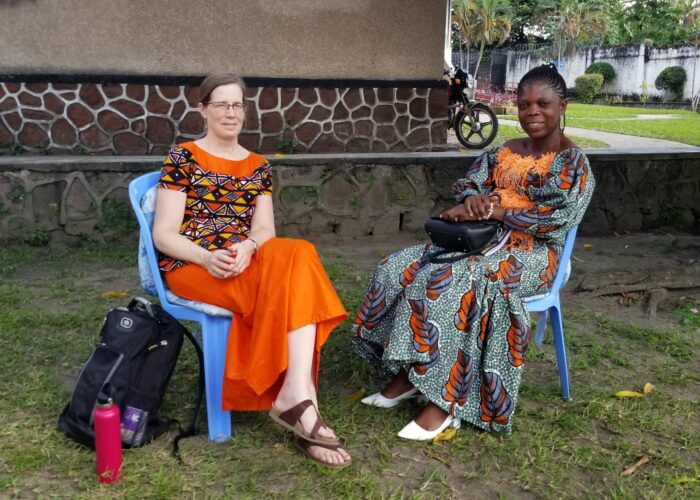
Bercie Mundedi was one of the children who grew up in Sengu’s household. Mundedi is one of the first three women to be ordained by the Communauté Mennonite au Congo (CMCo, Mennonite Church of Congo) and is the director of the Kalonda Bible Institute, CMCo’s leadership training school.
Mundedi is also one of the writers for a new Mennonite World Conference biographical history series, Global Anabaptist Forebears, edited by Anicka Fast, who is serving with Mission Network.
Research needs to bridge continents for a truer history
When researching for her doctoral dissertation on the beginnings of the Mennonite Church in DRC, Fast was frustrated by the lack of Congolese voices in the Mennonite Church USA Archives and the official, mission-board-commissioned histories.
“The story was strongly controlled by the mission board,” Fast said. “They would edit it to fit the narrative that they wanted. I noticed that women were very absent from the official stories — both missionary women and Congolese women. I noticed that Congolese men were also very absent.”
Fast wanted to know who our African Anabaptist ancestors were. How did they live out their faith? What kinds of questions did the early African Anabaptists have? What were their struggles? Through her studies in world Christianity at Boston (Massachusetts) University, she learned that biographies were a good way to hear the voices of people who were marginalized in histories written by European and North American missionaries.
Fast appreciated how the richness of primary source material in the archives complemented her interviews with Mennonites in Congo about the earliest days of the Mennonite church there.
“It was like a treasure hunt of searching in the archives after getting clues from interviews with Congolese Mennonites,” Fast said. “They may not have been able to remember all the way back to the beginning of the church, but they could give hints to perspectives that I could then be alert to in the mission archives and so discover sides of the story that the official histories had completely glossed over.”
In 2021, after completing her doctorate, Fast began her Mission Network assignment from her home in Burkina Faso. Fast taught church history and encouraged her students to write histories about their local congregations and biographies of early church members, both women and men. Mennonites in DRC also invited Fast to teach and conduct history-writing workshops in their context.
“I had a vision that these stories, written by local historians, could contribute to having a truer story about what it means to be a global Anabaptist church,” Fast said. “We need a new generation of textbooks [that introduce us to] our ancestors, realizing that many of our forebears in faith came from continents other than where we live. We need to recognize them as kin.”
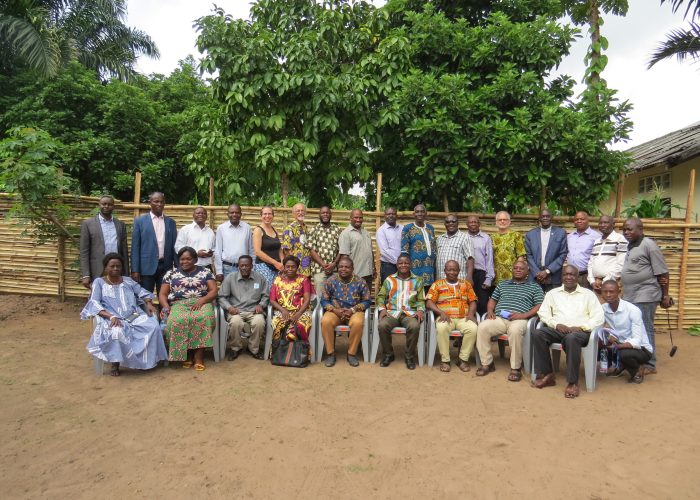
Some of the biographies written by Fast’s students and workshop participants appeared in the Dictionary of African Christian Biography, whose executive director, Michèle Sigg, helped Fast refine a workshop-based teaching method. When Fast saw how excited some of the Burkinabè and Congolese historians were about seeing their work in print, her vision expanded to include a book series of global Anabaptist biographies. The first volume, focusing on Congolese Mennonites, grows out of a 2023 workshop co-taught by Fast and Sigg. It will be published in 2026 by Regnum Books. Fast has begun discussions with potential editors for future volumes in other parts of Africa, Asia and Latin America.
African historians need access to archived documents
While a more complete history needs the insights of African memories and perspectives, African historians also need access to documents archived by mission agencies. Mundedi and her colleagues don’t have access to many photos of their ancestors, whom they are writing about, as few African church leaders had cameras before cell phones became common. In addition, they have found that their printed documents quickly fade and deteriorate when stored without temperature control and other protections.
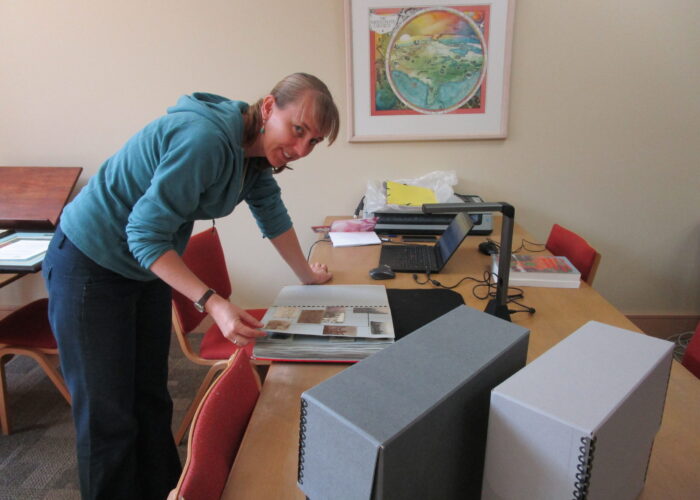
To address this problem, when Fast travels to North America, she tries to schedule time in the Mennonite Church USA Archives to “sleuth” for African authors.
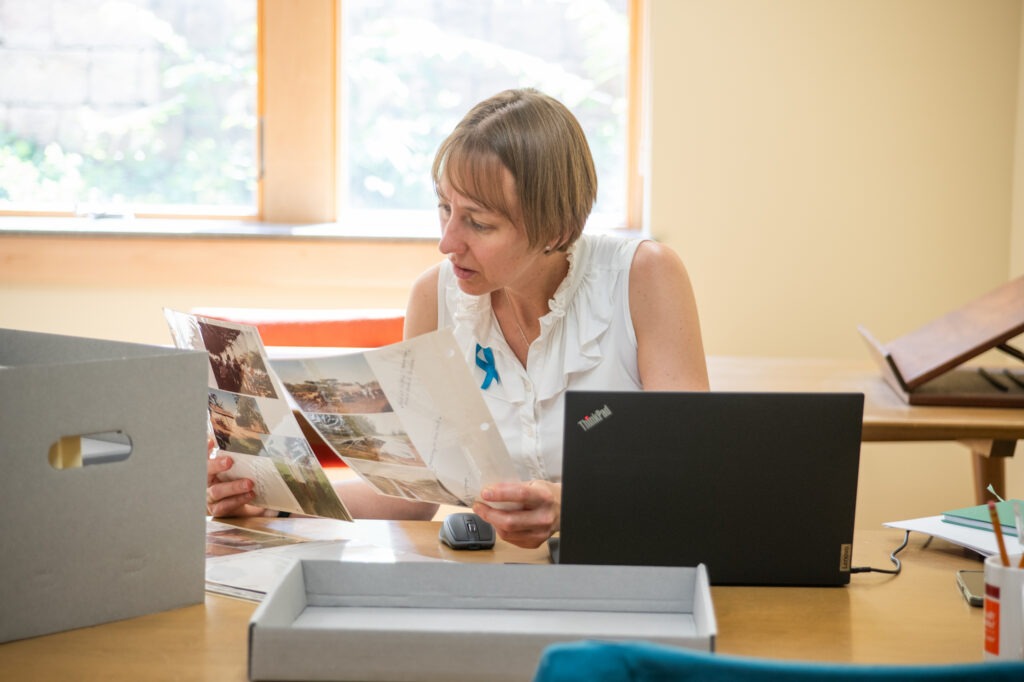
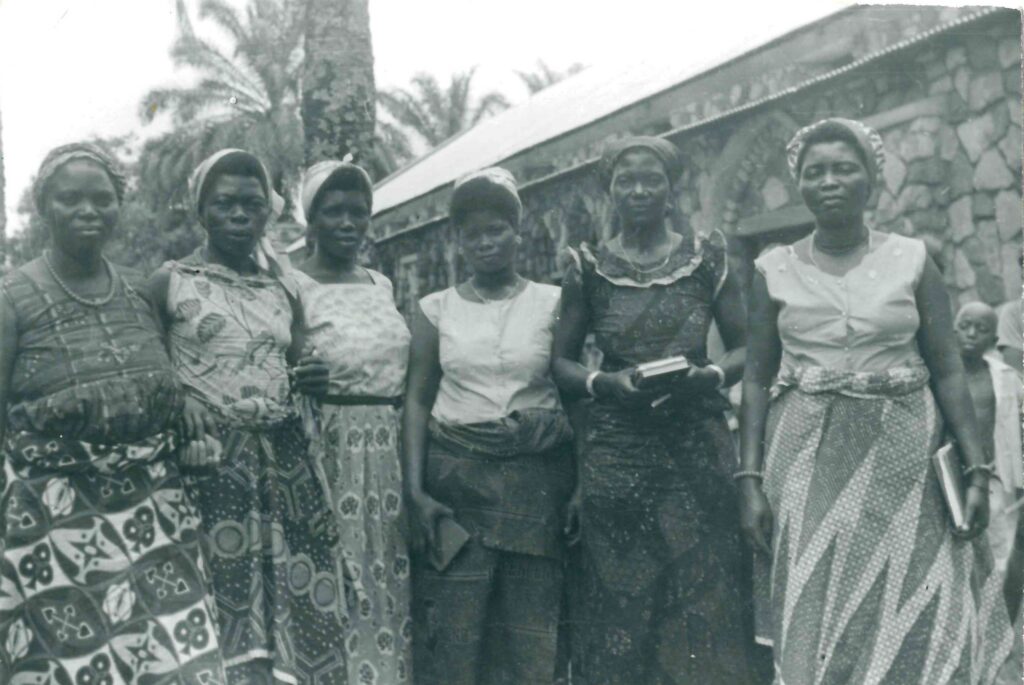
On one trip, Fast spent the better part of a day looking through photos from Nyanga, in search of photos for Mundedi’s biography on Rebecca Sengu. After experiencing many fruitless hours, she found a photo of a group of women.
“I almost missed it,” Fast said with excitement. “There was a different spelling of her name, Lebeka. I realized that this might be Rebecca [Sengu]. Then, I took a picture [of the photo] and sent it with WhatsApp to Bercie. Bercie was like, ‘Yes, it’s her!’ It made everything come alive!”
Fast laughed about the improbability of the scenario — her being in the archives in North America, WhatsApping back and forth in real time with a Congolese biographer, while doing research together and using the resources of both continents — combining the lived experience of African relationships with the historical photos found in North American archives.
Women played a powerful role in African churches
“There are women in the church in Africa who have played very powerful roles as leaders of renewal and revival,” Fast said. “[Women] have been prophets and healers. They have [prayed for and seen] miracles and cast out demons. They have been very involved in mediating the encounter between Christianity and the traditional religions and have found ways to express the gospel message in terms that are contextually relevant for people who are coming from different religious systems.”
Another leader in the early Mennonite church of DRC, Esther Kholoma, was about 15 years younger than Sengu. She received a vision and a mission while she was in a month-long coma, a common way for African traditional healers to receive their vocations, much like the way that God called people in the Bible. When Kholoma awoke from her coma, she began the ministry that God had called her to: Preaching and healing women who weren’t able to have children. God continued to give Kholoma revelations.
“She received the nickname, Kolombolo, which means, ‘rooster,’ because she would get up in the middle of the night and run through the streets, proclaiming the messages that God gave to her,” Fast said. “People listened attentively to those messages.”
Fast has found a few mentions of Kholoma in the archives, “But there’s zero mention of the women that she healed and the babies that were born after she prayed for women who were struggling with infertility.”
Fast said that she could almost tell the history of the African church as a series of renewal movements led by women like Kholoma.
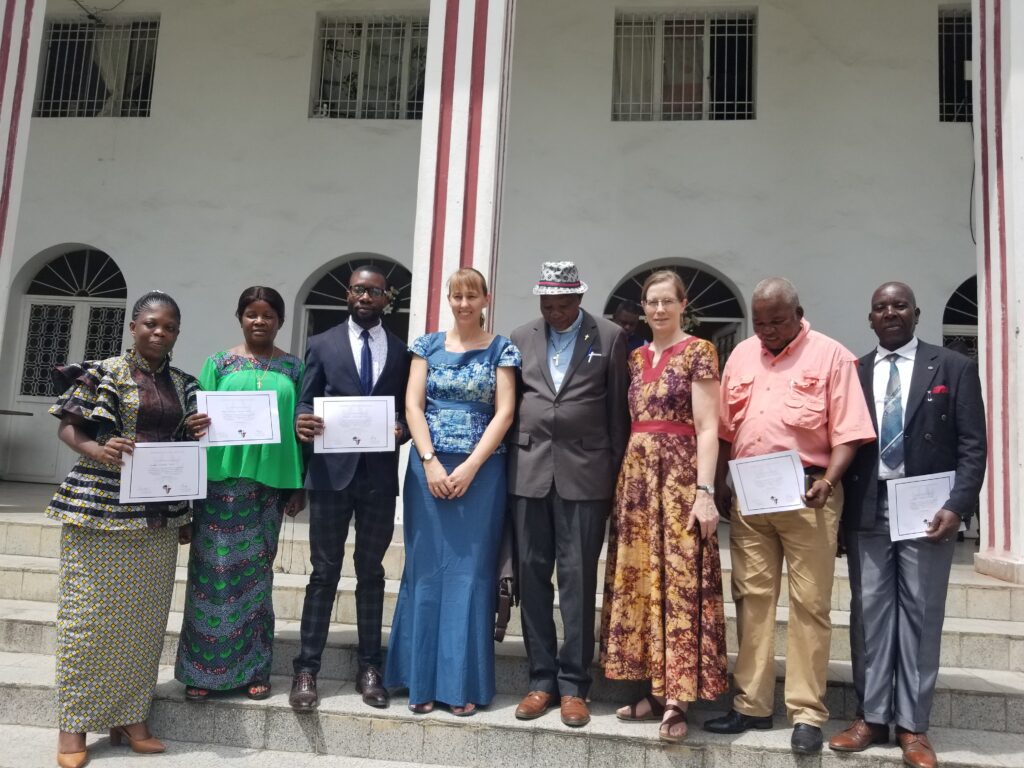
Kholoma’s biographer, Guy Kapeme, said that the liberating power with which God used Kholoma was unstoppable and that the lives of many people were saved through her ministry.
Fast quoted an excerpt from Kapeme’s biography of Kholoma, which concludes, “Through [Kholoma], God healed the sick, gave children to the barren, delivered captives, overthrew the altars of false gods, brought joy and relief to the downcast, and restored the lives of many.”
This is a different kind of history that is completely absent from the mission narratives, Fast said.
Deeper understandings are revealed when Africans narrate their own history
“[The African historians have] so much more understanding of the socio-political context and much, much more understanding of the kinds of leadership that women were exercising. They also touch on some of the painful dynamics of inequality in the relationship between African church leaders and the North American missionaries whom they were working with,” Fast said.
While this article focuses mainly on the biographies of African women Anabaptist leaders, about half of the biographies in the forthcoming Global Anabaptist Forebearers volume are about African men in church leadership.
To participate in telling a more globally accurate Anabaptist history, contribute to Anicka Fast’s ministry through Mission Network or the Global Anabaptist Histories Fund through Fast’s alma mater, Boston University.