
College makes friendship surprisingly easy. Someone is always across the hall, next to you in class or texting about late-night food. You see the same people again and again without planning six weeks ahead.
Then graduation happens. Friends scatter. A new job may give you coworkers, but not necessarily people who know the whole story. Even moving home can feel strange because you have changed.
If finding community after college feels harder than expected, you are not failing at adulthood. You lost a structure that quietly did a lot of the work. The good news is that you can choose a new one.
Why community feels harder after college
Young adults are among the age groups most likely to feel lonely and disconnected, according to the U.S. Surgeon General. In real life, that can look like eating dinner alone, wondering who to text on Friday night or realizing nobody nearby knows when you are having a rough week.
You may still love your college friends, but you no longer share Tuesday lunch, Thursday practice or the walk back from class. Friendship now takes calendars, travel and repeated choices.
That is the need an intentional community can meet. It gives people a reason to keep showing up until unfamiliar faces start to feel like people you can count on.
What is an intentional community?
The phrase can sound formal. The reality is usually pretty ordinary.
An intentional community is a group of people who choose to build part of life around shared commitments. They may live together, serve together, practice faith together or care for the same neighborhood.
Think shared meals, inside jokes, rides to work, chores and someone noticing when you seem off. It is not instant friendship, and it is not conflict-free. It is a setting where relationships have room to grow because people keep coming back.
Three places where community can take root.
Mennonite Voluntary Service, or MVS, is one example of what this can look like after college. It is a one-year service experience for adults ages 20 and older, with options to extend a term to two or three years. Participants join in community in three key ways: they live with peers, serve with a local nonprofit and connect with a local and supporting Mennonite congregation.
Those three elements matter because they create more than one way to belong.
1. A home where people show up
Living with other people can be fun, awkward and occasionally annoying. In other words, it is real life.
MVS participants share meals, responsibilities, good days and hard ones. You learn how your choices affect the people around you. You also have people nearby for the small moments that rarely make it into a group chat: making dinner, running errands, talking after work or laughing over something that should not be that funny.
This is intentional community at its most practical — connection built through ordinary life.
2. A church that knows your name
Each MVS unit is connected to a local Mennonite congregation. That gives participants a community beyond their housemates, including people from different ages and stages of life.
A former MVS participant, Kris Ituralde, described the experience this way: “You come and you have this instant community because the house has been there for a long time.”
That kind of welcome matters when you are new to a city. A local church can offer familiar faces, meals, practical help and people who know the neighborhood. (It also gives parents some reassurance that their young adult is not figuring out every challenge alone.)
3. Work that means something
Service placements give the group a shared purpose beyond the house. MVS participants serve with local nonprofits working in areas such as education, food access, immigration, housing, health and restorative justice. The work is real, with real responsibilities, plus the chance to build skills and new interests.
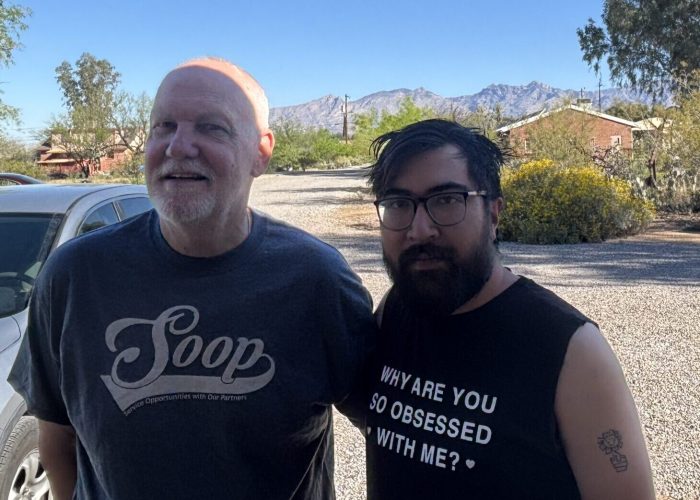
Juan Witmer arrived in Tucson with a photography degree and little home-repair experience. Through his placement with Community Home Repair Projects of Arizona, he discovered he loved plumbing and helping homeowners. By the end of his MVS term, he chose to stay in Tucson and pursue plumbing as a career.
"I really fell in love with being here,” Juan said. Read Juan’s story.
Community and meaningful work do not hand you a perfect five-year plan. They do give you people, purpose and enough support to try something you may never have considered on your own.
What to ask before you say yes
Young adults may be asking, “Will I find my people?” Parents may be asking, “Who will support them?” Both are fair questions.Before joining any intentional community for a year, ask:
A trustworthy program should answer those questions clearly.
With MVS, the unit house, service placement and supporting congregation create three layers of connection. Basic needs such as food, housing, health care, transportation and a personal stipend are provided during the service term. Student loan scholarships may also be available for volunteers with college debt.
Start with one repeated choice
You do not need to have your whole future figured out. Start smaller.
Choose one place where you can return often enough to be known. Serve with the same organization each week. Invite two people to a monthly meal. Join a congregation and stay long enough to move beyond introductions.
Community is rarely discovered all at once. More often, it grows because people keep showing up, receive care and offer something of themselves.
Your next step can be simple: list three communities already within reach, then choose one repeated action to take this month. If a year of shared life, faith and meaningful service sounds worth exploring, look through Mennonite Mission Network’s service opportunities and learn more about applying for MVS.