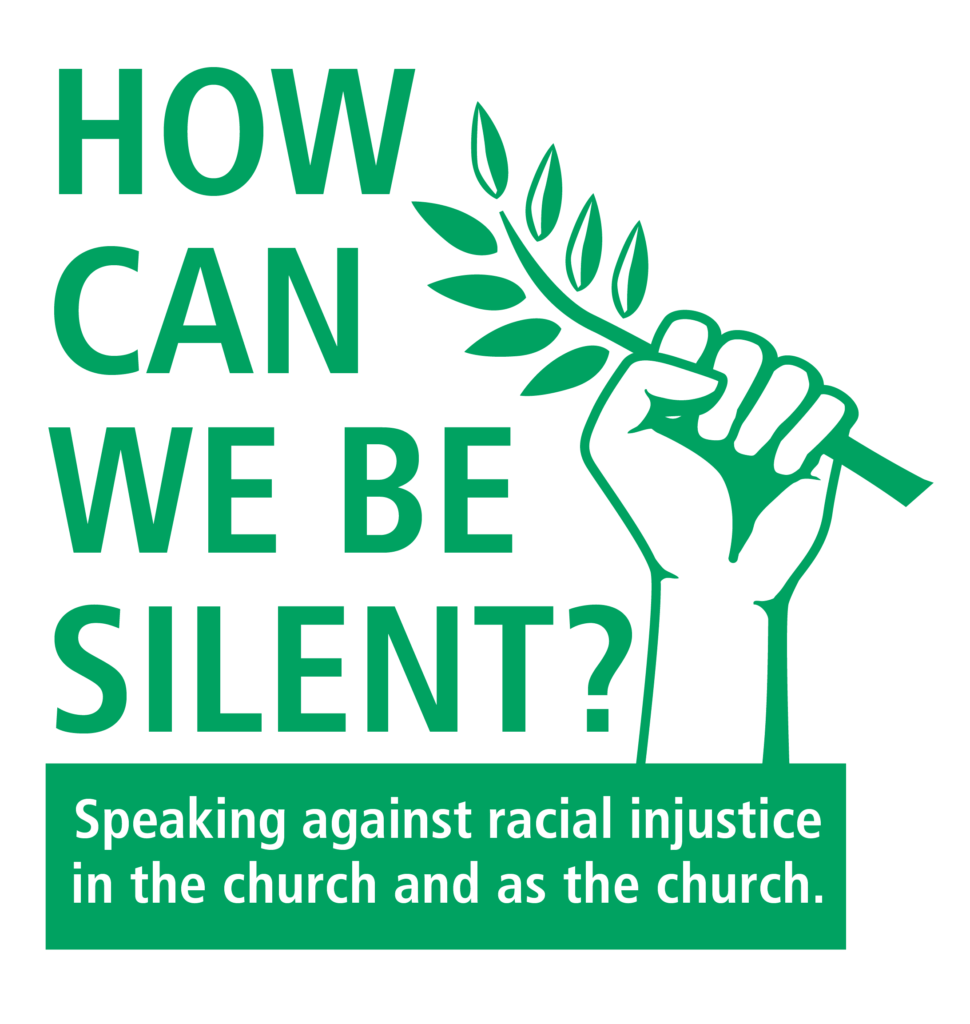
Speaking against racial injustice in the church and as the church
Written by James Long and Michael Blair of Bethesda Mennonite Church and Samuel Voth Schrag of St. Louis
Mennonite Fellowship.
Scripture texts
Luke 19:1-10 (CEB)
1 Jesus entered Jericho and was passing through town. 2 A man there named Zacchaeus, a ruler among tax collectors, was rich. 3 He was trying to see who Jesus was, but, being a short man, he couldn’t because of the crowd. 4 So he ran ahead and climbed up a sycamore tree so he could see Jesus, who was about to pass that way. 5 When Jesus came to that spot, he looked up and said, “Zacchaeus, come down at once. I must stay in your home today.” 6 So Zacchaeus came down at once, happy to welcome Jesus.
7 Everyone who saw this grumbled, saying, “He has gone to be the guest of a sinner.”
8 Zacchaeus stopped and said to the Lord, “Look, Lord, I give half of my possessions to the poor. And if I have cheated anyone, I repay them four times as much.”
9 Jesus said to him, “Today, salvation has come to this household because he too is a son of Abraham. 10 The Human One came to seek and save the lost.”
Philippians 2:5-8 (CEB)
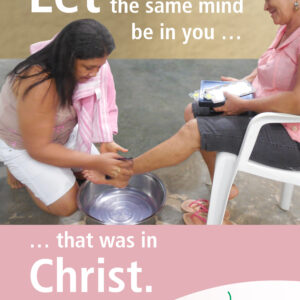
5 Adopt the attitude that was in Christ Jesus:
6 Though he was in the form of God,
he did not consider being equal with God something to exploit.
7 But he emptied himself
by taking the form of a slave
and by becoming like human beings.
When he found himself in the form of a human,
8 he humbled himself by becoming obedient to the point of death,
even death on a cross.
Ephesians 2:2-10, 14-22 (CEB)
2 You used to live like people of this world. You followed the rule of a destructive spiritual power. This is the spirit of disobedience to God’s will that is now at work in persons whose lives are characterized by disobedience. 3 At one time you were like those persons. All of you used to do whatever felt good and whatever you thought you wanted so that you were children headed for punishment just like everyone else.
4-5 However, God is rich in mercy. He brought us to life with Christ while we were dead as a result of those things that we did wrong. He did this because of the great love that he has for us. You are saved by God’s grace! 6 And God raised us up and seated us in the heavens with Christ Jesus. 7 God did this to show future generations the greatness of his grace by the goodness that God has shown us in Christ Jesus.
8 You are saved by God’s grace because of your faith. This salvation is God’s gift. It’s not something you possessed. 9 It’s not something you did that you can be proud of. 10 Instead, we are God’s accomplishment, created in Christ Jesus to do good things. God planned for these good things to be the way that we live our lives.
14 Christ is our peace. He made both Jews and Gentiles into one group. With his body, he broke down the barrier of hatred that divided us. 15 He canceled the detailed rules of the Law so that he could create one new person out of the two groups, making peace. 16 He reconciled them both as one body to God by the cross, which ended the hostility to God.
17 When he came, he announced the good news of peace to you who were far away from God and to those who were near. 18 We both have access to the Father through Christ by the one Spirit. 19 So now you are no longer strangers and aliens. Rather, you are fellow citizens with God’s people, and you belong to God’s household. 20 As God’s household, you are built on the foundation of the apostles and prophets with Christ Jesus himself as the cornerstone. 21 The whole building is joined together in him, and it grows up into a temple that is dedicated to the Lord. 22 Christ is building you into a place where God lives through the Spirit.
Galatians 3:28 (CEB)
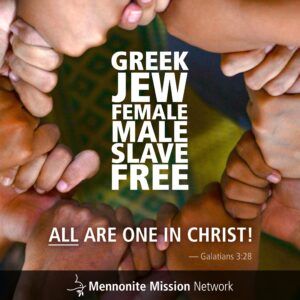
28 There is neither Jew nor Greek; there is neither slave nor free; nor is there male and female, for you are all one in Christ Jesus.
Jeremiah 10 (CEB)
1 Listen to the word that the Lord has spoken to you, people of Israel!
2 The Lord proclaims:
Don’t follow the ways of the nations
or be troubled by signs in the sky,
even though the nations are troubled by them.
3 The rituals of the nations are hollow:
a tree from the forest is chopped down
and shaped by the craftsman’s tools.
4 It’s overlaid with silver and gold,
and fastened securely with hammer and nails
so it won’t fall over.
5 They are no different than a scarecrow
in a cucumber patch:
they can’t speak;
they must be carried
because they can’t walk.
Don’t be afraid of them,
because they can’t do harm or good.
6 Lord, no one is like you!
You are great,
and great is your mighty name.
7 Who wouldn’t fear you,
king of the nations?
That is your due;
among all the wise of the nations
and in all their countries,
there is no one like you!
8 But they are both foolish and silly;
they offer nothing
because they are mere wood.
9 Covered with silver from Tarshish
and gold from Uphaz,
they are the work of a craftsman
and the hands of a goldsmith.
Clothed in blue and purple,
all of them nothing more than the work of artisans.
10 But the Lord is the true God!
He’s the living God and the everlasting king!
When he’s angry, the earth quakes;
the nations can’t endure his rage.
11 Tell them this: The gods who didn’t make the heavens and the earth will perish from the earth and from under the heavens.
12 But God made the earth by his might;
he shaped the world by his wisdom,
crafted the skies by his knowledge.
13 At the sound of his voice,
the heavenly waters roar.
He raises the clouds from the ends of the earth.
He sends the lightning with the rain,
the wind from his treasuries.
14 Everyone is too foolish to understand;
every goldsmith is dishonored by his idols,
for their images are shams;
they aren’t alive.
15 They are a delusion, a charade;
at the appointed time they will vanish!
16 Jacob’s portion is utterly different
because God has formed all things,
including Israel, his very own people—
the Lord of heavenly forces is his name!
Get ready for exile!
17 Pack your bags and get ready to leave,
you who live under siege.
18 The Lord proclaims:
I’m going to eject those who live in the land at this time;
I will badger them until they leave.
19 How terrible for me, due to my injury;
my wound is terrible.
Yet I said to myself:
This is my sickness,
and I must bear it.
20 But now my tent is destroyed;
all its ropes are cut,
and my children are gone for good.
There’s no one left to set up my tent frame
and to attach the fabric.
21 The shepherd kings have lost their senses
and don’t seek answers from the Lord.
That is why they have failed
and their flock is scattered.
22 Listen! The sound is getting louder,
a mighty uproar from the land of the north;
it will reduce the towns of Judah to ruins,
a den for wild dogs.
23 I know, Lord, that our lives are not our own,
that we’re not able to direct our paths.
24 So correct me, Lord, but with justice,
not in your anger,
or else you will reduce me to nothing.
25 Pour out your wrath on the nations
that ignore you
and on the people
who don’t call on you,
since they have devoured Jacob;
they have devoured him completely
and ruined his country.
Introduction
In May 2015, the executive director of Mennonite Church USA, Ervin Stutzman, and moderator Elizabeth Soto Albrecht wrote a letter on behalf of Mennonite Church USA.
“Our hearts have been broken as we’ve watched racial tensions break out in violence on the streets of our nation, most recently in the cities of Ferguson, Missouri, and Baltimore. Like a cauldron of hot water finally boiling over, the deep frustration of continued injustices against communities of color have spilled into the streets. Too often, these communities suffer from joblessness, substandard housing, poor education, and an unjust law enforcement system. Police brutality against black men is fueled by racism coupled with the increased militarization of the police force. As a church called to grow as ‘communities of grace, joy and peace,’ we must not ignore the systemic realities of racism in our country.”
In the face of injustice, the church is called to confession for where we have fallen short, to repentance and transformation in light of God’s vision, and to testimony to the world about God’s way of peace, where all are treated with love and justice.
We know that talking about race is fraught with difficulty. We have offered sermon starters and scripture suggestions that lead to different levels of tension and different kinds of conversations. We hope there are some that are right for your congregation.
But we also offer these resources as a challenge. These resources were written by two congregations in St. Louis who have spent a lot of time learning from one another, reaching across differences of race, culture and theology to discover what God is doing in their midst.
We encourage everyone who uses these resources to also stretch beyond their comfort zone, and to engage with congregations that are different from them. This might include consulting with a congregation from a different tradition in planning the worship service, bringing in a guest speaker with a different racial/ethnic background, or having a joint worship service with a congregation with a very different worship style or theology.
We believe that building relationships is more important than intellectual knowledge.
Service resources include Scripture suggestions and sermon “seeds” to go along with them, children’s story suggestions, options for prayers of confession, hymn suggestions, and some options for further research.
Children’s time
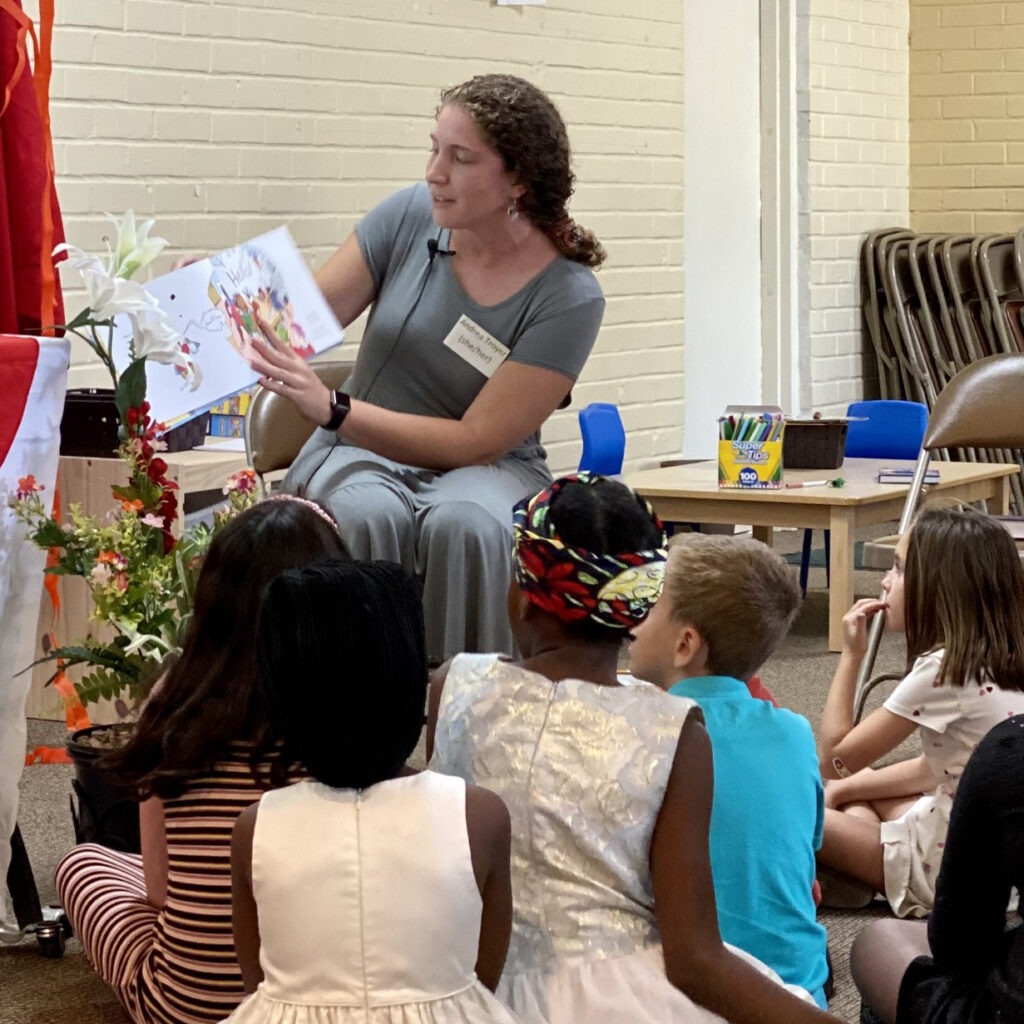
Children’s story ideas
The Sandwich Swap, by Queen Rania of Jordan
We Shall Overcome: The Story of a Song, by Debbie Levy
Martin’s Big Words: The Life of Dr. Martin Luther King, Jr., by Doreen Rappaport
Constructing the church together
Bring a big box full of tools, and have each child come and grab a tool, then have them tell what it is used for. Talk about how they all are different, and that they all have different functions, but there is one tool box. That’s like us—we are all different colors, have different traditions and ways of doing things, and we have different ways of talking and being. But we are all part of God’s tool box, and every tool has to work together to build up God’s house. When tools are being left out, and aren’t being used well, then the house is not as strong.
People from every tongue and tribe and nation: Revelation 7:9
Collect pictures of people from all different countries from magazines, or print them from the Internet.
Guest speaker
Invite a guest speaker who is not from the dominant culture of your congregation to share stories of their experience of race.
Sermon starters
Jesus and Zacchaeus
Luke 19:1-10
In the Roman Empire, the tax collectors were charged with raising money from the poor. The Empire didn’t ask too many questions about where the money came from. So Jesus called the tax collectors like Zacchaeus to repentance, to look at the poor with mercy and with justice.
In the same way, in too many cities in our country, government does not serve the poor. Traffic tickets serve as a money-making mechanism. The prison industrial complex makes money off of the bodies of poor black men. There is too much money tied up in systems of justice, and Christians are called to a better way. As Jimi Hendrix said, “When the power of love overcomes the love of power, the world will know peace.” We are called to Christ’s way of peace.
• Policing for profit: How Ferguson’s fines violated rights of African-Americans
• The Prison-Industrial Complex
Have this mind among you, that was yours in Christ
Philippians 2:5-8
Jesus did not look at differences between people. He saw that all people had one need—God’s salvation. The people of God are the ones who should have the mind of Christ, and should see people as God sees them. God sees people as sinners in need of salvation, as sheep without a shepherd. As the people of God, if we saw people as God sees them, we wouldn’t become trapped by the false divisions of race and class. The Black Lives Matter movement is about the desire to be seen with equality. With the mind of Christ, we see people with a different kind of love—love that overcomes fear, celebrates the diversity in the human family, and challenges us to real relationships with Jesus and
with one another.
Tear down the dividing wall
Ephesians 2:2-10, 14-22; Galatians 3:28
The apostle Paul was focused on breaking down barriers that prevented God’s dream from being realized. He spent a lot of time talking about breaking down dividing walls and about community reconciliation. We know that there are deep dividing walls in our communities. Our cities are segregated, our jails are segregated, and our churches are segregated. As Martin Luther King, Jr. said, “It is appalling that the most segregated hour of Christian America is 11 o’clock on Sunday morning.” (Sermon, National Cathedral in Washington, D.C., March 31, 1968)
The church is called to fight against these walls, in the name of Christ and his peace.
• Our 21st-century segregation: we’re still divided by race
The false idolatry of race
Jeremiah 10
Christians through the years have created a false idol—an image of God that looks like us. In the Sistine Chapel, God is an old white man, and some of the most famous images of Jesus reflect a tall, light skinned, blue-eyed man with a beard and long brown hair.
While all people can represent Jesus—after all, we are God’s hands and feet in the world—the historical Jesus would not be called white in the United States today.
We worship a God who was embodied in a person of color. When we are suspicious of people who look different, when we close our borders to immigrants, when we participate in a system that discriminates against people of color, we discriminate against God. How would it change us if we remembered daily that the face of Christ does not look exactly like the church that sits around us on Sunday morning?
• ‘Color Of Christ’: A Story Of Race And Religion In America
• Insisting Jesus Was White Is Bad History and Bad Theology
Mennonite story suggestions
These stories would fit in any sermon.
Vincent Harding
Dr. Vincent Harding was a Mennonite pastor and a confidant of Dr. Martin Luther King, Jr.
His life is a testimony to how the church can call for justice. But it is also a cautionary tale,
as fellow Mennonites often failed to follow Harding’s call for justice. Mennonite Life has a
wonderful exploration of his legacy in their summer 2015 issue.
• Vincent Harding: ‘Don’t get weary though the way be long’
Sundown towns
Many Mennonite churches in rural areas are in “sundown towns”—places where, historically, it was illegal and unsafe for Black Americans to spend the night. Goshen, Indiana, home of Goshen College, is one important example. It is a classic example of how Mennonites have benefited from systems of sin.
• Goshen repents of being a ‘sundown town’

Offering
Your gifts to Mennonite Mission Network make resources like this possible. Join us in sharing the word of God across the street and around the world by giving today. Click here to support our global work.

Worship resources
Call to worship suggestion
One: We gather to worship together.
All: Different people, different lives, different histories,
One: Yet all children of the same Parent,
All: Created lovingly by the Source of all life!
One: We gather to reconnect with one another.
All: Different people, different lives, different histories,
One: Yet all disciples of one Teacher,
All: Jesus, the Word made flesh, dwelling among us.
One: We gather with different joys and sorrows, different hopes and fears …
All: Different people, different lives, different histories,
One: Yet one people with one God, one faith, one baptism.
All: Let us open ourselves to the presence of God at work in us, among us,
and through us.
Songs from Voices Together
- No. 611 “Lift Every Voice and Sing”
- No. 801 “Welcome Table”
- No. 719 “Jesus, Help Us Live in Peace”
- No. 703 “Rain Down”
- No. 390 “In Christ There Is no East or West”
Other praise songs

Join in God’s mission

Visit our website for more stories from Mission Network workers and alumni who are, or have served in many places across the globe.

Become a prayer partner. Join a worldwide network of people who support Mission Network through prayer.

Serve with us! Individuals and families may choose from many programs to serve domestically or internationally.

Your gifts to Mennonite Mission Network make resources like this possible. Join us in sharing the word of God across the street and around the world by giving today. Click here to support our global work.

Graphics