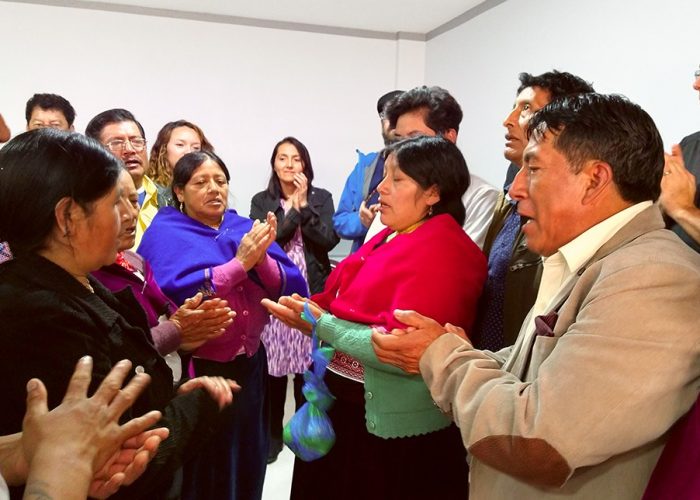
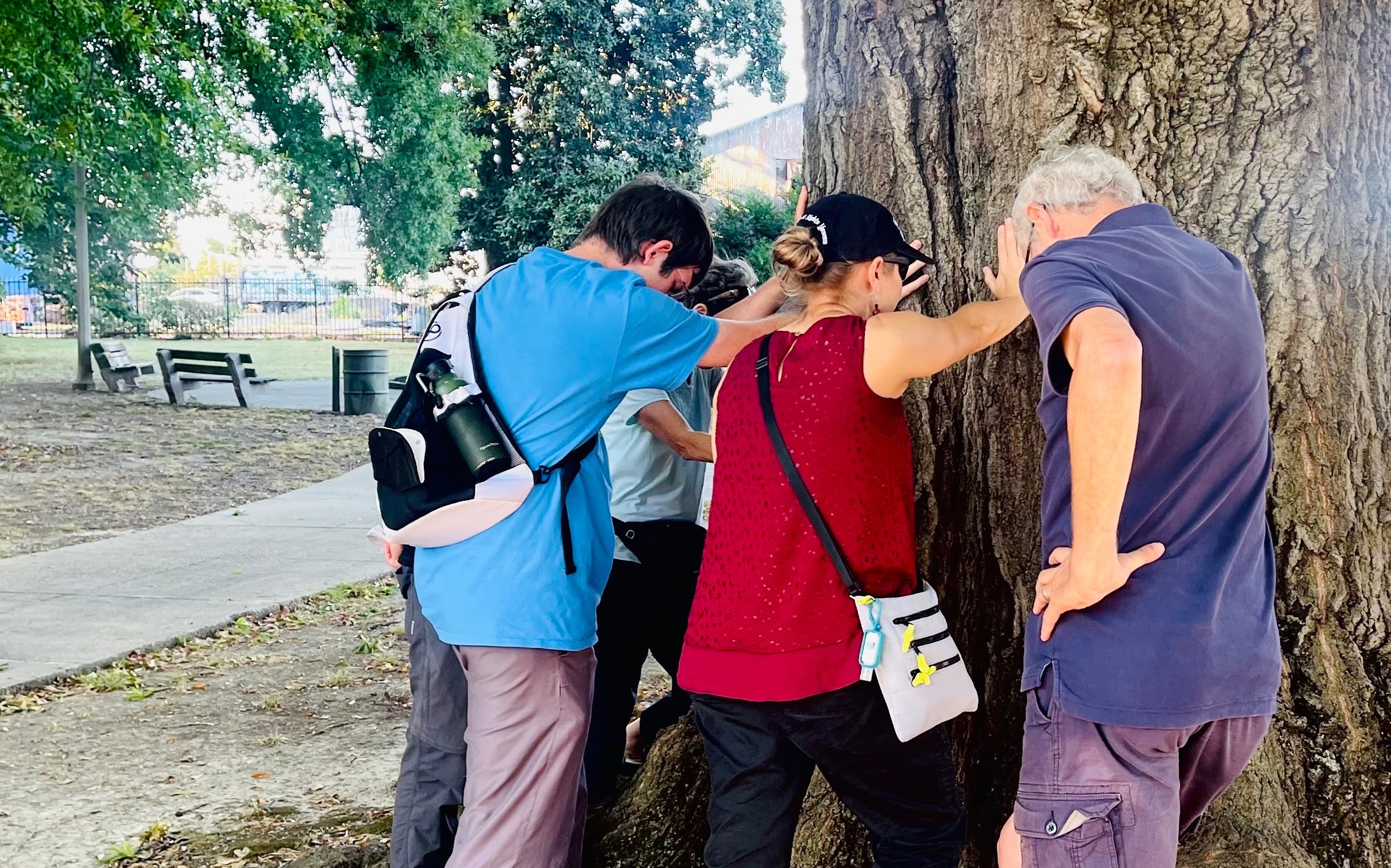
Racism harms the body of Christ and God’s reconciling mission. But God has made a way to receive forgiveness — the repentance that leads to life! Mission Network invites MC USA churches to witness across the church to God’s plan for reconciliation.
Introduction
Two plagues have erupted in 2020 — COVID-19 and the systemic injustice of racism. The killings of Ahmaud Arbery, Breonna Taylor, George Floyd and many others have exposed the United States’ ugly history of terrorizing Black people to maintain the power and privilege of White people. Even though Christianity has made an indelible mark on American society, our legacy of racism is anything but Christian. On the contrary, the name “Christian” was first applied to Jews and Gentiles who were learning to overcome hostility and share life together through their faith in Jesus Christ. Mission, or the sharing of the good news of Jesus across cultures, lit the fire of the reconciliation of former enemies in one body. Indeed, Greek-speaking Jews from the Mediterranean and Africa (“Cyprus and Cyrene”) were the first to tell the story of Jesus to the Syrian Gentiles among whom they were sent (Acts 11:19-26).
On the other hand, these were not the first Jews to cross land and sea to proclaim a message from God to the Gentiles. Through the prophet Jeremiah, God exhorted the Jews in Babylon “to seek the welfare of the city where I have sent you” (Jeremiah 29:7). And in the book of Jonah, God sends a Hebrew prophet to announce repentance to Nineveh. Nineveh was the great and glorious capital of Assyria, the mighty and merciless empire which destroyed the northern kingdom of Israel in the 8th century before Christ. Like the Ninevites, the call “to turn from our evil ways and from the violence that is in our hands” confronts us who live in the shadow of 21st-century racism. Like Nineveh, the message of repentance comes not for our destruction, but that we might lament, turn, and be healed (Jonah 3:8-9).
With its focus on the mission of Jonah, may these materials inspire your worship and invigorate your witness to Jesus Christ, our hope in a diseased and divided world.
Scripture text
Jonah 3:1-10 (CEB)
The Lord’s word came to Jonah a second time: 2 “Get up and go to Nineveh, that great city, and declare against it the proclamation that I am commanding you.” 3 And Jonah got up and went to Nineveh, according to the Lord’s word. (Now Nineveh was indeed an enormous city, a three days’ walk across.)
4 Jonah started into the city, walking one day, and he cried out, “Just forty days more and Nineveh will be overthrown!” 5 And the people of Nineveh believed God. They proclaimed a fast and put on mourning clothes, from the greatest of them to the least significant.
6 When word of it reached the king of Nineveh, he got up from his throne, stripped himself of his robe, covered himself with mourning clothes, and sat in ashes. 7 Then he announced, “In Nineveh, by decree of the king and his officials: Neither human nor animal, cattle nor flock, will taste anything! No grazing and no drinking water!8 Let humans and animals alike put on mourning clothes, and let them call upon God forcefully! And let all persons stop their evil behavior and the violence that’s under their control!” 9 He thought, Who knows? God may see this and turn from his wrath, so that we might not perish.
10 God saw what they were doing—that they had ceased their evil behavior. So God stopped planning to destroy them, and he didn’t do it.
Children’s time
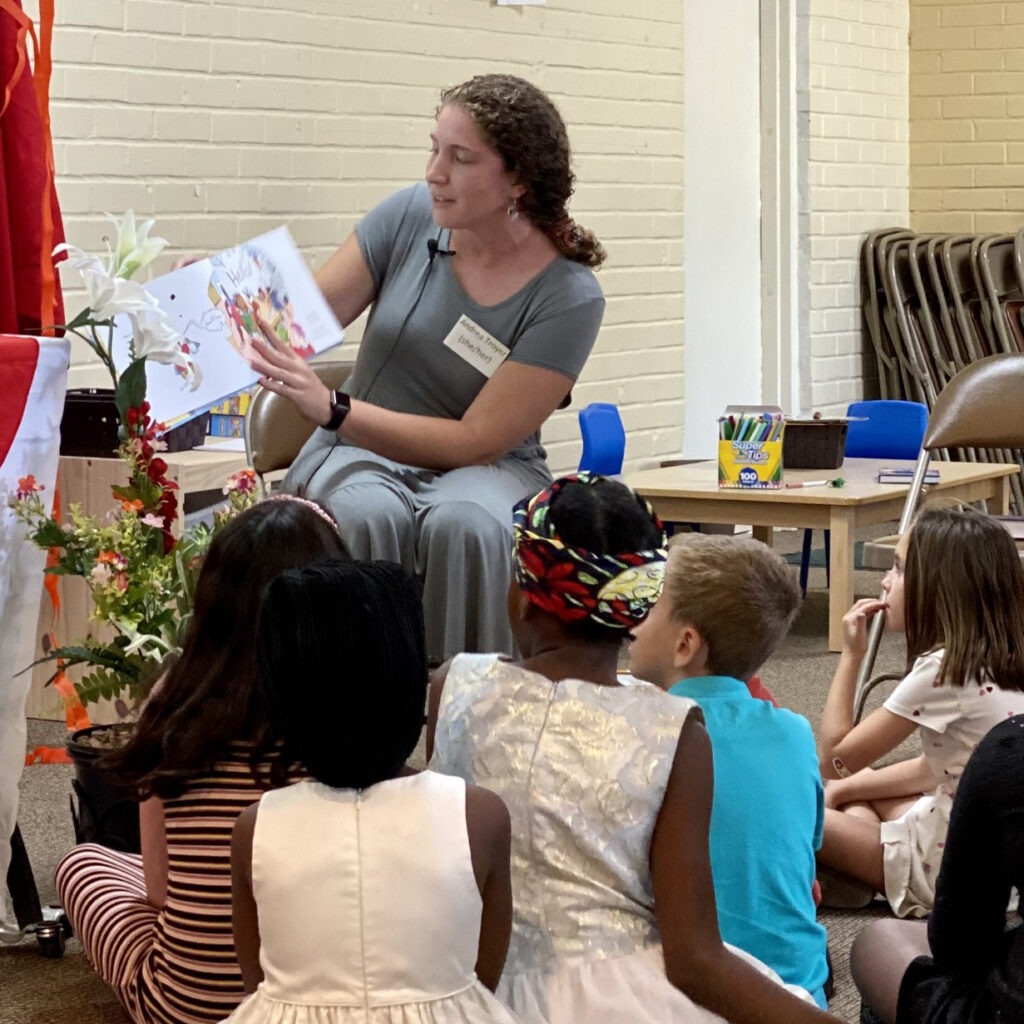
A camp for peace
“… let your light shine before others, so that they may see your good works and give glory to your Father in heaven.” —Matthew 5:16
Every year the Korea Peacebuilding Institute helps plan a peace camp. The camp is for young people from China, Japan and Korea. These three countries are neighbors, but because of wars, many Chinese and Korean youth are taught to hate Japan.
At the Youth Peace Camp, the campers become friends. “On the first day of Peace Camp, I had no idea what it would be like, said Heo Hyo-eun, a 15-year-old Korean girl. When I saw one young girl from Japan, Yuki, I wanted to be her friend. We were placed on the same team, and I was happy! Through playing, dancing, and games, we became close.
“I will remember the relationships we built with friends from other countries. Since we’re students, we have all studied about our history of pain and hurt. Even just sharing space together and eating food together was a powerful experience for us.
“The last night of Peace Camp, my Chinese friend and roommate, Linda, shared a lot. She said, crying, ‘We hated Japan, because we cannot forget what Japan did to us … but through this camp, my hatred toward Japan has disappeared.’
“When it was the Japanese students’ turn, they went to the front. They were crying, and said, ‘We are very sorry to Korea and China … really sorry … sorry.’ Their tears extinguished the fire of my hatred. Yuki, from Japan, had become my best friend.
“After this, we had a candle-lighting ceremony. Each person placed a candle on the world map on the floor, in an area where they wanted to see peace grow. The area between China, Korea and Japan became the shining-est part of the map. I thought to myself, ‘Let’s love warmly and accept each other, just like these candles. And may we never again repeat our painful history.’”
Questions for discussion
- Sometimes when we hear bad things about someone, we dislike them without even knowing them. How can that change when we get to know that person?
- How can games and activities help us really get to know someone?
- Why do you think the Japanese students were so sorry?
Prayer
Dear God, help us not to dislike others because of how they look or what we’ve heard about them. Help us to get to know them and make friends. Amen.

Sermon starters
1. In the text, the verb or noun form of the word for “word” (Hebrew: dabar) appears three times in relation to the city of Nineveh.
- In v. 2, the Lord tells Jonah to proclaim to Nineveh “the message that I tell you.”
- In v. 6, the king of Nineveh responds when “the news [“the word”] reached” him.
- In v. 10, God does not bring about “the calamity that he had said he would bring upon them.”
How would you describe the purpose of “the word” in this story? What is the reason “for which it was sent” (cf. Isaiah 55:10-11)?
2. The same word translated as “proclaim” or “cry out” appears four times in the text.
- Verse 2 includes two occurrences. The Lord tells Jonah to “proclaim to [Nineveh] the message [proclamation] that I tell you.” In other words, the Lord tells Jonah to “proclaim the proclamation” or to “cry the cry that I speak to you.”
- In v. 4, Jonah enters Nineveh and “cried out” the message to Nineveh.
- In response to Jonah’s proclamation (v. 4 above), “the people of Nineveh believed God” and “proclaimed a fast” (v. 5).
How would you describe the nature of the relationship between the proclamation of Jonah and the proclamation of the Ninevites? Is the one necessary for the other (cf. Romans 10:14-17)?
3. The verb translated as “get up” or “arise” appears twice in this text.
- In v. 2, The Lord tells Jonah to “get up” and “go to Nineveh, that great city, and proclaim to it the message that I tell you.” This is “the second time” that the Lord has spoken to Jonah. The first time appears in chapter 1, v. 2a, where the Lord issued an identical command to Jonah—a word that Jonah disobeyed.
- In v. 6, when “the news reached the king of Nineveh, he rose from his throne, removed his robe, covered himself with sackcloth, and sat in ashes.”
Is it significant that both the one who is sent with the word and the one who receives the word “get up” and turn toward God? Why or why not?
4. The verb translated as “turn”— to change direction or to convert — occurs three times in the text.
- In response to the word, the king’s decree is that all in Nineveh should “turn from their evil ways and from the violence that is in their hands” (v. 8).
- The king announces this decree in hope that God may “turn from his fierce anger, so that we do not perish” (v. 9).
- Finally, the king is proved right: “When God saw what they did, how they turned from their evil ways, God changed his mind about the calamity that he said he would bring upon them; and he did not do it” (v. 10).
List all the characters in the story who “turn” or repent? What does repentance look like in this story? What actions are involved in repentance? What are the results of repentance?

Offering
Your gifts to Mennonite Mission Network make resources like this possible. Join us in sharing the word of God across the street and around the world by giving today. Click here to support our global work.

Worship resources
Worship songs from Voices Together
- No. 128 “Many and Great”
- No. 75 “Praise, My Soul, the King of Heaven!”
- No. 71 “Praise God”
- No. 156 “There’s a Wideness in God’s Mercy”
- No. 722 “Help Us to Help Each Other”
- No. 714 “Let There Be Light, Lord God”
- No. 395 “The Church of Christ in Every Age”
- No. 827 “Move in Our Midst”
- No. 738 “Open My Eyes That I May See”
- No. 30 “Jesus Calls Us”
- No. 113 “Cantai ao Senhor (O Sing to the Lord)”
- No. 420 “God of the Bible”
- No. 715 “Longing for Light”
- No. 388 “How can I say”
- No. “My Soul Cries Out”

Additional resources
Read D. L. Mayfield’s 2017 article in Christianity Today, “Facing Our Legacy of Lynching,” about the history of lynching in the United States and the work of the Equal Justice Initiative (EJI) and its founder, Bryan Stevenson, to create The Memorial for Peace and Justice in Montgomery, Alabama. The Memorial provides tangible ways for visitors to carry its message of public confession and repentance for racial injustice to their home communities. Responding to the claim that people cannot repent of sins for which they were not personally present, Mayfield writes,
“In Daniel 9, Daniel confessed to sins that happened in another location, in another generation—yet he considered it important to include himself in the confession of those corporate sins.”
Discuss Mayfield’s portrayal of repentance. What opportunities exist in your own communities for acts of corporate confession, apology and repentance for violence and injustice? To learn more, join a Mission Network Civil Rights Just Peace Pilgrimage to Mississippi and Alabama.

Join in God’s mission

Visit our website for more stories from Mission Network workers and alumni who are, or have served in many places across the globe.

Become a prayer partner. Join a worldwide network of people who support Mission Network through prayer.

Serve with us! Individuals and families may choose from many programs to serve domestically or internationally.

Your gifts to Mennonite Mission Network make resources like this possible. Join us in sharing the word of God across the street and around the world by giving today. Click here to support our global work.

Graphics